Olaiya Niyi Gideon, Nuryawan Arif, Oke Peter Kayode, Khalil H P S Abdul, Rizal Samsul, Mogaji P B, Sadiku E R, Suprakas S R, Farayibi Peter Kayode, Ojijo Vincent, Paridah M T
Department of Industrial and Production Engineering, Federal University of Technology Akure, P.M.B. 740, Akure 340282, Nigeria.
School of Industrial Technology, University Sains Malaysia, Penang 11800, Malaysia.
Polymers (Basel). 2020 Mar 5;12(3):592. doi: 10.3390/polym12030592.
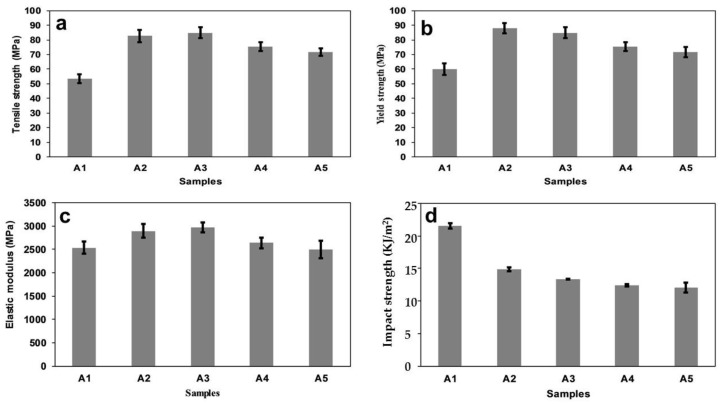
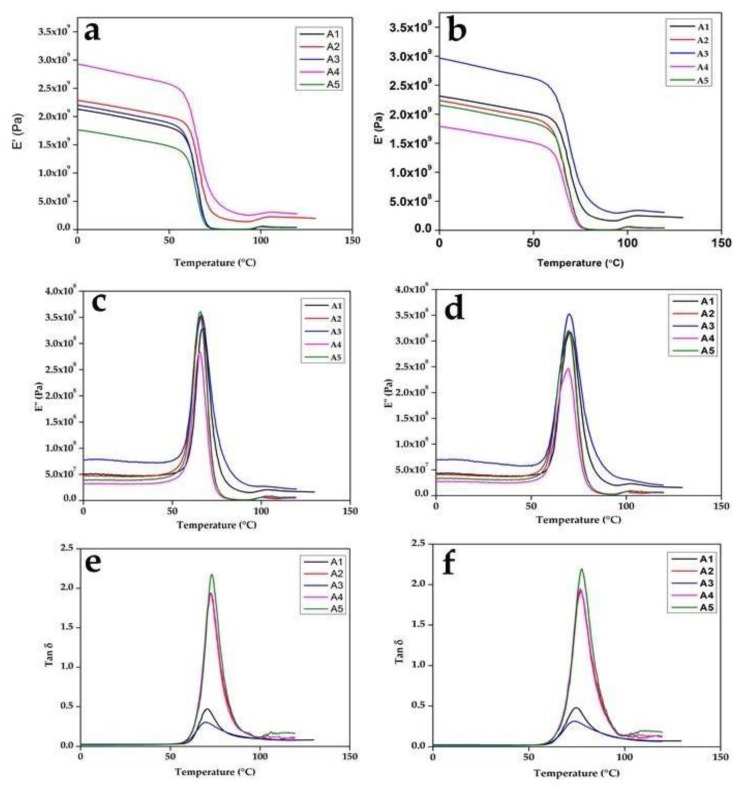
The current research trend for excellent miscibility in polymer mixing is the use of plasticizers. The use of most plasticizers usually has some negative effects on the mechanical properties of the resulting composite and can sometimes make it toxic, which makes such polymers unsuitable for biomedical applications. This research focuses on the improvement of the miscibility of polymer composites using two-step mixing with a rheomixer and a mix extruder. Polylactic acid (PLA), chitin, and starch were produced after two-step mixing, using a compression molding method with decreasing composition variation (between 8% to 2%) of chitin and increasing starch content. A dynamic mechanical analysis (DMA) was used to study the mechanical behavior of the composite at various temperatures. The tensile strength, yield, elastic modulus, impact, morphology, and compatibility properties were also studied. The DMA results showed a glass transition temperature range of 50 °C to 100 °C for all samples, with a distinct peak value for the loss modulus and factor. The single distinct peak value meant the polymer blend was compatible. The storage and loss modulus increased with an increase in blending, while the loss factor decreased, indicating excellent compatibility and miscibility of the composite components. The mechanical properties of the samples improved compared to neat PLA. Small voids and immiscibility were noticed in the scanning electron microscopy images, and this was corroborated by X-ray diffraction graphs that showed an improvement in the crystalline nature of PLA with starch. Bioabsorption and toxicity tests showed compatibility with the rat system, which is similar to the human system.
目前在聚合物混合中实现优异混溶性的研究趋势是使用增塑剂。大多数增塑剂的使用通常会对所得复合材料的机械性能产生一些负面影响,有时还会使其具有毒性,这使得此类聚合物不适用于生物医学应用。本研究聚焦于通过使用流变混合器和混合挤出机进行两步混合来提高聚合物复合材料的混溶性。经过两步混合后,采用压缩成型方法,使甲壳素的组成变化(介于8%至2%之间)逐渐减小,淀粉含量逐渐增加,从而制备出聚乳酸(PLA)、甲壳素和淀粉。使用动态力学分析(DMA)来研究复合材料在不同温度下的力学行为。还研究了拉伸强度、屈服强度、弹性模量、冲击性能、形态和相容性等性能。DMA结果表明,所有样品的玻璃化转变温度范围为50℃至100℃,损耗模量和损耗因子有明显的峰值。单一明显的峰值意味着聚合物共混物是相容的。储能模量和损耗模量随着共混比例的增加而增加,而损耗因子则降低,表明复合材料各组分具有优异的相容性和混溶性。与纯PLA相比,样品的机械性能有所提高。扫描电子显微镜图像中发现了小空隙和不相容性,X射线衍射图证实了这一点,该图显示PLA与淀粉的结晶性质有所改善。生物吸收和毒性测试表明该材料与大鼠系统相容,而大鼠系统与人类系统相似。