Department of Immunology and Microbiology, University of Colorado SOM, Aurora, CO, United States.
Department of Biomedical Sciences, National Jewish Health, Denver, CO, United States.
Front Immunol. 2020 Feb 21;11:238. doi: 10.3389/fimmu.2020.00238. eCollection 2020.
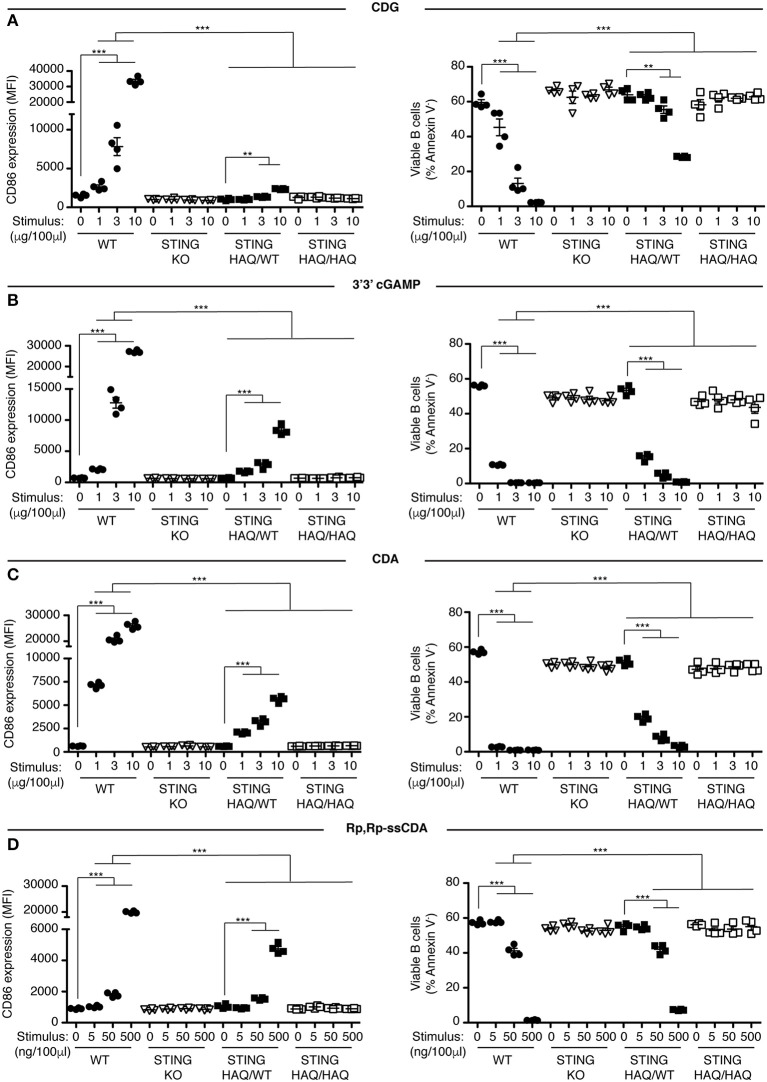
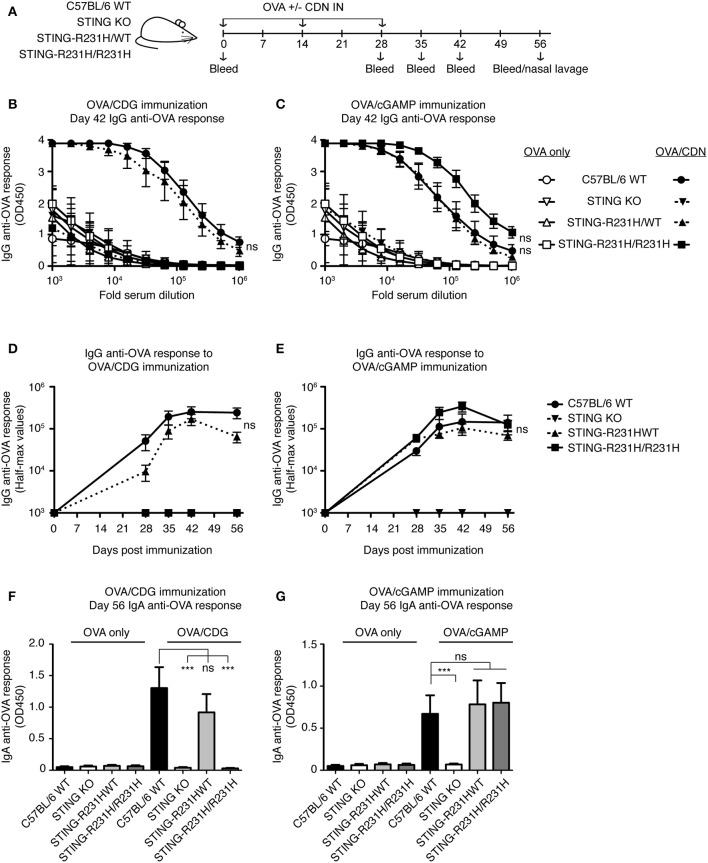
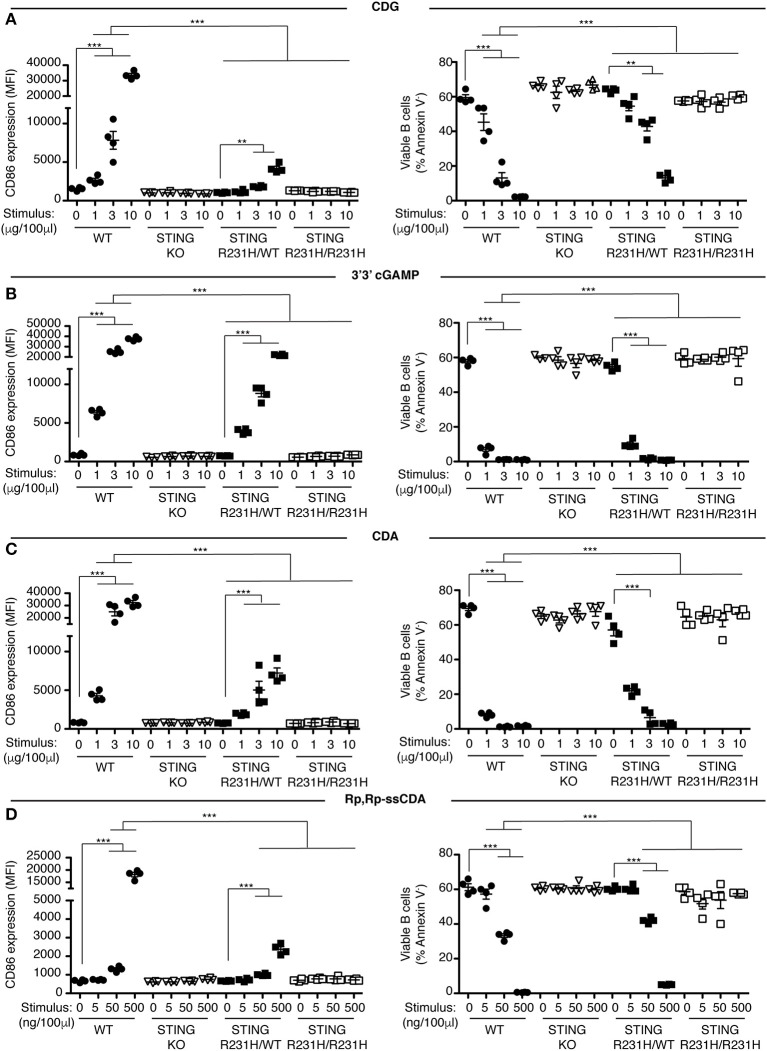
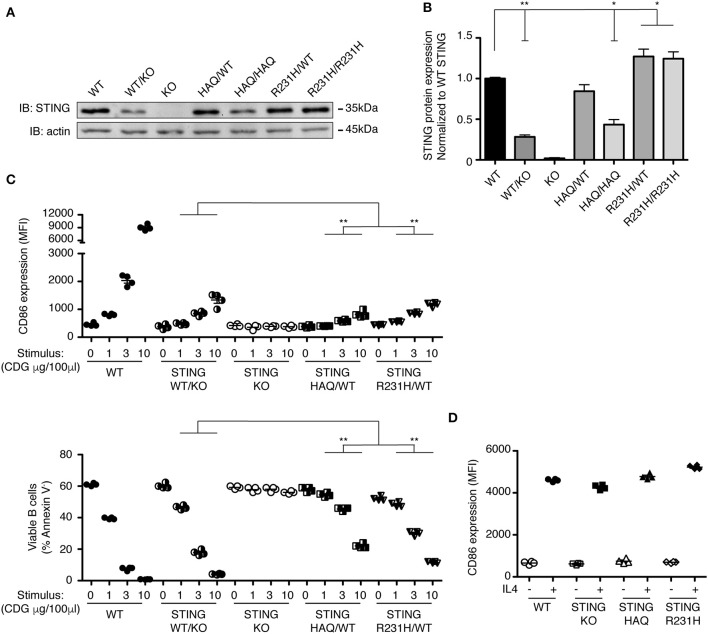
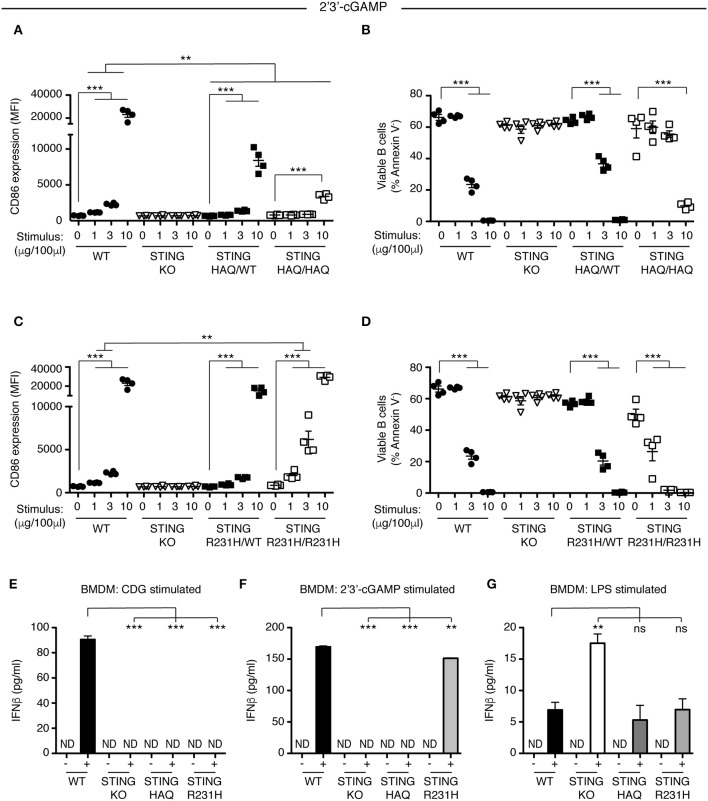
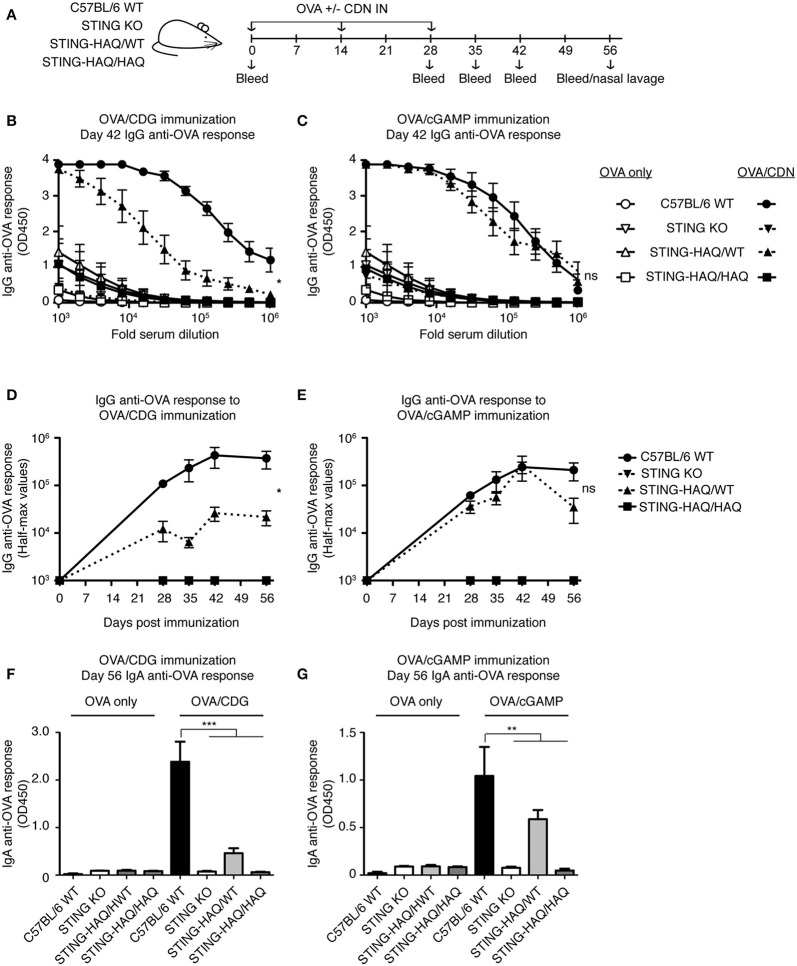
Stimulator of interferon genes (STING) plays a central role in innate immune responses to viral and intracellular bacterial infections, and cellular damage. STING is a cytosolic sensor of cyclic dinucleotides (CDNs) including those produced by pathogenic bacteria and those arising endogenously as products of the DNA sensor cGAS (e.g., 2'3' cGAMP). The two most common alternative allelic variants of STING in humans are STING-R71H-G230A-R293Q (STING-HAQ) and STING-R232H that are found in 20.4% and 13.7-17.6% of the population, respectively. To determine the biologic consequences of these genotypic variations, we generated knock-in mice containing the murine equivalents of each variant and studied their responsiveness to CDNs. Homozygous STING-HAQ (R71H-I229A-R292Q) and STING-R231H mice were found to be unresponsive to all exogenous CDNs tested (ci-di-GMP, ci-di-AMP, 3'3' cGAMP and Rp,Rp-CDA). Responses of homozygous STING-HAQ mice to endogenous 2'3' cGAMP was also greatly impaired. However, homozygous STING-R231H mice are fully responsive to 2'3' cGAMP. Analysis of heterozygous mice revealed reduced responsiveness to exogenous and endogenous CDNs in mice carrying a single copy of STING-HAQ, while STING-R231H heterozygous mice exhibit reduced responsiveness to exogenous but not endogenous CDNs. These findings confirm and extend previous reports by demonstrating differing impact of allelic variation of STING on the ability to sense and respond to exogenous vs. endogenous CDNs. Finally, the STING-R231H variant mouse represents a useful tool with which to examine the relative contributions of STING sensing of exogenous and endogenous CDNs in the context of bacterial infections and CDN-based cancer immunotherapeutics.
干扰素基因刺激物 (STING) 在病毒和细胞内细菌感染以及细胞损伤的固有免疫反应中发挥核心作用。STING 是环二核苷酸 (CDN) 的细胞溶质传感器,包括病原体产生的 CDN 和作为 DNA 传感器 cGAS 的产物(例如,2'3' cGAMP)内源性产生的 CDN。人类中 STING 的两种最常见的替代等位基因变异是 STING-R71H-G230A-R293Q(STING-HAQ)和 STING-R232H,它们分别存在于人群中的 20.4%和 13.7-17.6%。为了确定这些基因型变异的生物学后果,我们生成了含有每种变体的小鼠同源物的敲入小鼠,并研究了它们对 CDN 的反应。发现纯合 STING-HAQ(R71H-I229A-R292Q)和 STING-R231H 小鼠对所有测试的外源性 CDN 均无反应(ci-di-GMP、ci-di-AMP、3'3' cGAMP 和 Rp,Rp-CDA)。同源性 STING-HAQ 小鼠对内源性 2'3' cGAMP 的反应也大大受损。然而,纯合 STING-R231H 小鼠对 2'3' cGAMP 完全有反应。对杂合小鼠的分析表明,携带 STING-HAQ 单拷贝的小鼠对外源性和内源性 CDN 的反应性降低,而 STING-R231H 杂合小鼠对外源性但不是内源性 CDN 的反应性降低。这些发现通过证明 STING 等位基因变异对感知和对外源性与内源性 CDN 反应的能力的不同影响,证实并扩展了先前的报告。最后,STING-R231H 变体小鼠代表了一种有用的工具,可用于研究细菌感染和基于 CDN 的癌症免疫治疗中 STING 对内外源性 CDN 的感知的相对贡献。