Zhao Nanxia, Yang Xue, Calvelli Hannah R, Cao Yue, Francis Nicola L, Chmielowski Rebecca A, Joseph Laurie B, Pang Zhiping P, Uhrich Kathryn E, Baum Jean, Moghe Prabhas V
Department of Chemical and Biochemical Engineering, Rutgers, The State University of New Jersey, Piscataway, NJ, United States.
Department of Chemistry and Chemical Biology, Rutgers, The State University of New Jersey, Piscataway, NJ, United States.
Front Bioeng Biotechnol. 2020 Feb 21;8:112. doi: 10.3389/fbioe.2020.00112. eCollection 2020.
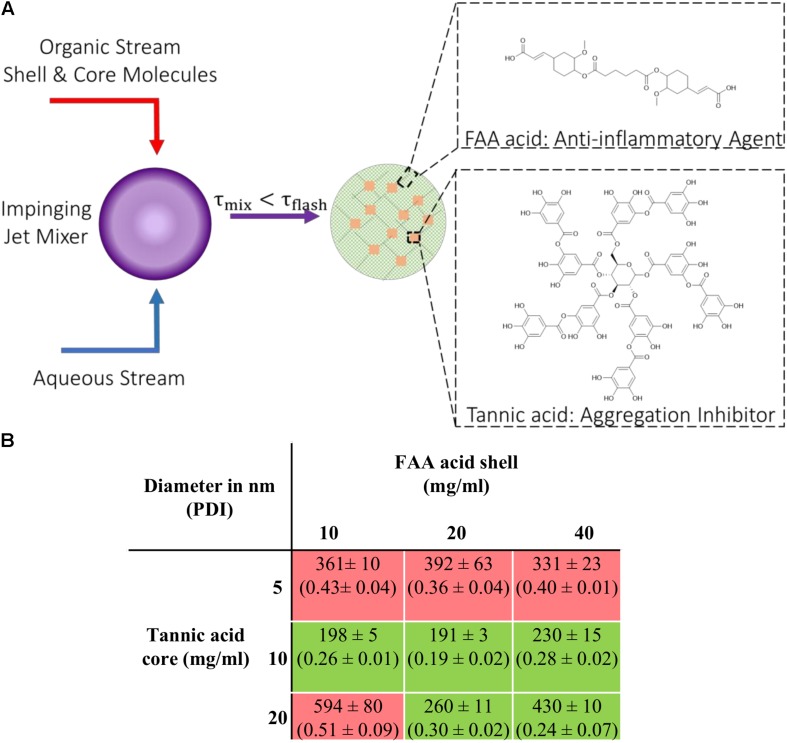
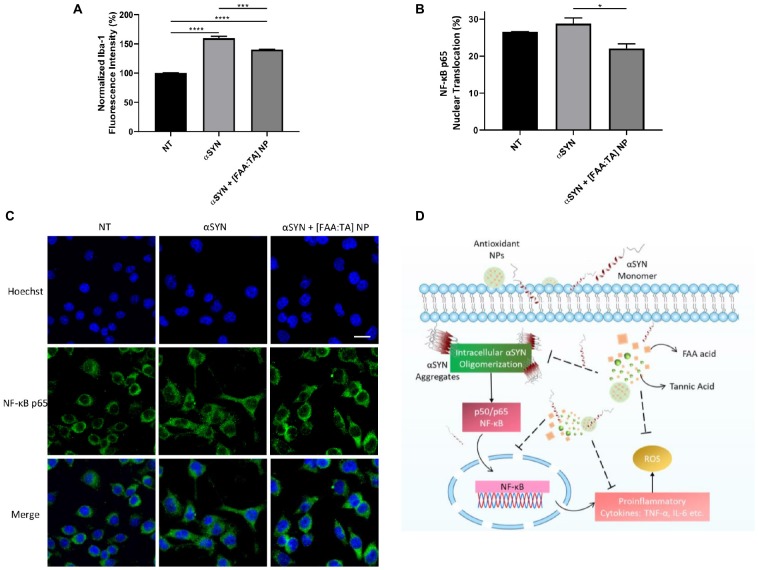
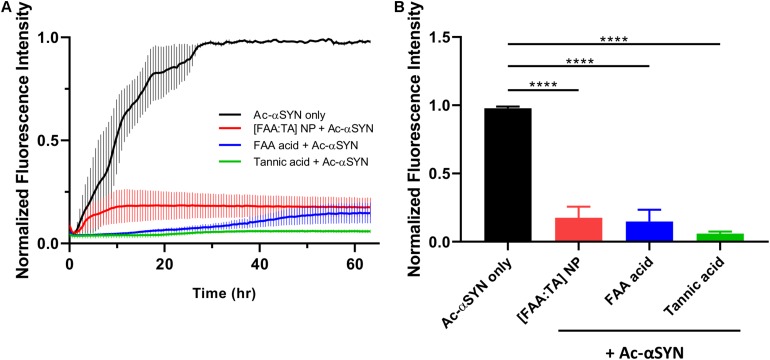
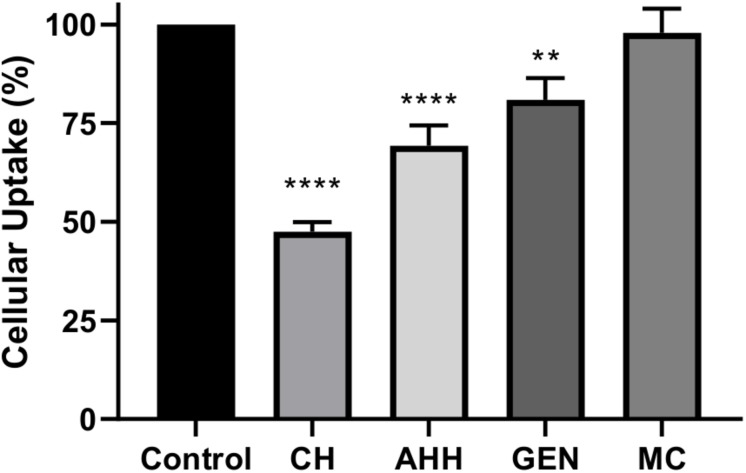
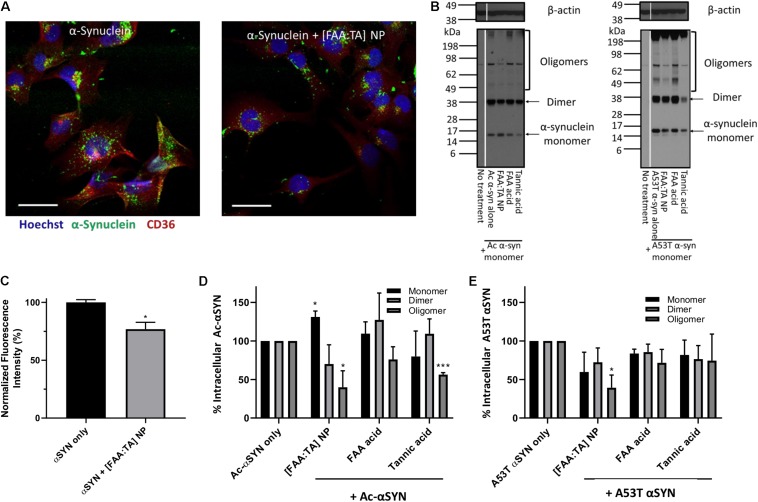
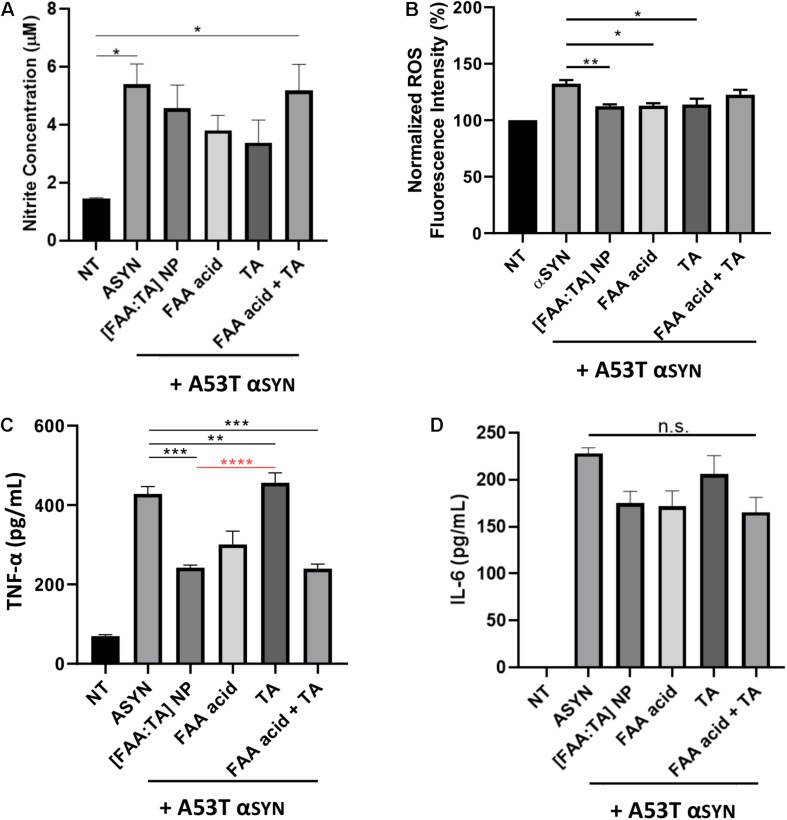
Parkinson's Disease is characterized by the loss of dopaminergic neurons in the , the extracellular accumulation of toxic α-synuclein (αSYN) aggregates, and neuroinflammation. Microglia, resident macrophages of the brain, are one of the critical cell types involved in neuroinflammation. Upon sensing extracellular stimuli or experiencing oxidative stress, microglia become activated, which further exacerbates neuroinflammation. In addition, as the first line of defense in the central nervous system, microglia play a critical role in αSYN clearance and degradation. While the role of microglia in neurodegenerative pathologies is widely recognized, few therapeutic approaches have been designed to target both microglial activation and αSYN aggregation. Here, we designed nanoparticles (NPs) to deliver aggregation-inhibiting antioxidants to ameliorate αSYN aggregation and attenuate activation of a pro-inflammatory microglial phenotype. Ferulic acid diacid with an adipic acid linker (FAA) and tannic acid (TA) were used as shell and core molecules to form NPs via flash nanoprecipitation. These NPs showed a strong inhibitory effect on αSYN fibrillization, significantly diminishing αSYN fibrillization compared to untreated αSYN using a Thioflavin T assay. Treating microglia with NPs decreased overall αSYN internalization and intracellular αSYN oligomer formation. NP treatment additionally lowered the secretion of pro-inflammatory cytokines TNF-α and IL-6, and also attenuated nitric oxide and reactive oxygen species production induced by αSYN. NP treatment also significantly decreased Iba-1 expression in αSYN-challenged microglia and suppressed nuclear translocation of nuclear factor kappa B (NF-κB). Overall, this work lays the foundation for an antioxidant-based nanotherapeutic candidate to target pathological protein aggregation and neuroinflammation in neurodegenerative diseases.
帕金森病的特征是黑质中多巴胺能神经元的丧失、有毒的α-突触核蛋白(αSYN)聚集体的细胞外积累以及神经炎症。小胶质细胞是大脑中的常驻巨噬细胞,是参与神经炎症的关键细胞类型之一。在感知细胞外刺激或经历氧化应激时,小胶质细胞被激活,这进一步加剧了神经炎症。此外,作为中枢神经系统的第一道防线,小胶质细胞在αSYN的清除和降解中起关键作用。虽然小胶质细胞在神经退行性病变中的作用已得到广泛认可,但很少有治疗方法被设计用于同时靶向小胶质细胞的激活和αSYN的聚集。在此,我们设计了纳米颗粒(NPs)来递送抑制聚集的抗氧化剂,以改善αSYN的聚集并减弱促炎性小胶质细胞表型的激活。用己二酸连接的阿魏酸二酸(FAA)和鞣酸(TA)作为壳层和核心分子,通过快速纳米沉淀形成NPs。这些NPs对αSYN纤维化显示出强烈的抑制作用,与未处理的αSYN相比,使用硫黄素T检测法可显著减少αSYN纤维化。用NPs处理小胶质细胞可降低总体αSYN内化和细胞内αSYN寡聚体的形成。NP处理还降低了促炎细胞因子TNF-α和IL-6的分泌,并减弱了αSYN诱导的一氧化氮和活性氧的产生。NP处理还显著降低了αSYN刺激的小胶质细胞中Iba-1的表达,并抑制了核因子κB(NF-κB)的核转位。总体而言,这项工作为基于抗氧化剂的纳米治疗候选物奠定了基础,该候选物可靶向神经退行性疾病中的病理性蛋白质聚集和神经炎症。