Stoker Thomas B, Torsney Kelli M, Barker Roger A
John van Geest Centre for Brain Repair, Department of Clinical Neurosciences, University of Cambridge, Cambridge, United Kingdom.
Wellcome Trust - Medical Research Council Stem Cell Institute, University of Cambridge, Cambridge, United Kingdom.
Front Neurosci. 2018 Oct 8;12:693. doi: 10.3389/fnins.2018.00693. eCollection 2018.
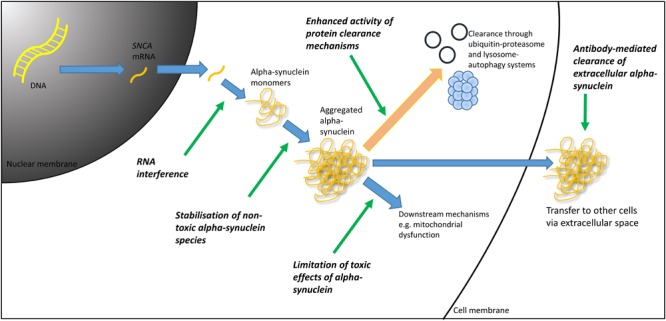
Parkinson's disease (PD) is the second most common neurodegenerative disease, manifesting as a characteristic movement disorder with a number of additional non-motor features. The pathological hallmark of PD is the presence of intra-neuronal aggregates of α-synuclein (Lewy bodies). The movement disorder of PD occurs largely due to loss of dopaminergic neurons of the substantia nigra, resulting in striatal dopamine depletion. There are currently no proven disease modifying treatments for PD, with management options consisting mainly of dopaminergic drugs, and in a limited number of patients, deep brain stimulation. Long-term use of established dopaminergic therapies for PD results in significant adverse effects, and there is therefore a requirement to develop better means of restoring striatal dopamine, as well as treatments that are able to slow progression of the disease. A number of exciting treatments have yielded promising results in pre-clinical and early clinical trials, and it now seems likely that the landscape for the management of PD will change dramatically in the short to medium term future. Here, we discuss the promising regenerative cell-based and gene therapies, designed to treat the dopaminergic aspects of PD whilst limiting adverse effects, as well as novel approaches to reducing α-synuclein pathology.
帕金森病(PD)是第二常见的神经退行性疾病,表现为具有一系列额外非运动特征的典型运动障碍。PD的病理标志是α-突触核蛋白的神经元内聚集体(路易小体)的存在。PD的运动障碍主要是由于黑质多巴胺能神经元的丧失,导致纹状体多巴胺耗竭。目前尚无经证实的可改变PD病程的治疗方法,治疗选择主要包括多巴胺能药物,以及少数患者采用的深部脑刺激。长期使用已有的PD多巴胺能疗法会产生显著的不良反应,因此需要开发更好的恢复纹状体多巴胺的方法,以及能够减缓疾病进展的治疗方法。一些令人兴奋的治疗方法在临床前和早期临床试验中取得了有希望的结果,现在看来,在短期到中期的未来,PD的治疗格局可能会发生巨大变化。在此,我们讨论有前景的基于细胞的再生疗法和基因疗法,旨在治疗PD的多巴胺能方面,同时限制不良反应,以及减少α-突触核蛋白病理的新方法。