Department of Pathology, Langone Medical Center, New York University, 550 1st Avenue, New York, NY, 10016, USA.
Department of Surgery, Langone Medical Center, New York University, 550 1st Avenue, New York, NY, 10016, USA.
Diagn Pathol. 2020 Mar 13;15(1):23. doi: 10.1186/s13000-019-0905-2.
Low-grade fibromyxoid sarcoma (LGFMS) is a rare fibroblastic tumor often involving deep tissue of trunk and lower extremities in young to middle-aged patients. Rarely, LGFMS can occur in other sites including head and neck, chest, abdomen and female reproductive system. Three cases of LGFMS in mesentery of small intestine have been reported and all have conventional histologic features. Herein we reported a unique case of LGFMS in mesentery of small intestine.
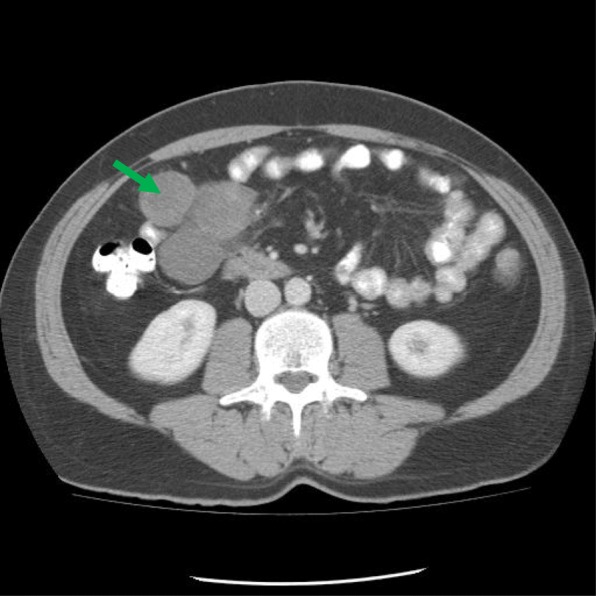
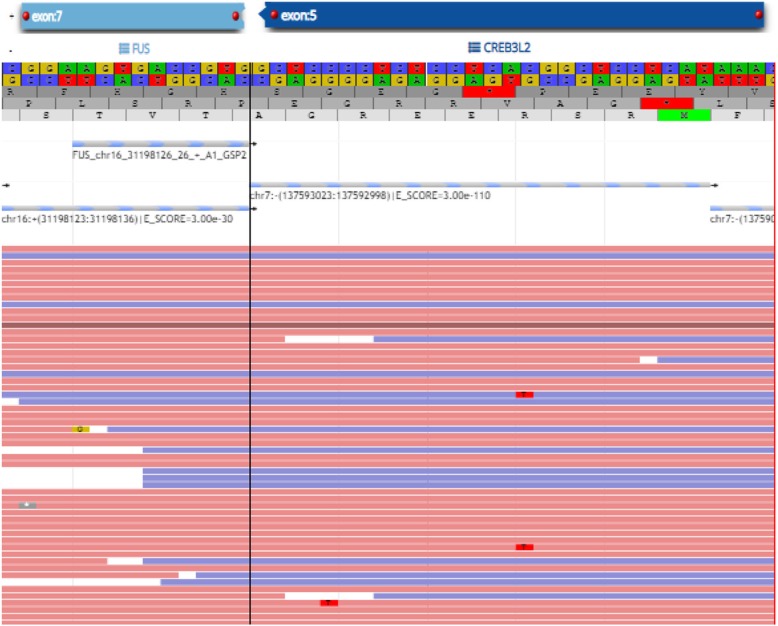
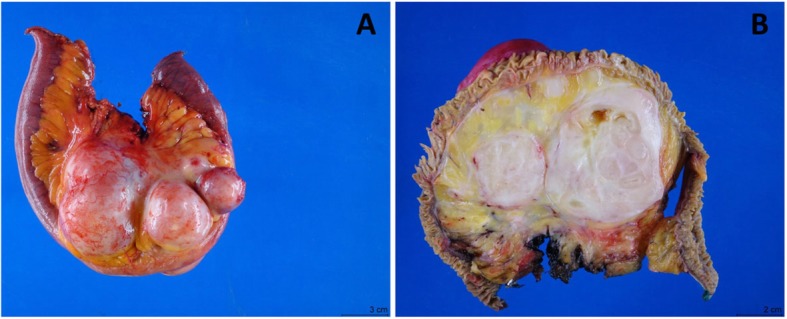
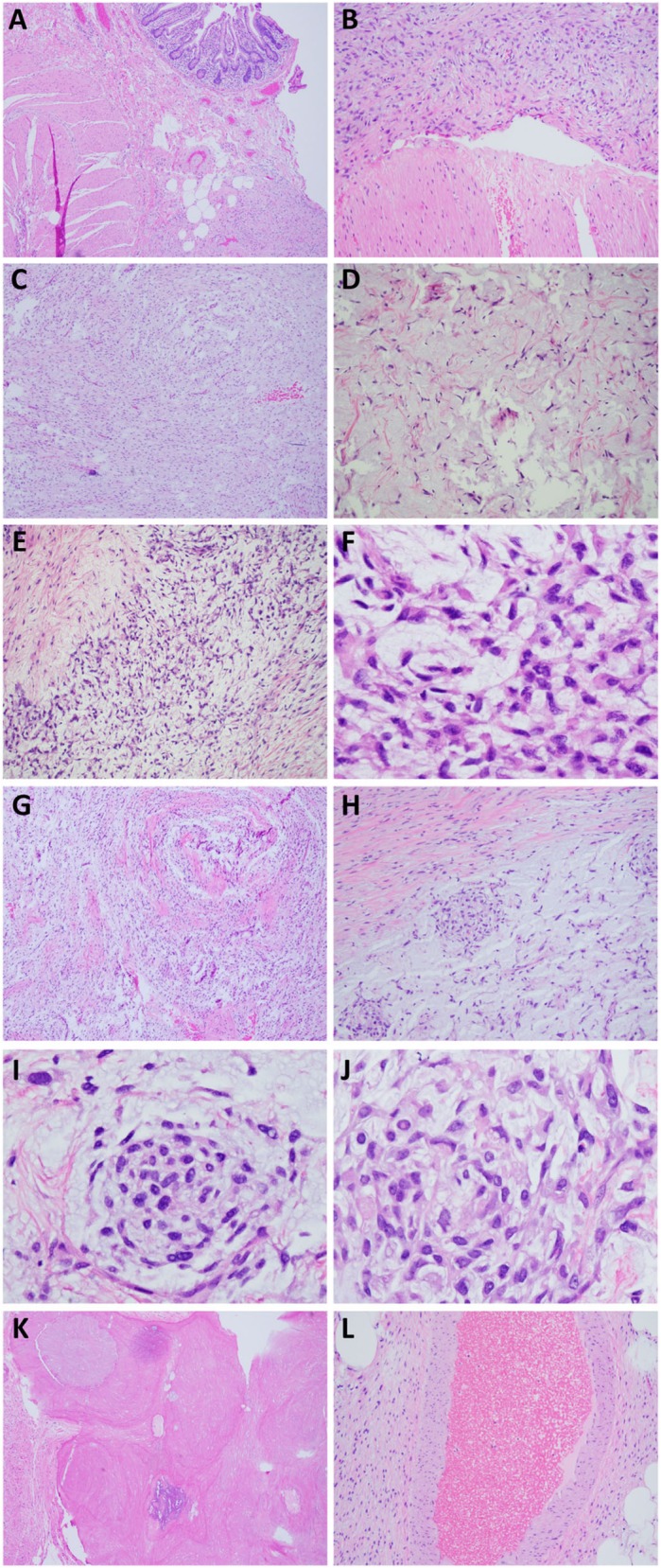
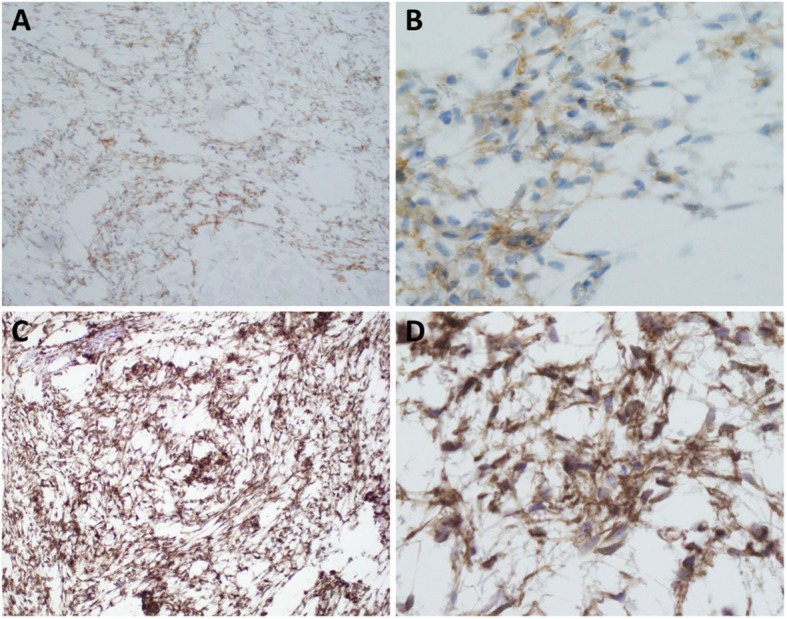
A 43 year-old male with chief complaint of lower back pain for 4 years presented to our hospital. Physical exam reveal a firm, non-tender, non-distended, mobile large abdominal mass, which was shown on abdominal CT as a 10 cm retroperitoneal tumor. Biopsy revealed a spindle cell neoplasm in a myxoid background with a delicate vascular network. Tumor resection was performed. Gross examination of the resected specimen showed a 10.8 cm, tan-white, smooth, firm, lobulated mesenteric mass with bulging and gelatinous cut surface and confined within small bowel serosa. Microscopic examination demonstrated foci epithelioid cords and whorls with prominent atypia, in additional of regular, bland-appearing spindle cells in a fibrous and myxoid stroma and osseous metaplasia. The tumor cells stained diffusely positive for DOG1 with moderate staining density, and diffusely and strongly positive for MUC4. Rearrangement involving FUS (16p11.2) gene was identified with break-apart probe and confirmed by Anchored Multiplex PCR. A final diagnosis of low-grade fibromyxoid sarcoma was rendered.
Our case highlights the importance of including LGFMS in the differential diagnosis of mesenteric tumors and the DOG1 positivity which could represent a potential diagnostic pitfall.
低度恶性纤维黏液样肉瘤(LGFMS)是一种罕见的纤维母细胞肿瘤,常发生于中青年患者的躯干和下肢深部组织。罕见情况下,LGFMS 也可发生于其他部位,包括头颈部、胸部、腹部和女性生殖系统。已有 3 例发生于小肠系膜的 LGFMS 报道,均具有常规组织学特征。本文报道了小肠系膜 LGFMS 的 1 例独特病例。
一名 43 岁男性,主要症状为 4 年前出现的腰痛。体格检查发现一坚硬、无触痛、无膨胀、可移动的大腹部肿块,腹部 CT 显示腹膜后有一 10cm 肿瘤。活检显示黏液样背景下存在梭形细胞肿瘤,伴有精细的血管网。行肿瘤切除术。切除标本大体检查显示 10.8cm 大小、灰褐色、光滑、坚硬、分叶状肠系膜肿块,表面凸起,呈胶冻样,局限于小肠浆膜内。显微镜下观察到肿瘤组织中存在上皮样条索和漩涡状结构,伴有明显异型性,同时存在规则、形态温和的梭形细胞,位于纤维黏液样基质和骨化生中。肿瘤细胞弥漫性强阳性表达 DOG1,染色密度中等,弥漫性强阳性表达 MUC4。采用分离探针检测到涉及 FUS(16p11.2)基因的重排,并通过锚定多重 PCR 进行了确认。最终诊断为低度恶性纤维黏液样肉瘤。
本病例强调了在肠系膜肿瘤的鉴别诊断中考虑 LGFMS 的重要性,以及 DOG1 阳性可能代表潜在的诊断陷阱。