Department of Pharmacological and Pharmaceutical Sciences, University of Houston, Houston, Texas, USA.
Department of Pharmacological and Pharmaceutical Sciences, University of Houston, Houston, Texas, USA.
Neurosci Lett. 2020 Apr 23;725:134892. doi: 10.1016/j.neulet.2020.134892. Epub 2020 Mar 9.
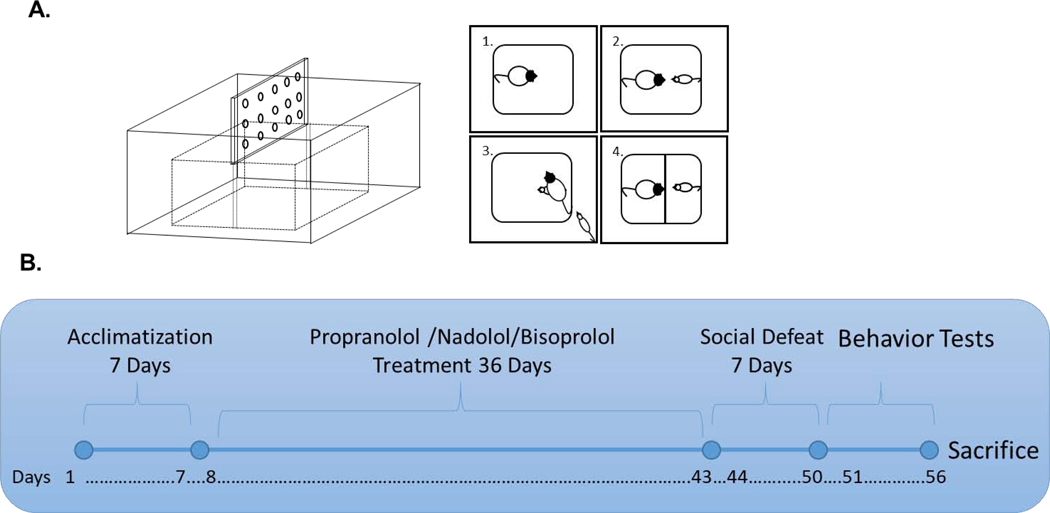
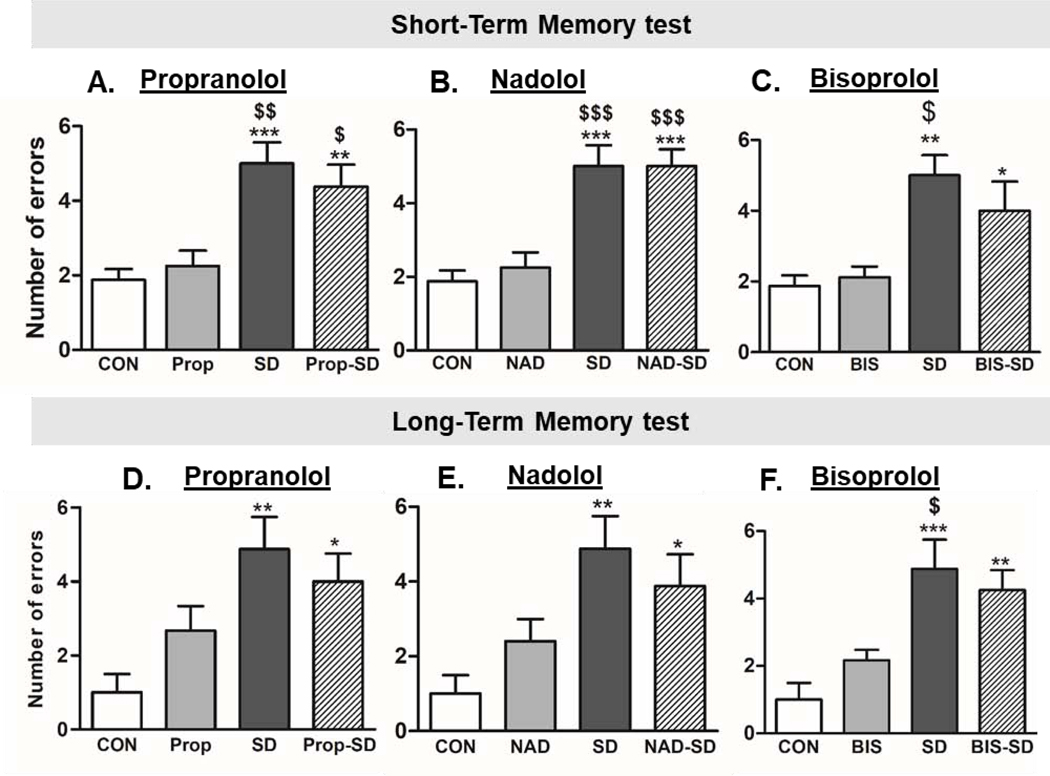
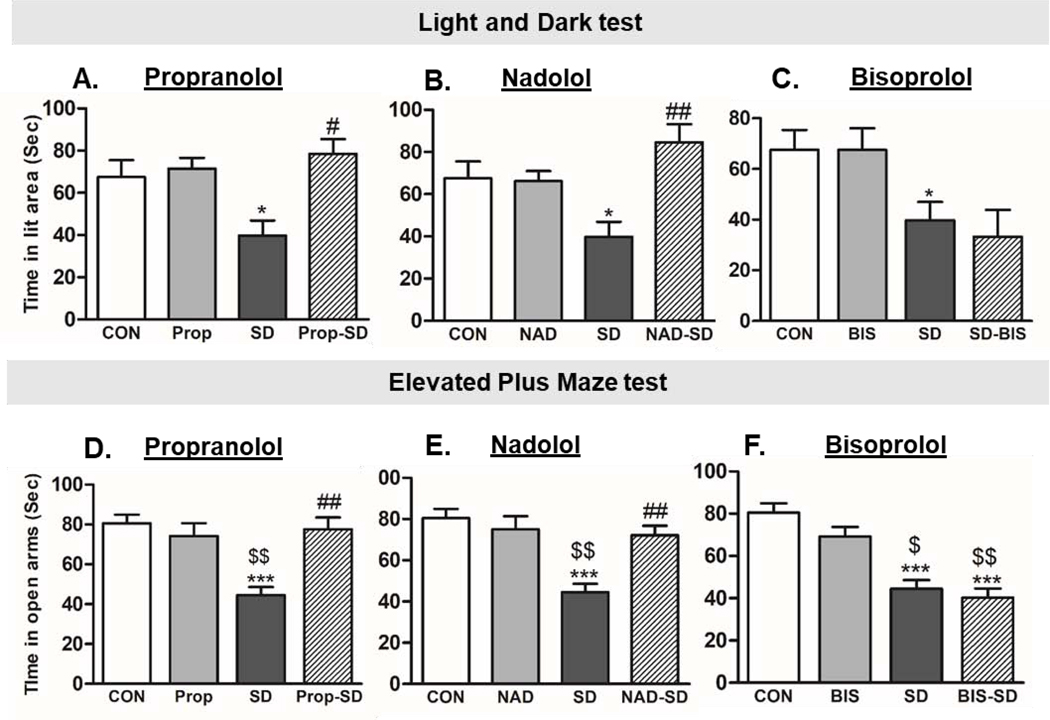
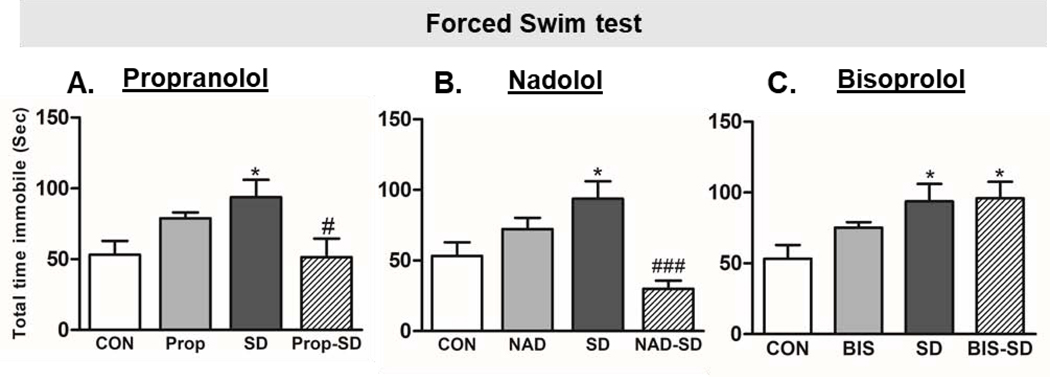
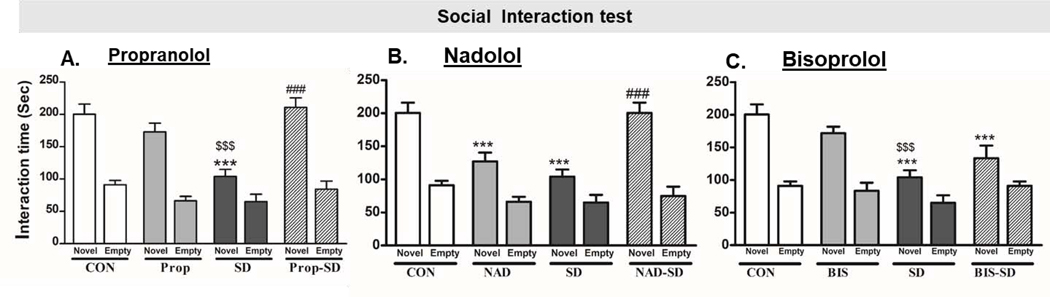
Benzodiazepines and SSRIs are considered as standard treatment options for anxiety and depression, hallmarks of Post-Traumatic Stress Disorder (PTSD), although their use is often limited by adverse effects. While promising evidence emerged with β-adrenergic receptor (β-AR) antagonists (or 'β-blockers') and PTSD relief, efficacy issues dampened the excitement. However, we believe it is premature to completely eliminate a beneficial role of β-blockers. Our previous work has suggested that social defeat (SD) results in anxiety-like and depression-like behaviors in rats. Here, using the SD paradigm, we examined the effect of several β-adrenergic receptor antagonists (propranolol, nadolol, bisoprolol) on these behaviors in rats. Following acclimatization, Sprague-Dawley rats received no treatment (for control groups) or treated with ; propranolol (50 mg/kg/day in water), or nadolol (18 mg/kg/day in rats' chow), or bisoprolol (15 mg/kg/day in water). The treatment lasted for 36 days, following which rats were subjected to SD/control exposures (1 week). Later, anxiety-like and depression-like behaviors, social interaction and learning-memory function tests were conducted. SD rats exhibited anxiety- and depression-like behavior as well as learning-memory impairment. Propranolol and nadolol protected SD rats from exhibiting anxiety-or depression-like behaviors. Bisoprolol treatment did not mitigate SD-induced behavioral impairments in rats. Nadolol, propranolol or bisoprolol have no effect in attenuating SD-induced memory function tests. These results suggest that certain 'β-blockers' have the potential to mitigate the negative psychological effects of traumatic events.
苯二氮䓬类药物和 SSRI 被认为是焦虑和抑郁的标准治疗选择,也是创伤后应激障碍 (PTSD) 的特征,但由于不良反应,其使用往往受到限制。虽然β-肾上腺素能受体 (β-AR) 拮抗剂(或“β-阻滞剂”)和 PTSD 缓解的有希望的证据出现了,但疗效问题降低了兴奋度。然而,我们认为完全消除β-阻滞剂的有益作用还为时过早。我们之前的工作表明,社会挫败(SD)会导致大鼠出现类似焦虑和抑郁的行为。在这里,我们使用 SD 范式,研究了几种β-肾上腺素能受体拮抗剂(普萘洛尔、纳多洛尔、比索洛尔)对大鼠这些行为的影响。在适应环境后,Sprague-Dawley 大鼠接受无治疗(对照组)或以下治疗:普萘洛尔(50mg/kg/天,溶于水),纳多洛尔(18mg/kg/天,掺入大鼠饲料中),或比索洛尔(15mg/kg/天,溶于水)。治疗持续 36 天,然后大鼠接受 SD/对照暴露(1 周)。之后,进行焦虑样和抑郁样行为、社会互动和学习记忆功能测试。SD 大鼠表现出焦虑样和抑郁样行为以及学习记忆障碍。普萘洛尔和纳多洛尔可保护 SD 大鼠免受焦虑或抑郁样行为的发生。比索洛尔治疗不能减轻 SD 诱导的大鼠行为损伤。纳多洛尔、普萘洛尔或比索洛尔对减轻 SD 诱导的记忆功能测试没有影响。这些结果表明,某些“β-阻滞剂”有可能减轻创伤事件的负面心理影响。