Kohsaka Tetsuya, Minagawa Itaru, Morimoto Masashi, Yoshida Takuya, Sasanami Tomohiro, Yoneda Yoshitaka, Ikegaya Naoki, Sasada Hiroshi
1Department of Applied Life Sciences, Animal Reproduction & Physiology Faculty of Agriculture, Shizuoka University, 836 Ohya, Suruga-ku, Shizuoka, 422-8529 Japan.
2Department of Clinical Nutrition, School of Food and Nutritional Science, University of Shizuoka, Shizuoka, 422-8526 Japan.
Basic Clin Androl. 2020 Mar 9;30:3. doi: 10.1186/s12610-020-0101-y. eCollection 2020.
Cisplatin (CP) is an extremely effective anticancer agent widely used to treat various cancer types, however, the potential side effects include testicular dysfunction. This study was to investigate, using a rat model of CP-induced testicular dysfunction, the protective effects of relaxin (RLN) against oxidative stress, testicular function, histological damage, spermatogenesis, germ-cell apoptosis, and sperm output, and to explore the usefulness of RLN as a potential protective drug for use with CP in chemotherapeutic treatments.
Sprague-Dawley male rats were used, which were divided into three groups: sham control, CP, and CP + RLN. Porcine RLN (500 ng/h) or saline was infused for 5 days using an implanted osmotic mini-pump following intraperitoneal injection of CP (6 mg/kg). RLN dose was chosen based on previous studies showing that it resulted in serum relaxin levels comparable to those in rats at the middle of pregnancy. At 5 days after CP administration, samples were collected and assessment of testicular histopathology, germ-cell apoptosis, oxidative stress, lipid peroxidation, and sperm quality was performed as main measures.
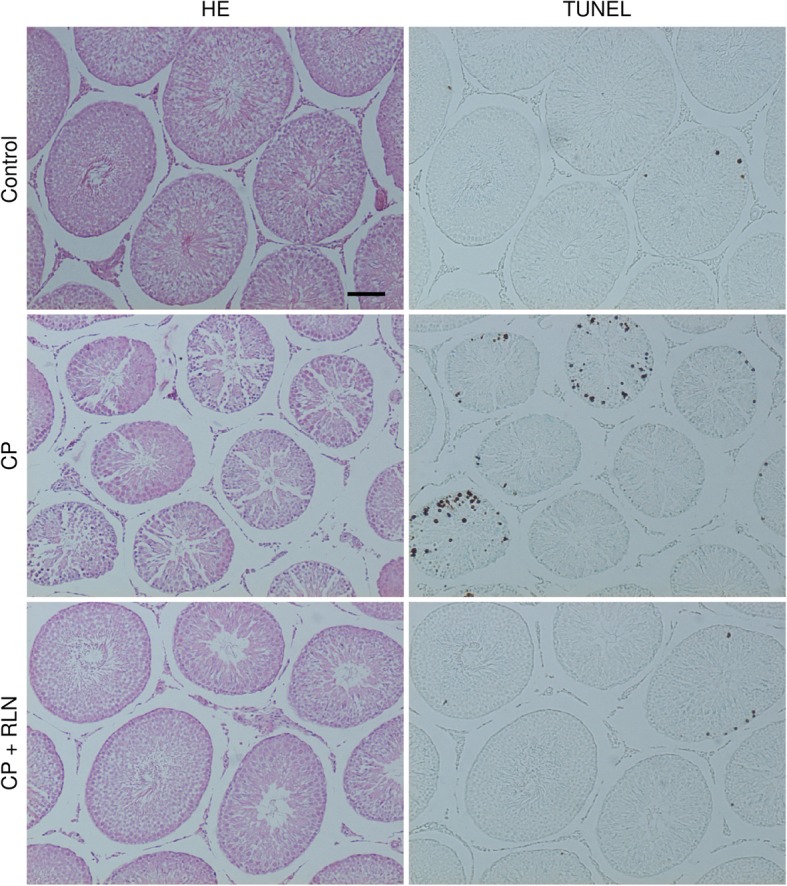
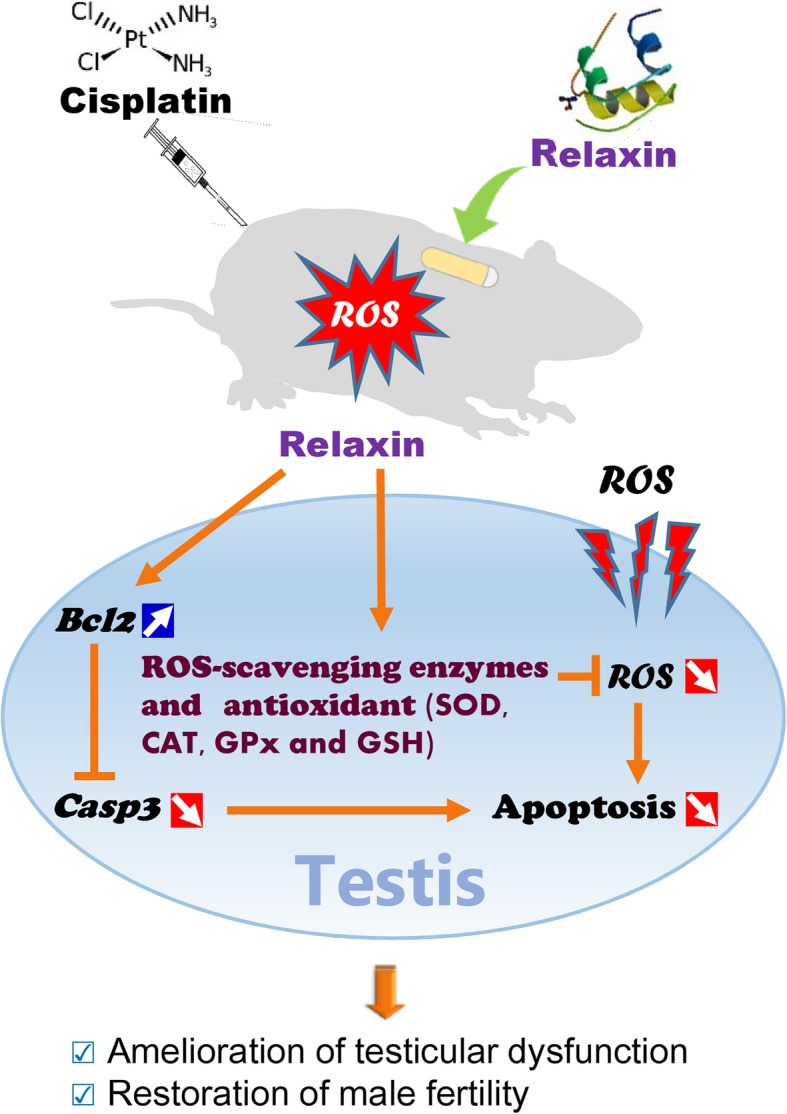
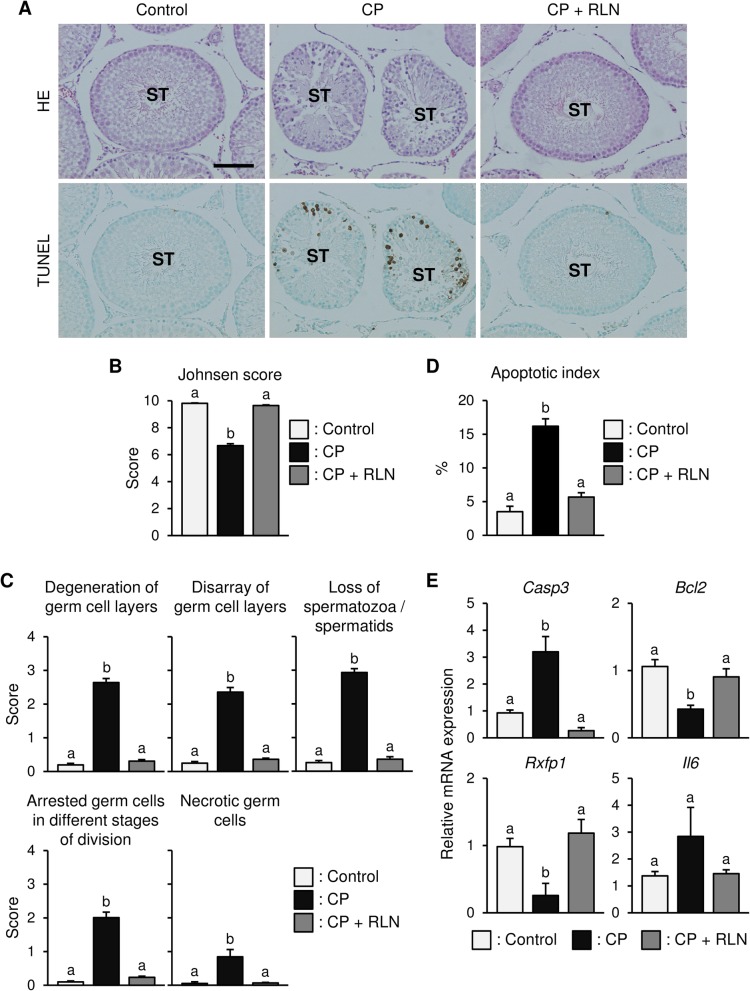
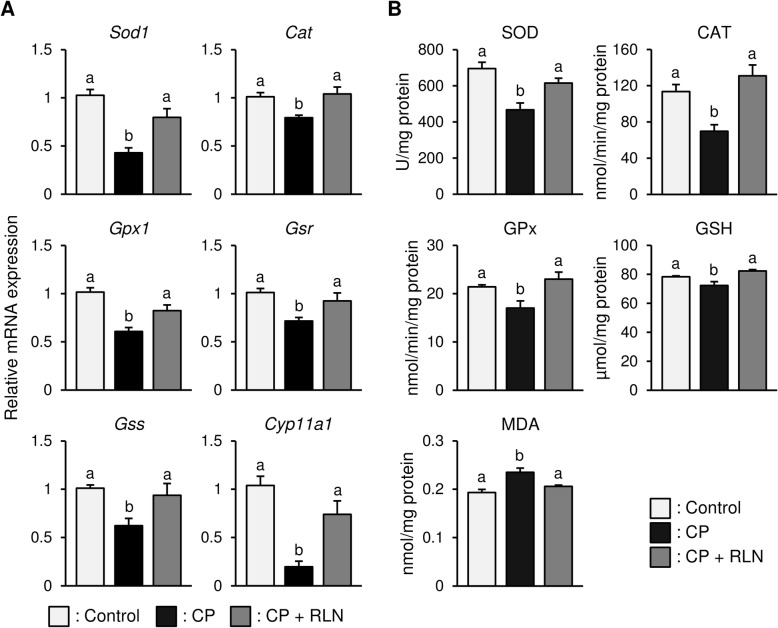
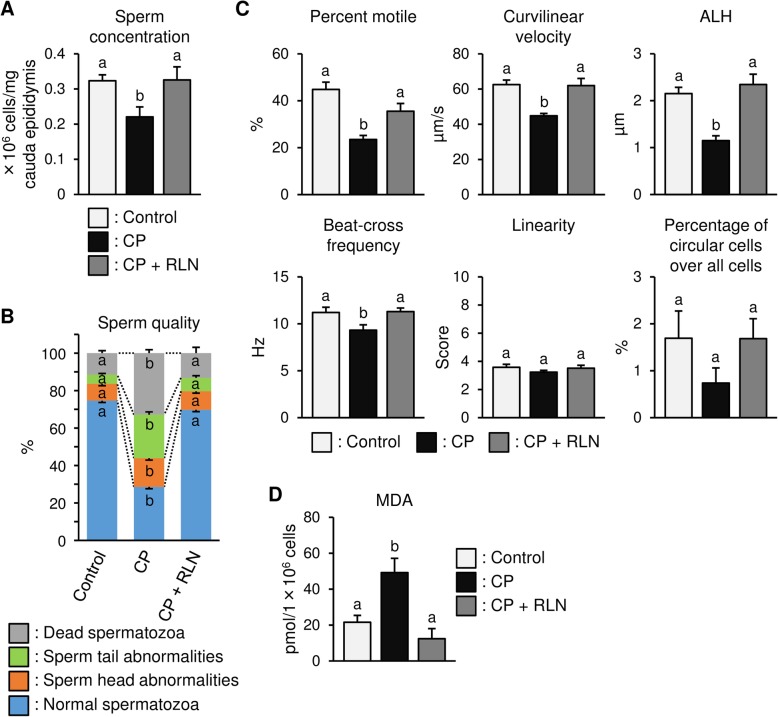
The testicular CP model showed reduced testis weight and significantly decreased spermatogenesis scores. Additionally, CP administration induced a 4.6-fold increase in the apoptotic index associated with a significant increase in oxidative stress and upregulation of pro-apoptotic and downregulation of anti-apoptotic levels, resulting in a marked reduction in sperm concentration. However, RLN administration caused a significant reduction in CP-mediated damage by attenuating oxidative stress and cell apoptosis. RLN administration efficiently scavenged ROS via the activation of SOD, CAT, and GPx and upregulation of GSH to prevent lipid peroxidation and decreased apoptosis by altering and expression, thereby reducing histopathological damage and restoring spermatogenesis. Furthermore, RLN ameliorated attenuated sperm motility in the cauda epididymis resulting from CP treatment.
This study clearly indicates that RLN exerts a protective effect against CP-induced testicular damage through attenuation of oxidative stress and suppression of apoptosis. Our findings suggest RLN as a potentially efficacious drug for use with cisplatin chemotherapy in order to ameliorate CP-induced side effects and testicular injury adversely affecting spermatogenesis, sperm quality, and oxidative-stress parameters.
顺铂(CP)是一种广泛用于治疗多种癌症类型的极其有效的抗癌药物,然而,其潜在的副作用包括睾丸功能障碍。本研究旨在利用顺铂诱导的大鼠睾丸功能障碍模型,研究松弛素(RLN)对氧化应激、睾丸功能、组织学损伤、精子发生、生殖细胞凋亡和精子输出的保护作用,并探讨RLN作为一种潜在的保护药物与顺铂联合用于化疗的有效性。
使用Sprague-Dawley雄性大鼠,将其分为三组:假手术对照组、顺铂组和顺铂+松弛素组。在腹腔注射顺铂(6mg/kg)后,使用植入式渗透微型泵输注猪松弛素(500ng/h)或生理盐水,持续5天。松弛素剂量是根据先前的研究选择的,该研究表明其可使血清松弛素水平与妊娠中期大鼠的水平相当。在给予顺铂5天后,收集样本并进行睾丸组织病理学、生殖细胞凋亡、氧化应激、脂质过氧化和精子质量评估作为主要指标。
睾丸顺铂模型显示睾丸重量减轻,精子发生评分显著降低。此外,给予顺铂导致凋亡指数增加4.6倍,同时氧化应激显著增加,促凋亡水平上调,抗凋亡水平下调,导致精子浓度显著降低。然而,给予松弛素通过减轻氧化应激和细胞凋亡,显著降低了顺铂介导的损伤。给予松弛素通过激活超氧化物歧化酶(SOD)、过氧化氢酶(CAT)和谷胱甘肽过氧化物酶(GPx)以及上调谷胱甘肽(GSH)有效地清除活性氧(ROS),以防止脂质过氧化,并通过改变相关蛋白表达减少凋亡,从而减少组织病理学损伤并恢复精子发生。此外,松弛素改善了顺铂治疗导致的附睾尾部精子活力减弱。
本研究清楚地表明,松弛素通过减轻氧化应激和抑制凋亡,对顺铂诱导的睾丸损伤发挥保护作用。我们的研究结果表明,松弛素作为一种潜在有效的药物,可与顺铂化疗联合使用,以改善顺铂诱导的副作用以及对精子发生、精子质量和氧化应激参数产生不利影响的睾丸损伤。