Vagelos College of Physicians and Surgeons, Department of Anesthesiology, Columbia University, 622 168th Street, P&S Box 46, New York, NY, USA.
Vagelos College of Physicians and Surgeons, Department of Obstetrics and Gynecology, Columbia University, New York, NY, USA.
Reprod Sci. 2020 Sep;27(9):1791-1801. doi: 10.1007/s43032-020-00180-z. Epub 2020 Mar 12.
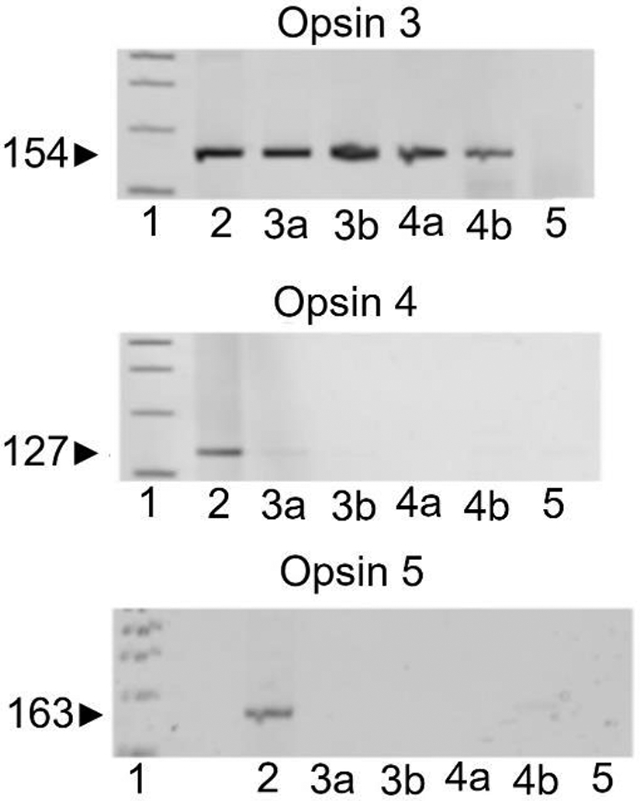
Spontaneous preterm birth (sPTB) remains a worldwide healthcare challenge. Preterm labor (PTL) is thought to be the largest reversible cause of sPTB, but current tocolytic therapies are ineffective and associated with systemic side effects from chronic use. Therefore, identifying novel mechanisms that promote human uterine smooth muscle (hUSM) relaxation is essential to improving clinical management of PTL. Here, we aimed to determine if an extraocular opsin receptor (OPN 3,4,5) system is expressed in pregnant hUSM and to characterize how photo-mediated relaxation of pre-contracting hUSM may be facilitated by external application of light. Translational studies were performed with hUSM from healthy late gestation patients (n = 8) and non-pregnant, similarly aged patients undergoing hysterectomy (n = 4). First, RT-PCR screened for mRNA coding for components of the classical extraocular light receptors (OPN 3,4,5). We found a restricted repertoire of opsin receptors (OPN3) expressed in pregnant hUSM tissue. Immunohistochemistry was performed to confirm protein expression. Pre-contracting late gestation hUSM strips were studied in functional organ bath studies to determine if photo-mediated relaxation is intensity or wavelength dependent. Functional organ bath studies revealed acute photo-mediated relaxation occurring in an intensity- and wavelength-dependent manner. Finally, coimmunoprecipitation of OPN3 with Gs following light activation suggests that a component of photo-relaxation occurs via G protein-coupled receptor machinery. This is the first report of light-mediated relaxation of pre-contracted human myometrium. Activation of endogenous light receptors on human myometrium may become a novel, non-invasive tocolytic strategy.
自发性早产(sPTB)仍然是全球医疗保健面临的挑战。早产(PTL)被认为是 sPTB 最大的可逆转原因,但目前的保胎药物治疗无效,并且长期使用会引起全身性副作用。因此,确定促进人子宫平滑肌(hUSM)松弛的新机制对于改善 PTL 的临床管理至关重要。在这里,我们旨在确定是否存在眼外光感受器(OPN3、4、5)系统在妊娠 hUSM 中表达,并描述如何通过外部应用光来促进预收缩的 hUSM 的光介导松弛。使用来自健康晚期妊娠患者(n=8)和非妊娠、年龄相似接受子宫切除术的患者(n=4)的 hUSM 进行了转化研究。首先,通过 RT-PCR 筛选编码经典眼外光受体(OPN3、4、5)成分的 mRNA。我们发现妊娠 hUSM 组织中表达有限的光感受器(OPN3)。进行免疫组织化学以确认蛋白质表达。在功能器官浴研究中对预收缩的晚期妊娠 hUSM 条进行研究,以确定光介导的松弛是否依赖于强度或波长。功能器官浴研究表明,光介导的松弛以强度和波长依赖性方式发生。最后,光激活后 OPN3 与 Gs 的共免疫沉淀表明,光松弛的一部分是通过 G 蛋白偶联受体机制发生的。这是关于预收缩的人子宫肌用光介导松弛的首次报道。激活人子宫平滑肌上的内源性光受体可能成为一种新的非侵入性保胎策略。