Department of Medical Genetics, Medical University of Warsaw, ul. Pawinskiego 3c, 02-106, Warsaw, Poland.
Department of Child and Adolescent Neurology, Institute of Mother and Child, Warsaw, Poland.
J Appl Genet. 2020 May;61(2):213-218. doi: 10.1007/s13353-020-00552-w. Epub 2020 Mar 12.
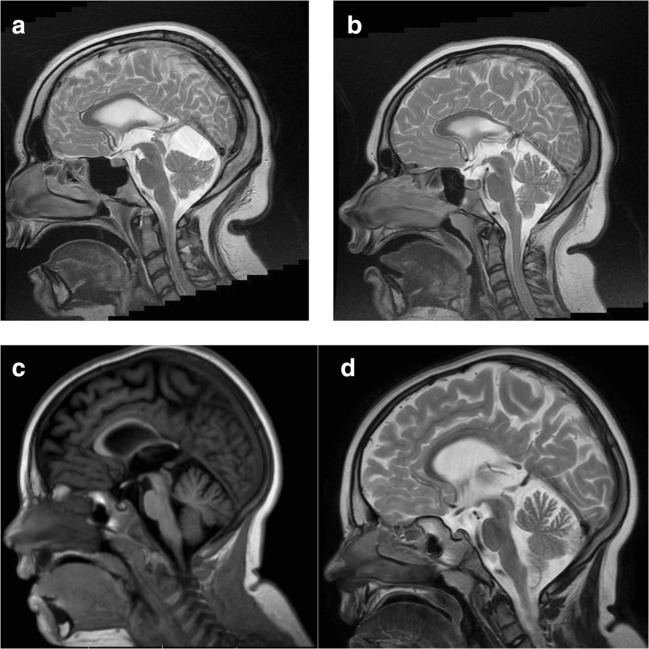
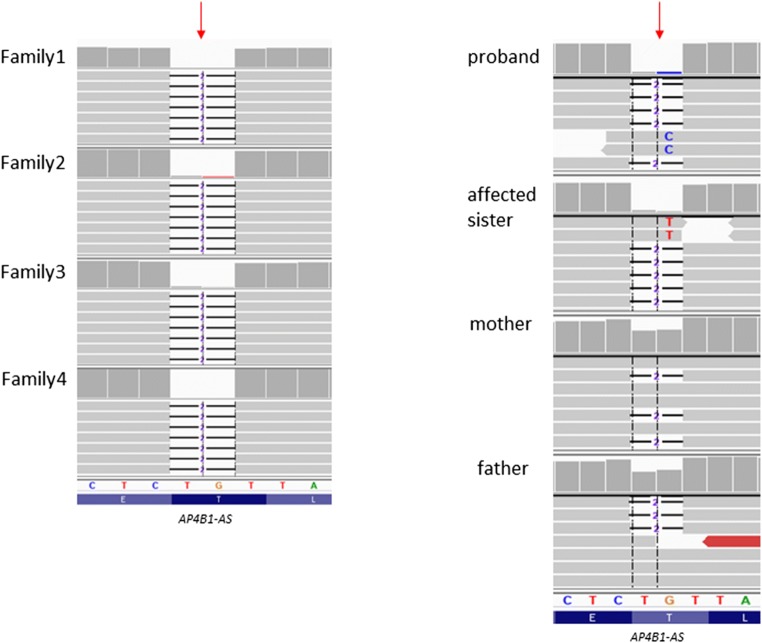
Biallelic mutations in the AP4B1 gene, encoding adaptor-related protein complex 4 beta-1 subunit, have been recognized as an important cause of a group of conditions leading to adaptor-related protein complex 4 (AP4)-associated hereditary spastic paraplegia (SPG47). We describe a homozygous, known variant c.1160_1161delCA (p.Thr387fs) that was found in the largest ever group of patients coming from four families. The patients exhibited early hypotonia progressing to spastic paraplegia, microcephaly, epilepsy, and central nervous system (CNS) defects and global developmental delay that are consistent with the nature of SPG47. Our findings expand phenotypic spectrum of SPG47 to include polymorphic seizures, mild/moderate intellectual disability, and intracerebral cysts as well as point to founder mutation in AP4 deficiency disorders in apparently non-consanguineous Polish families without shared ancestry.
AP4B1 基因中的双等位基因突变,该基因编码衔接相关蛋白复合物 4β-1 亚基,已被认为是导致衔接相关蛋白复合物 4(AP4)相关遗传性痉挛性截瘫(SPG47)的一组病症的重要原因。我们描述了一种纯合的、已知的变体 c.1160_1161delCA(p.Thr387fs),该变体在来自四个家庭的有史以来最大的一组患者中被发现。这些患者表现出早期肌张力低下,进展为痉挛性截瘫、小头畸形、癫痫和中枢神经系统(CNS)缺陷以及全面发育迟缓,这与 SPG47 的性质一致。我们的发现将 SPG47 的表型谱扩展到包括多形性癫痫发作、轻度/中度智力障碍和颅内囊肿,以及在没有共同祖先的明显非近亲波兰家庭中,AP4 缺乏症的创始突变。