Center for the Study of Complex Systems, University of Michigan, Ann Arbor, MI, USA.
Department of Pharmacology, University of Michigan, Ann Arbor, MI, USA.
Psychopharmacology (Berl). 2020 Apr;237(4):943-955. doi: 10.1007/s00213-020-05491-2. Epub 2020 Mar 13.
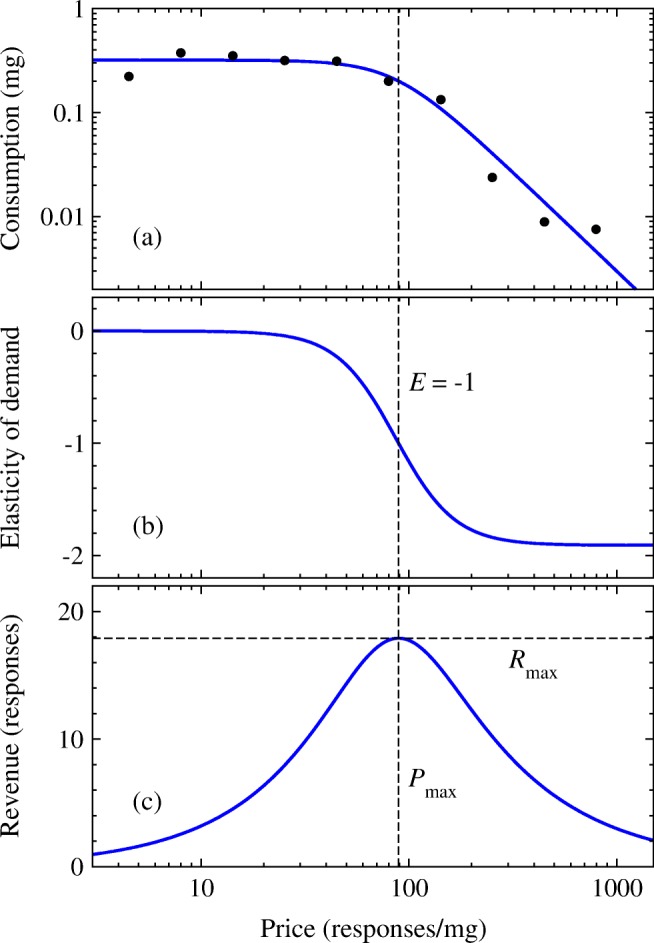
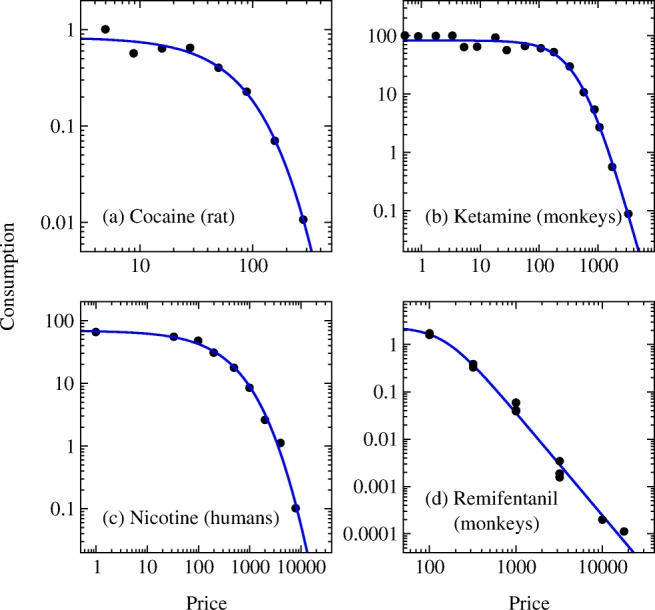
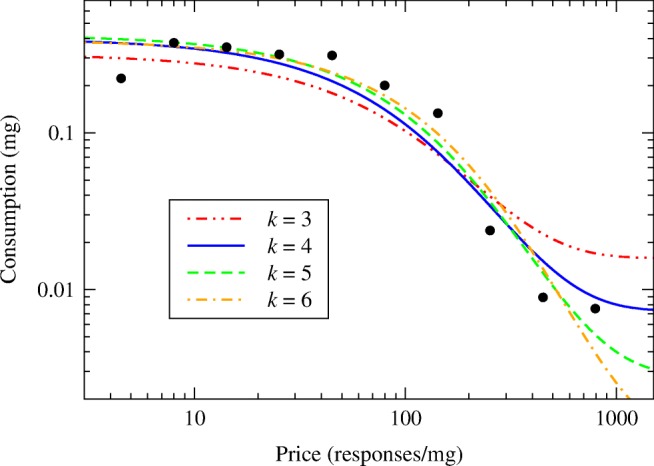
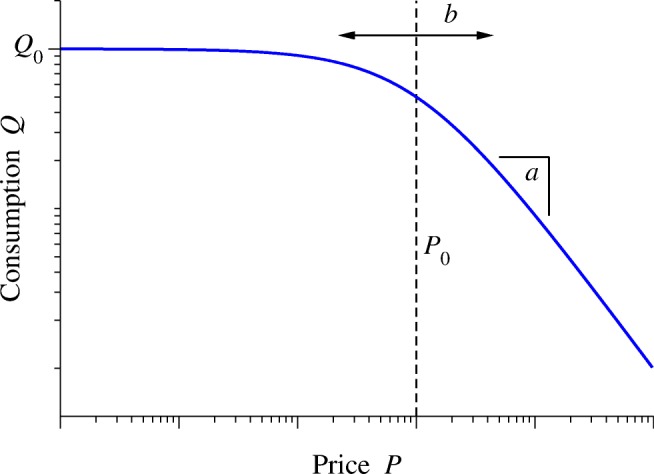
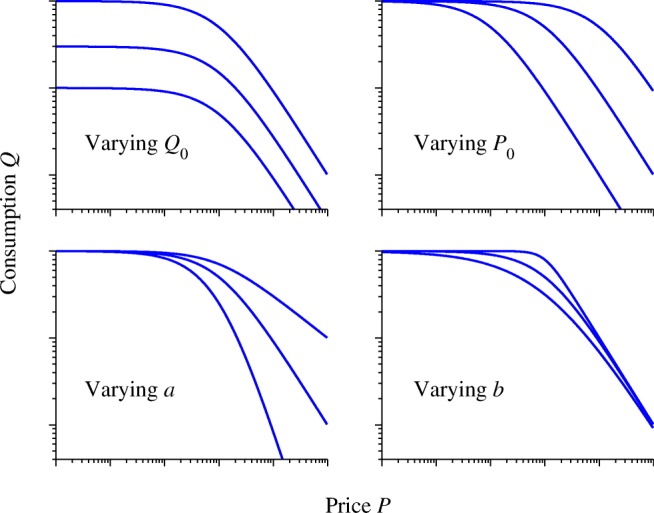
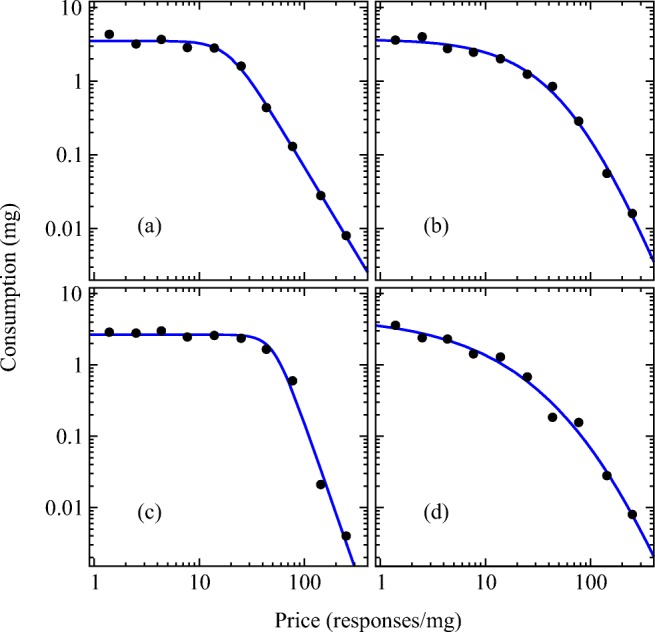
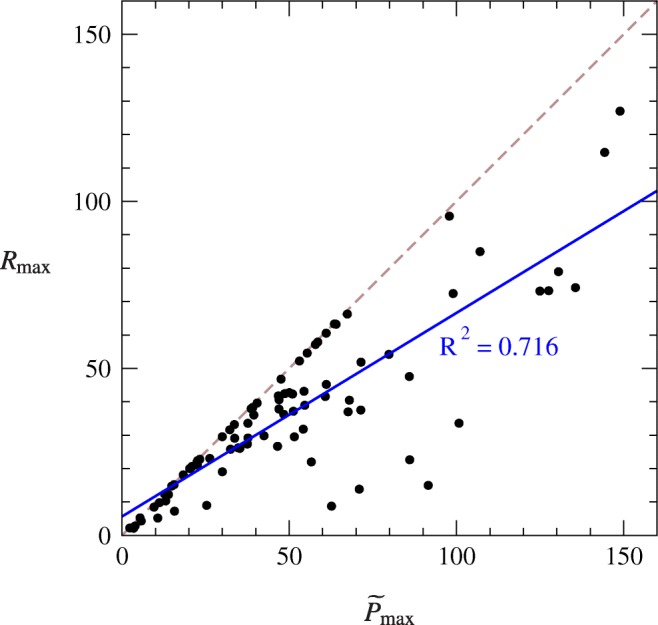
The incorporation of microeconomics concepts into studies using self-administration procedures has provided critical insights into the factors that influence consumption of a wide range of food and drug reinforcers. In particular, the fitting of demand curves to consumption data provides a powerful analytic tool for computing objective metrics of behavior that can be compared across a wide range of reward types in both human and animal experiments. The results of these analyses depend crucially on the mathematical form used to fit the data. The most common choice is an exponential form proposed by Hursh and Silberberg, which is widely used and has provided fundamental insights into relationships between cost and consumption, but it also has some disadvantages. In this paper, we first briefly review the use of demand curves to quantify the motivating effects of food and drugs, then we describe the current methodology and highlight some potential issues that arise in its application. To address these issues, we propose a new mathematical framework for the analysis of consumption data, including a new functional form for the demand curve. We show that this proposed form gives good fits to data for a range of different reinforcers and experimental protocols, while allowing for straightforward calculation of key metrics of demand, including preferred consumption level, maximum response, price at maximum response, and price elasticity of demand. We provide software implementing our entire analysis pipeline, including data fits, data visualization, and the calculation of demand metrics.
将微观经济学概念纳入使用自我给药程序的研究中,为影响广泛的食物和药物强化物消费的因素提供了重要的见解。特别是,将需求曲线拟合到消费数据为计算行为的客观指标提供了强大的分析工具,这些指标可以在人类和动物实验中广泛的奖励类型之间进行比较。这些分析的结果在很大程度上取决于用于拟合数据的数学形式。最常见的选择是 Hursh 和 Silberberg 提出的指数形式,它被广泛使用,并为成本与消费之间的关系提供了基本的见解,但它也有一些缺点。在本文中,我们首先简要回顾了使用需求曲线来量化食物和药物的动机效应,然后描述了当前的方法,并强调了其应用中出现的一些潜在问题。为了解决这些问题,我们提出了一种新的消费数据分析的数学框架,包括需求曲线的新函数形式。我们表明,这种建议的形式可以很好地拟合不同强化物和实验方案的数据集,同时允许直接计算需求的关键指标,包括偏好消费水平、最大反应、最大反应时的价格和需求价格弹性。我们提供了实现我们整个分析流程的软件,包括数据拟合、数据可视化和需求指标的计算。