Institute of Neuroanatomy and Cell Biology, Hannover Medical School, Hannover, Germany.
Center for Systems Neuroscience, Hannover, Germany.
Cell Transplant. 2020 Jan-Dec;29:963689720910095. doi: 10.1177/0963689720910095.
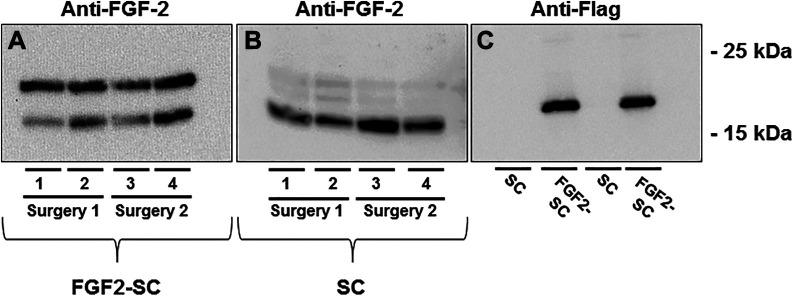
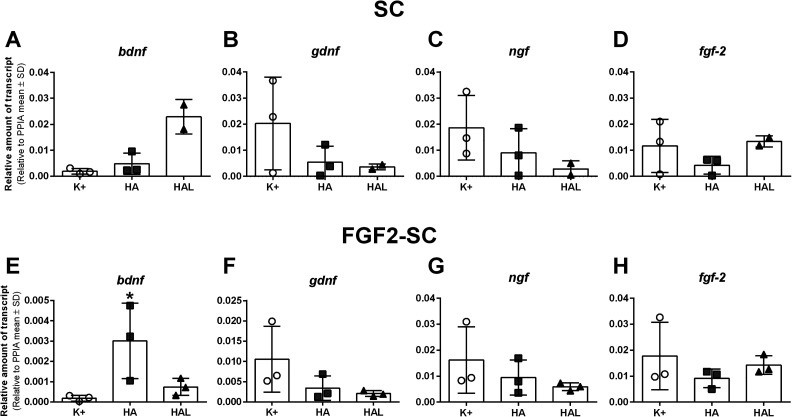
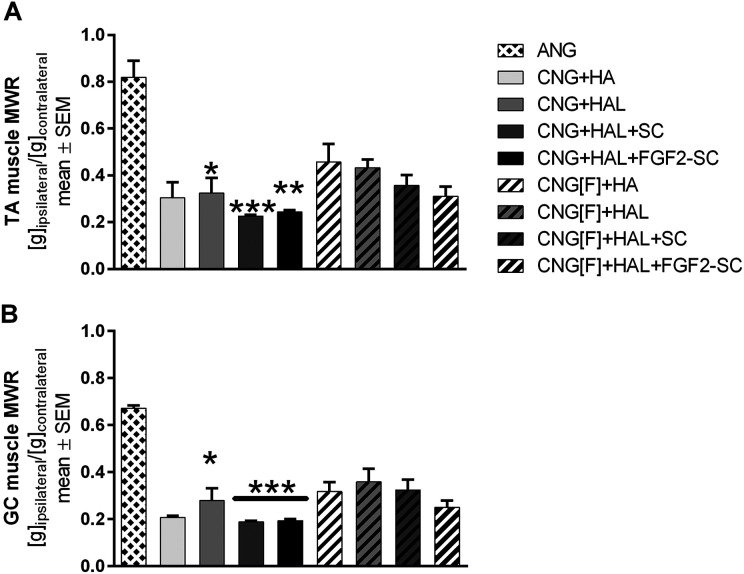
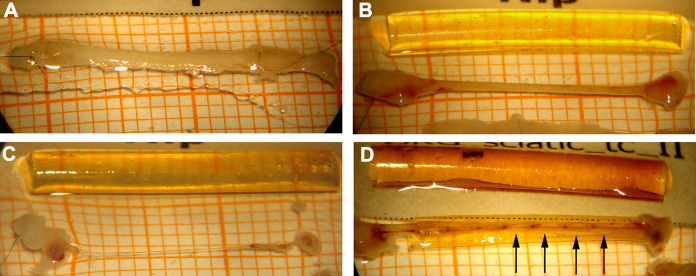
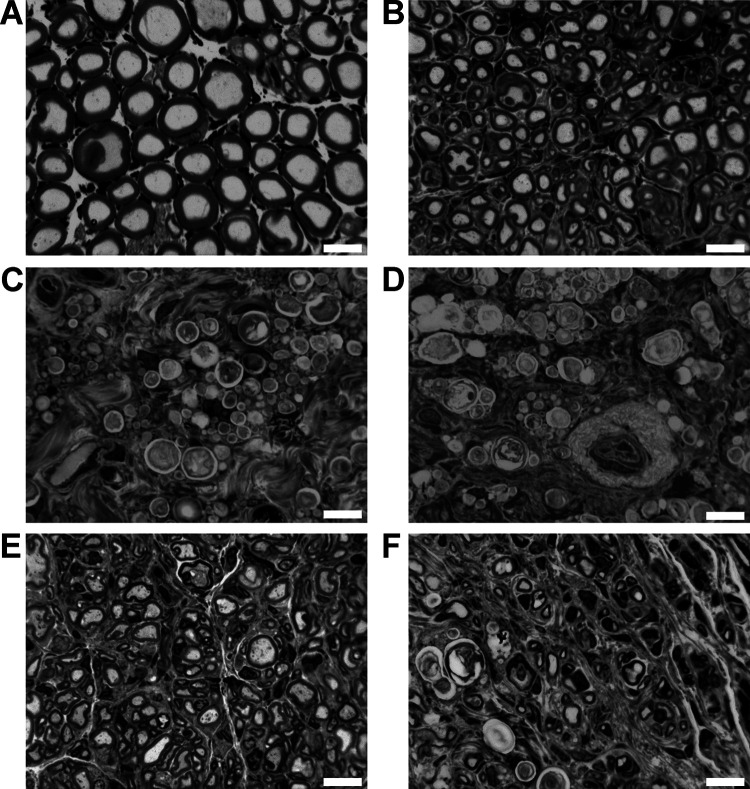
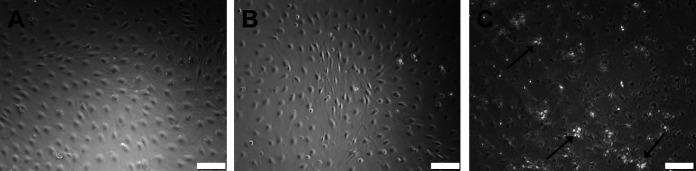
In the current study we investigated the suitability of a novel hyaluronic acid-laminin hydrogel (HAL) as luminal filler and carrier system for co-transplanted cells within a composite chitosan-based nerve graft (CNG) in a rat critical nerve defect model. The HAL was meant to improve the performance of our artificial nerve guides by giving additional structural and molecular support to regrowing axons. We filled hollow CNGs or two-chambered nerve guides with an inserted longitudinal chitosan film (CNG[F]s), with cell-free HAL or cell-free HA or additionally suspended either naïve Schwann cells (SCs) or fibroblast growth factor 2-overexpressing Schwann cells (FGF2-SCs) within the gels. We subjected female Lewis rats to immediate 15 mm sciatic nerve gap reconstruction and comprehensively compared axonal and functional regeneration parameters with the gold standard autologous nerve graft (ANG) repair. Motor recovery was surveyed by means of electrodiagnostic measurements at 60, 90, and 120 days post-reconstruction. Upon explantation after 120 days, lower limb target muscles were harvested for calculation of muscle-weight ratios. Semi-thin cross-sections of nerve segments distal to the grafts were evaluated histomorphometrically. After 120 days of recovery, only ANG treatment led to full motor recovery. Surprisingly, regeneration outcomes revealed no regeneration-supportive effect of HAL alone and even an impairment of peripheral nerve regeneration when combined with SCs and FGF2-SCs. Furthermore, complementary in vitro studies, conducted to elucidate the reason for this unexpected negative result, revealed that SCs and FGF2-SCs suspended within the hydrogel relatively downregulated gene expression of regeneration-supporting neurotrophic factors. In conclusion, cell-free HAL in its current formulation did not qualify for optimizing regeneration outcome through CNG[F]s. In addition, we demonstrate that our HAL, when used as a carrier system for co-transplanted SCs, changed their gene expression profile and deteriorated the pro-regenerative milieu within the nerve guides.
在当前的研究中,我们研究了一种新型的透明质酸-层粘连蛋白水凝胶(HAL)作为内腔填充物和载体系统,用于在大鼠临界神经缺损模型中的复合壳聚糖基神经移植物(CNG)内共移植细胞。HAL 的目的是通过为再生轴突提供额外的结构和分子支持来提高我们的人工神经导管的性能。我们用无细胞 HAL 或无细胞 HA 填充中空的 CNG 或双室神经导管,或在凝胶中另外悬浮未成熟雪旺细胞(SCs)或成纤维细胞生长因子 2 过表达雪旺细胞(FGF2-SCs)。我们使雌性 Lewis 大鼠立即接受 15mm 坐骨神经间隙重建,并通过电诊断测量在 60、90 和 120 天的重建后全面比较轴突和功能再生参数与金标准自体神经移植物(ANG)修复。通过电诊断测量在 60、90 和 120 天的重建后调查运动恢复情况。在 120 天的植入后,取出下肢靶肌肉用于计算肌肉重量比。对移植物远端的神经节段进行半薄横切片进行组织形态计量学评估。在 120 天的恢复后,只有 ANG 治疗导致完全运动恢复。令人惊讶的是,再生结果表明 HAL 单独没有促进再生的作用,甚至与 SCs 和 FGF2-SCs 结合使用时会损害周围神经再生。此外,为阐明这一意外负面结果的原因而进行的补充体外研究表明,悬浮在水凝胶中的 SCs 和 FGF2-SCs 相对下调了支持再生的神经营养因子的基因表达。总之,目前配方的无细胞 HAL 不适合通过 CNG[F]s 优化再生结果。此外,我们证明,当我们将 HAL 用作共移植 SC 的载体系统时,它改变了它们的基因表达谱,并恶化了神经导管内的促再生环境。