Dai Wentao, Liu Jixiang, Liu Bingya, Li Quanxue, Sang Qingqing, Li Yuan-Yuan
Shanghai Center for Bioinformation Technology, Shanghai, China.
Shanghai Key Laboratory of Gastric Neoplasms, Department of Surgery, Shanghai Institute of Digestive Surgery, Ruijin Hospital, Shanghai Jiao Tong University School of Medicine, Shanghai, China.
Front Mol Biosci. 2020 Feb 25;7:19. doi: 10.3389/fmolb.2020.00019. eCollection 2020.
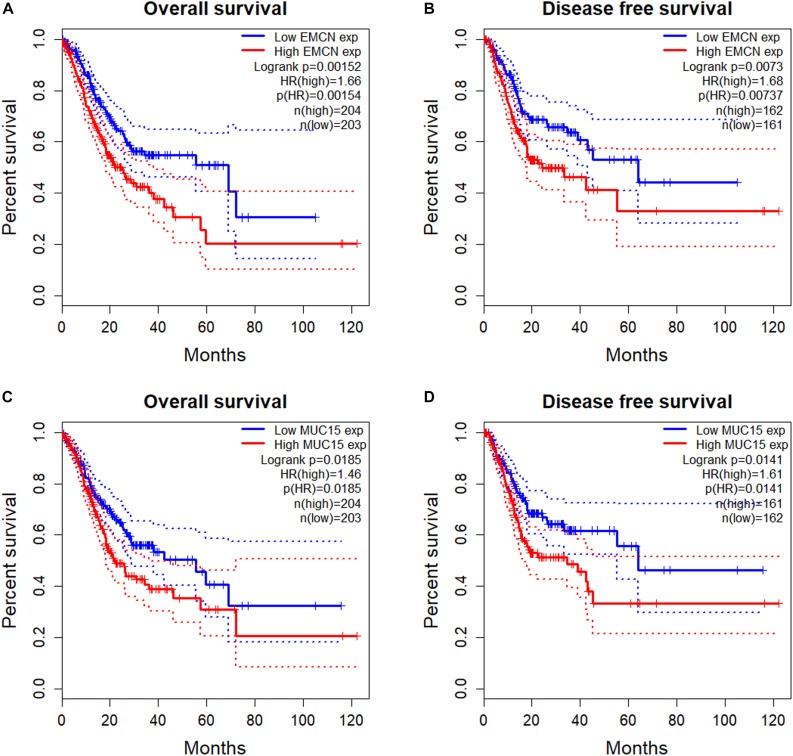
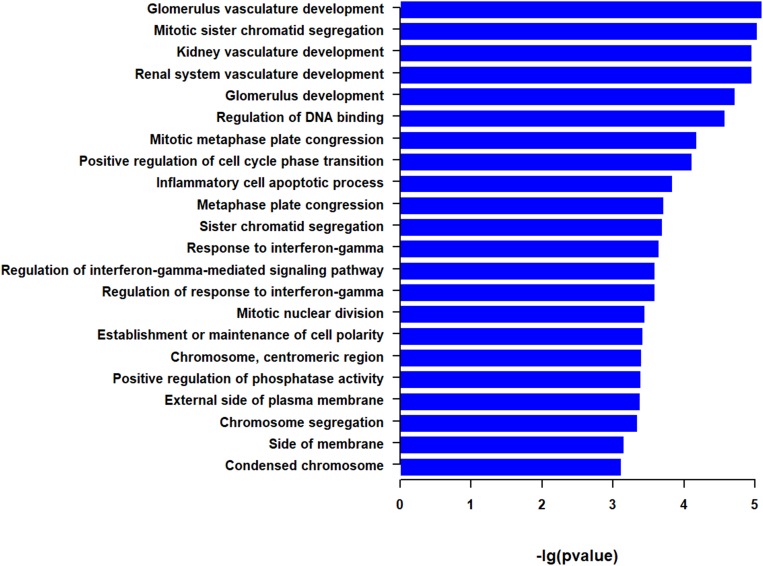
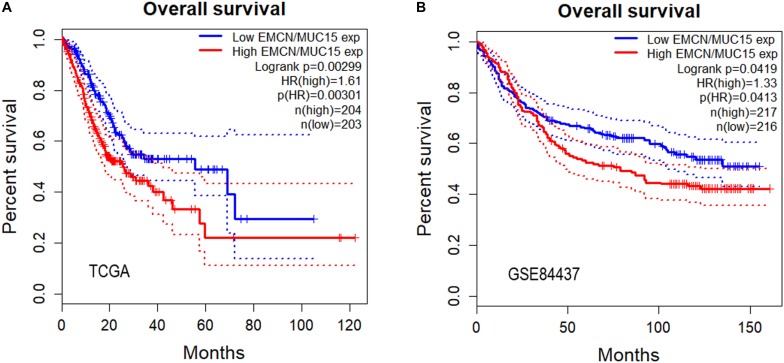
Digestive cancers-including gastric cancer (GC), colorectal cancer, hepatocellular carcinoma, esophageal cancer, and pancreatic cancer-accounted for 26% of cancer cases and 35% of cancer deaths worldwide in 2018. It is crucial and urgent to develop biomarkers for the diagnosis, prognosis, and therapeutic benefits of digestive cancers, especially for GC, since the incidence of GC is lower only than lung cancer in China, is hard to detect at an early stage, and is associated with poor prognosis. Mucins, glycoproteins encoded by MUC family genes, act as a part of a physical barrier in the digestive tract and participate in various signaling pathways. Some mucins have been used or proposed as biomarkers for carcinomas, such as MUC16 (CA125) and MUC4. However, there are no systematic investigations on the association of MUC family members with diagnoses and clinical outcomes even though relevant data have been largely accumulated in the past decade. By analyzing transcriptomic and clinical data of digestive cancer samples from TCGA involving colon adenocarcinoma (COAD), esophageal carcinoma (ESCA), liver hepatocellular carcinoma (LIHC), stomach adenocarcinoma (STAD), and pancreatic adenocarcinoma (PAAD), it was found that expressions levels of , , and were individually associated with survival for digestive cancers, and high expressions of (MUC14) and were correlated with poor survival for STAD. Cox regression analysis indicated the predictive power of an / combination for overall survival (OS) of GC patients, which was validated on an independent dataset from GEO. EMCN/MUC15 correlated genes were identified to be enriched in cancer-related processes, such as vasculature development, mitosis, and immunity. Therefore, we propose that an / combination could be a potential prognostic signature for gastric cancer.
消化系统癌症,包括胃癌(GC)、结直肠癌、肝细胞癌、食管癌和胰腺癌,在2018年占全球癌症病例的26%和癌症死亡人数的35%。开发用于消化系统癌症诊断、预后和治疗益处的生物标志物至关重要且紧迫,尤其是对于胃癌,因为在中国胃癌发病率仅次于肺癌,早期难以检测,且预后较差。粘蛋白是由MUC家族基因编码的糖蛋白,作为消化道物理屏障的一部分,参与各种信号通路。一些粘蛋白已被用作或被提议作为癌症的生物标志物,如MUC16(CA125)和MUC4。然而,尽管在过去十年中已经大量积累了相关数据,但对于MUC家族成员与诊断和临床结果之间的关联尚无系统研究。通过分析来自TCGA的消化系统癌症样本的转录组和临床数据,这些样本涉及结肠腺癌(COAD)、食管癌(ESCA)、肝细胞癌(LIHC)、胃腺癌(STAD)和胰腺腺癌(PAAD),发现 、 和 的表达水平分别与消化系统癌症的生存相关,而 (MUC14)和 的高表达与STAD的不良生存相关。Cox回归分析表明 / 组合对GC患者总生存(OS)的预测能力,这在来自GEO的独立数据集中得到了验证。EMCN/MUC15相关基因被鉴定为在血管生成、有丝分裂和免疫等癌症相关过程中富集。因此,我们提出 / 组合可能是胃癌的一种潜在预后标志物。