Department of Orthopedic Surgery, The First Affiliated Hospital of Chongqing Medical University, Chongqing, China.
Department of Pain Management, The First Affiliated Hospital of Chongqing Medical University, Chongqing, China.
BMC Musculoskelet Disord. 2020 Mar 16;21(1):172. doi: 10.1186/s12891-020-03196-3.
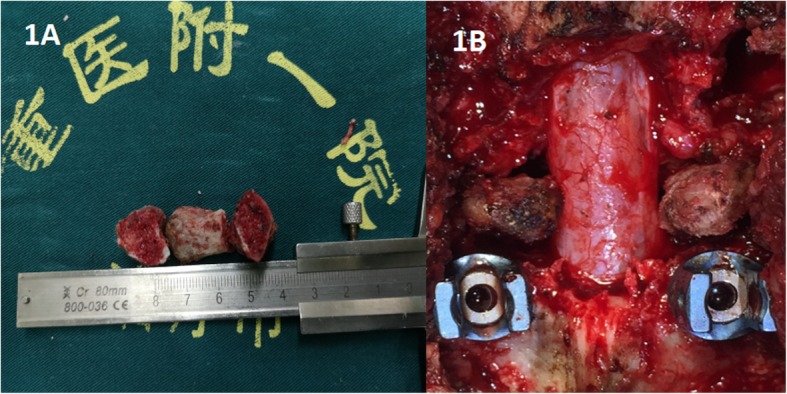
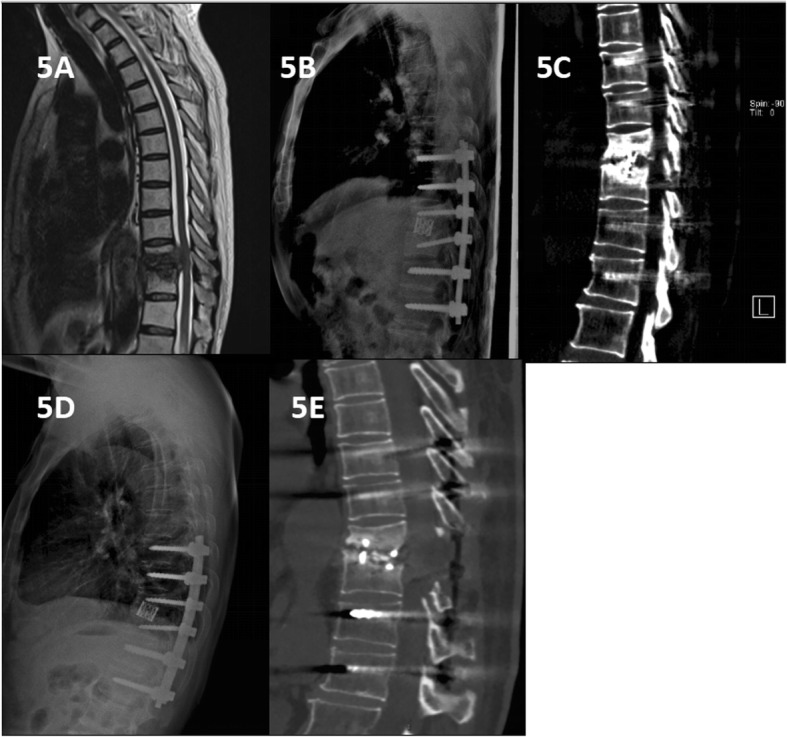
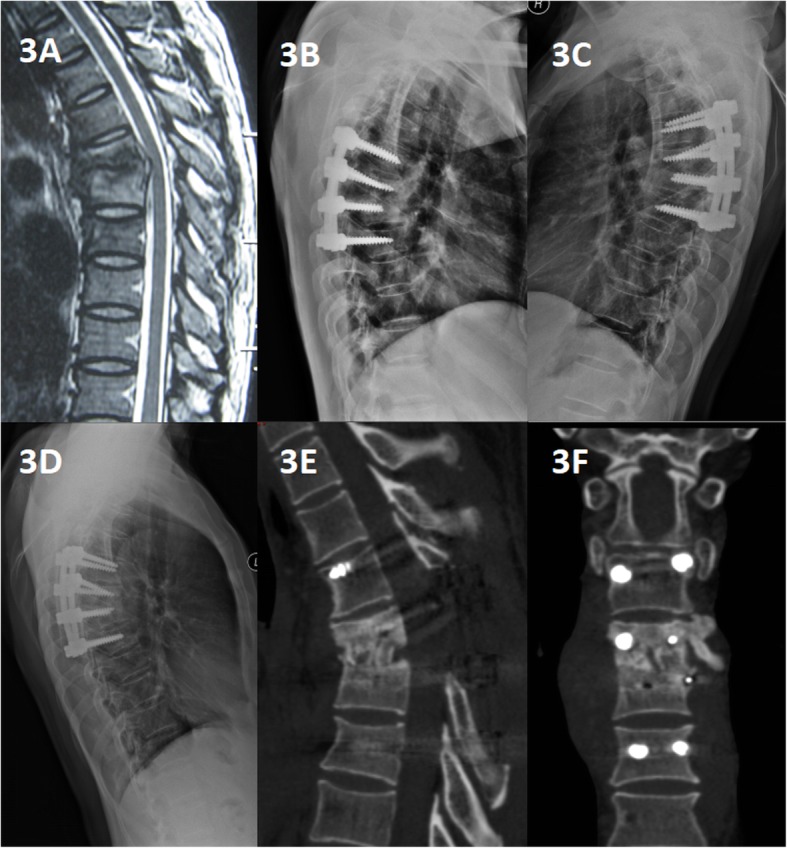
A retrospective and comparative study of transverse process strut (TPS, Group A) compared with titanium mesh cages (TMCs, Group B) in the reconstruction of thoracic stability through the one-stage posterior approach to treat single-segment tuberculosis.
Sixty patients from January 2013 to December 2016 were analyzed and divided into two groups. The following data of clinical and radiographical assessments were observed preoperatively, postoperatively and during follow-up (FU).
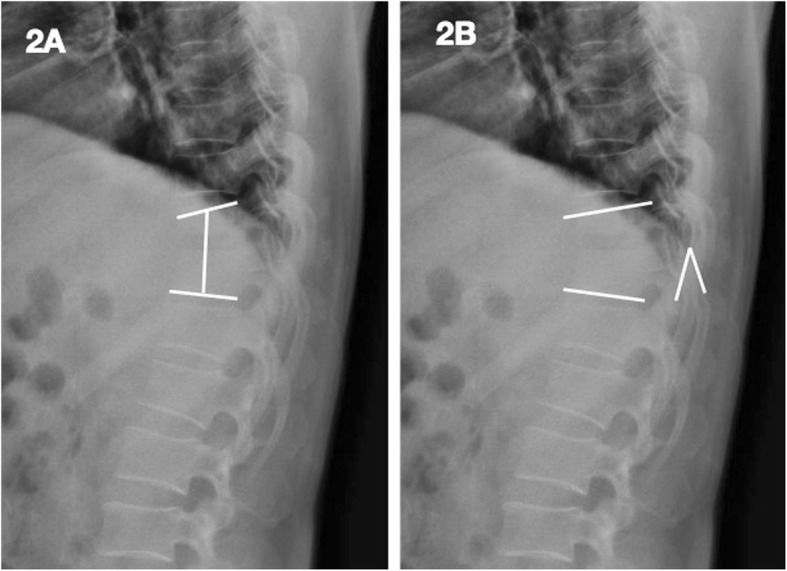
The patients were followed up for an average of 50.20 ± 25.10 months (Group A) and 48.70 ± 27.30 months(Group B) without significant difference. No significant differences were found in the mean of operation time in minutes, blood loss, hospitalization time, drainage and follow-up duration between the groups. The VAS, ODI, ESR and CRP were reduced significantly at the final FU compared with the preoperation values and there was no significance between the groups. Neurological deficits were improved in all patients at the final FU without significant difference between the groups(P > 0.05). The bony fusion times were 5.85 ± 1.82 months and 8.4 ± 5.1 months with significant difference(P < 0.05). Comparing with the preoperative values, the kyphosis angle significantly improved, but at the final FU the significant difference was found between the groups (P < 0.05). The loss of the angular correction and the fused segmental height in group A was lower than that in group B (P < 0.05).
TPS had a better osseous fusion rate, effective maintenance of fused segment stability which is a good bone graft for surgical management of single-segment thoracic spinal tuberculosis.
回顾性对比研究采用经后路一期手术治疗单节段脊柱结核,比较横突间支柱(TPS,A 组)与钛网 cage(TMC,B 组)在重建胸段稳定性方面的疗效。
对 2013 年 1 月至 2016 年 12 月期间的 60 例患者进行分析,分为两组。观察术前、术后和随访期间(FU)的临床和影像学评估的以下数据。
患者平均随访 50.20±25.10 个月(A 组)和 48.70±27.30 个月(B 组),无显著差异。两组间手术时间、失血量、住院时间、引流和随访时间的平均值无显著差异。与术前相比,终末 FU 时 VAS、ODI、ESR 和 CRP 均显著降低,两组间无显著性差异。所有患者的神经功能缺损在终末 FU 时均得到改善,两组间无显著性差异(P>0.05)。骨融合时间分别为 5.85±1.82 个月和 8.4±5.1 个月,差异有统计学意义(P<0.05)。与术前相比,后凸角显著改善,但终末 FU 时两组间差异有统计学意义(P<0.05)。A 组的角度矫正丢失和融合节段高度丢失均低于 B 组(P<0.05)。
TPS 具有更高的骨融合率,能有效维持融合节段的稳定性,是治疗单节段胸段脊柱结核的良好植骨材料。