University of Bristol, School of Physiology, Pharmacology & Neuroscience, Biomedical Sciences Building, University Walk, Bristol, BS8 1TD, UK.
School of Veterinary Sciences, University of Bristol, Langford House, Langford, Bristol BS40 5DU, UK.
Psychoneuroendocrinology. 2020 May;115:104647. doi: 10.1016/j.psyneuen.2020.104647. Epub 2020 Mar 7.
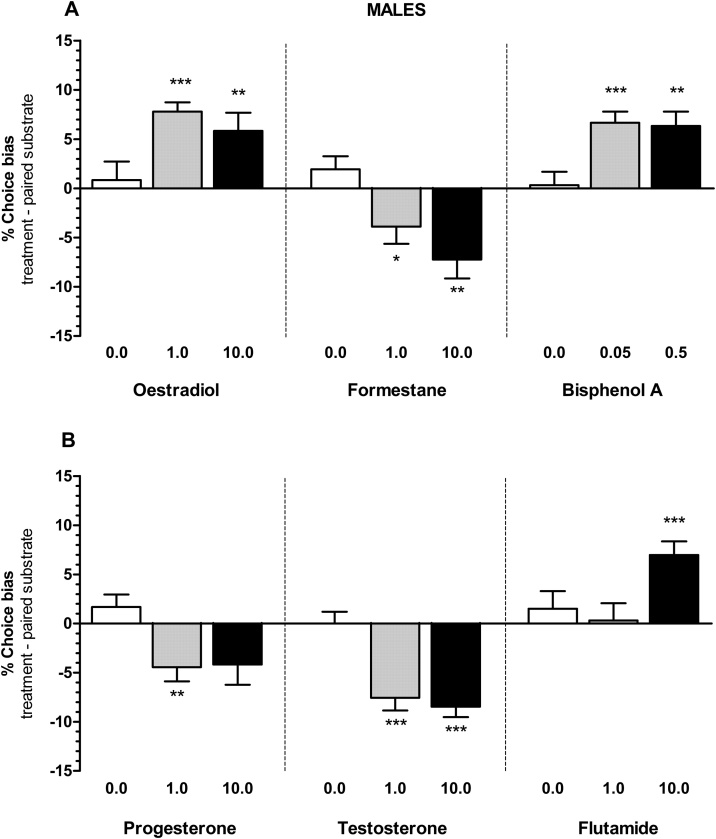
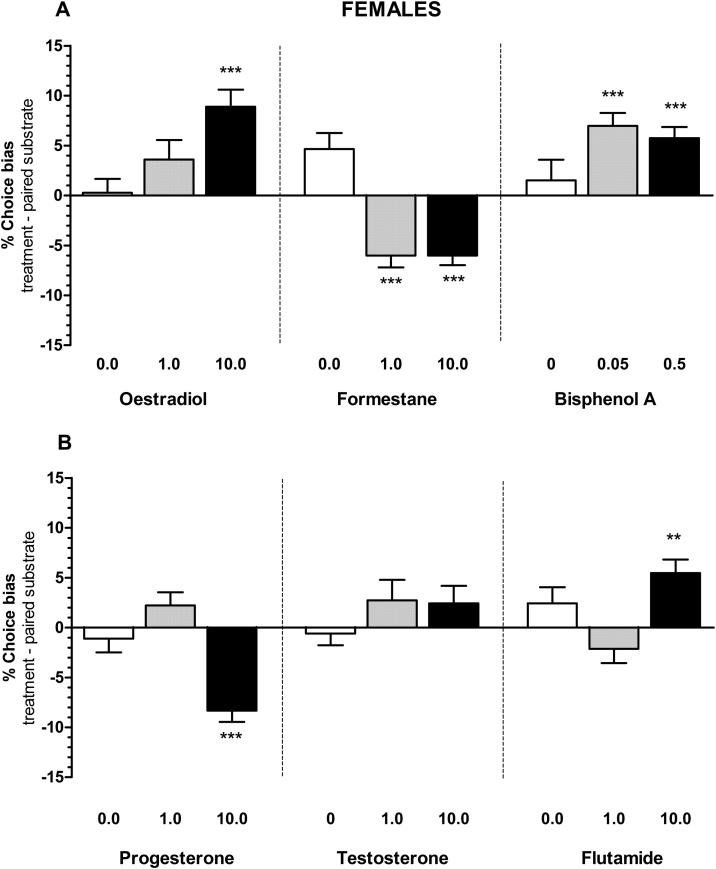
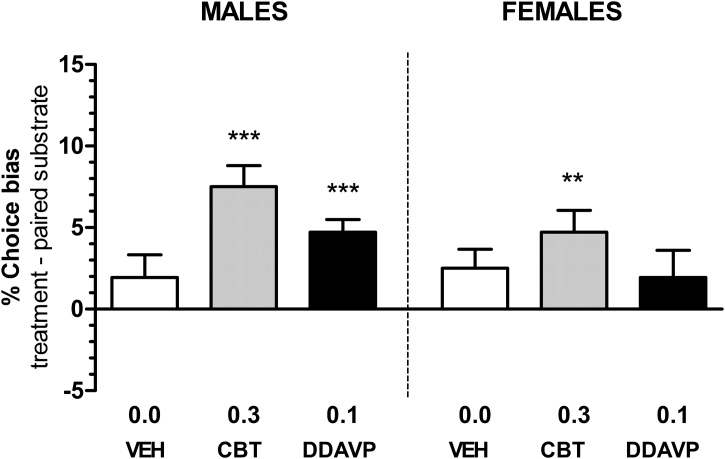
Recent clinical and pre-clinical research suggests that affective biases may play an important role in the development and perpetuation of mood disorders. Studies in animals have also revealed that similar neuropsychological processes can be measured in non-human species using behavioural assays designed to measure biases in learning and memory or decision-making. Given the proposed links between hormones and mood, we used the affective bias test to investigate the effects of different hormone treatments in both male and female rats. Animals were pre-treated with acute doses of hormone or vehicle control prior to learning each of two independent substrate-reward associations. During a subsequent choice test, positive or negative biases were observed by animal's preference towards or away from the substrate learnt during drug treatment respectively. In both sexes, oestradiol and the oestrogen-like compound bisphenol A induced positive biases, whilst blockade of oestrogen hormones with formestane induced a negative bias. Progesterone induced a negative bias in both sexes, but testosterone only induced a negative bias in males. Blocking testosterone with flutamide induced a positive bias in both sexes at the higher dose (10 mg/kg). The oxytocin analogue, carbetocin induced positive biases in both sexes but the vasopressin analogue, desmopressin, induced a positive bias in male rats only. These results provide evidence that modulating levels of hormones using exogenous treatments can induce affective biases in rats. They also suggest that hormone-induced affective biases influence cognitive and emotional behaviour and could have longer-term effects in some mood disorders.
最近的临床和临床前研究表明,情感偏见可能在情绪障碍的发展和持续中起着重要作用。动物研究还表明,使用旨在测量学习和记忆或决策偏见的行为测定法,可以在非人类物种中测量类似的神经心理学过程。鉴于激素和情绪之间的拟议联系,我们使用情感偏见测试来研究不同激素处理对雄性和雌性大鼠的影响。动物在学习两种独立的基质-奖励关联之前,先用激素或载体对照进行急性剂量预处理。在随后的选择测试中,通过动物对药物治疗期间学习的基质的偏好,观察到正或负的偏见。在两性中,雌激素和类雌激素化合物双酚 A 诱导正偏见,而用福美司坦阻断雌激素激素诱导负偏见。孕酮在两性中均诱导负偏见,但睾酮仅在雄性中诱导负偏见。用氟他胺阻断睾酮在较高剂量(10mg/kg)下在两性中诱导正偏见。催产素类似物卡贝缩宫素在两性中均诱导正偏见,但加压素类似物去氨加压素仅在雄性大鼠中诱导正偏见。这些结果提供了证据表明,使用外源性处理来调节激素水平可以在大鼠中诱导情感偏见。它们还表明,激素诱导的情感偏见会影响认知和情绪行为,并可能在某些情绪障碍中产生长期影响。