CAS Key Laboratory of Marine Ecology and Environmental Sciences, Institute of Oceanology, Chinese Academy of Sciences, Qingdao, China.
Laboratory for Marine Ecology and Environmental Science, Qingdao National Laboratory for Marine Science and Technology, Qingdao, China.
Microbiologyopen. 2020 Jun;9(6):1207-1224. doi: 10.1002/mbo3.1031. Epub 2020 Mar 16.
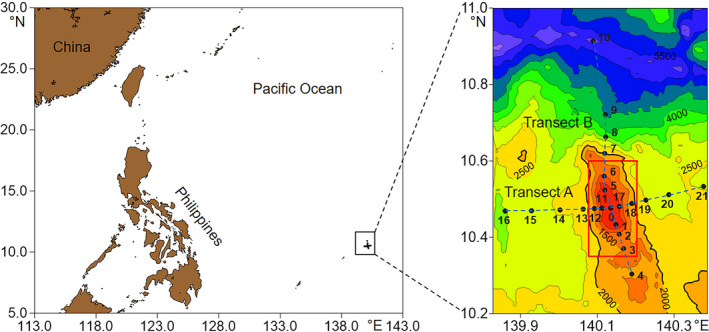
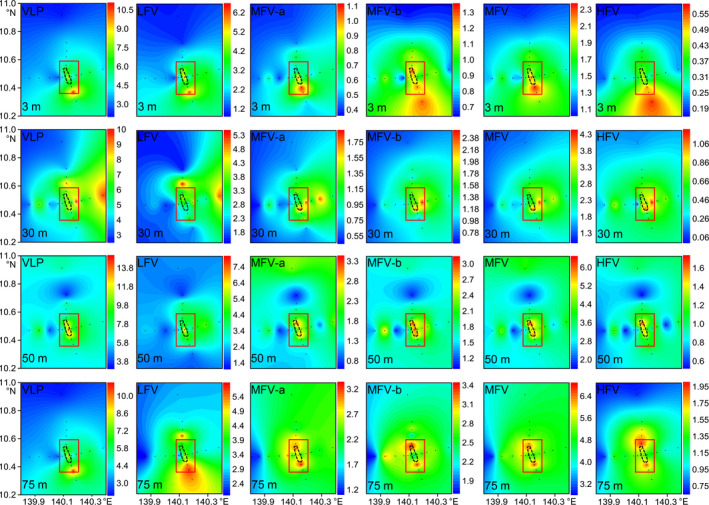
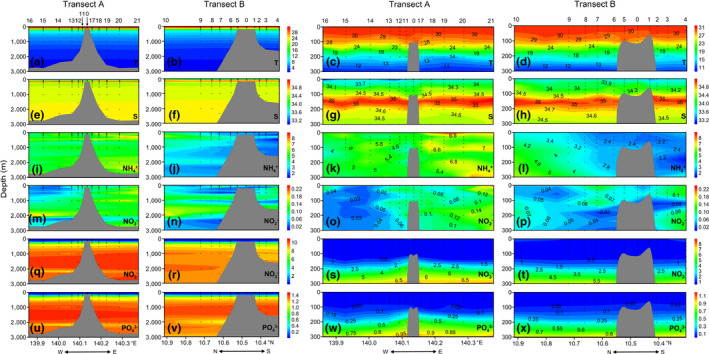
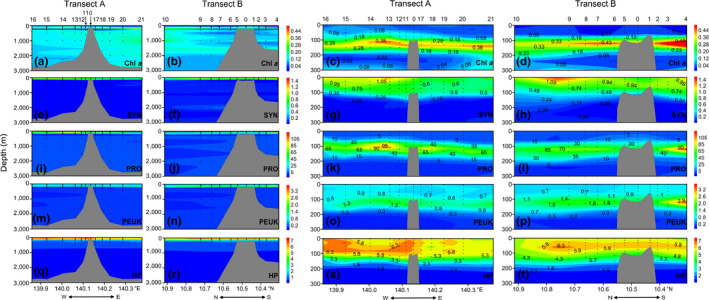
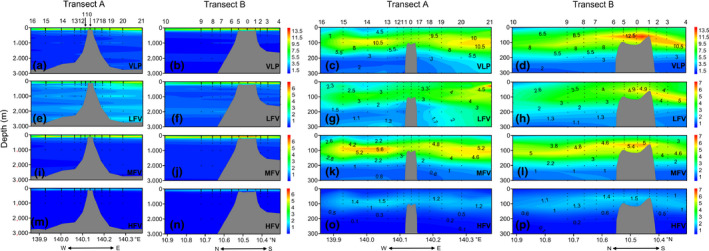
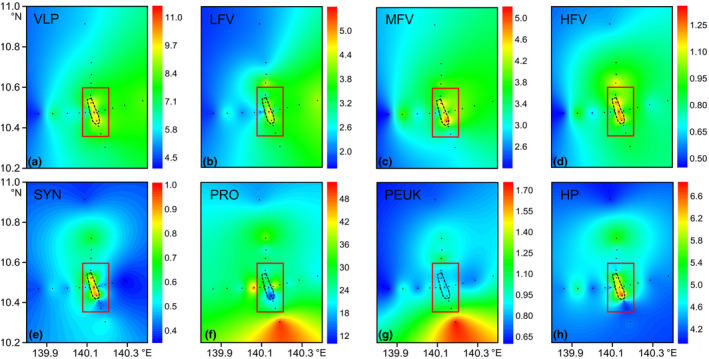
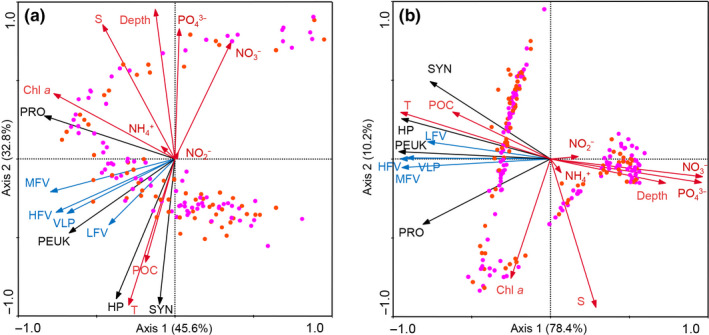
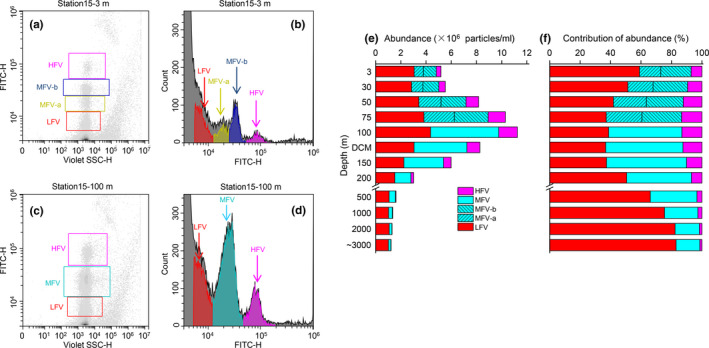
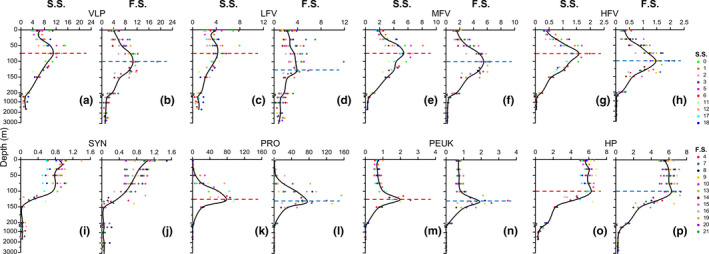
The shallow Caroline Seamount is located in the tropical western Pacific Ocean. Its summit is 57 m below the surface and penetrates the euphotic zone. Therefore, it is ideal for the study of the influence of seamount on plankton distribution. Here, virioplankton abundance and distribution were investigated by flow cytometry (FCM) in the Caroline Seamount in August and September 2017. The total abundance of virus-like particles (VLP) was in the range of 0.64 × 10 -18.77 × 10 particles/ml and the average was 5.37 ± 3.75 × 10 particles/ml. Three to four distinct viral subclusters with similar side scatter but different green fluorescence intensities were identified. Above the deep chlorophyll maximum (DCM), two medium fluorescence virus (MFV) subclusters were discriminated. Between the DCM and the deeper layers, only one MFV subcluster was resolved. In general, low fluorescence viruses (LFV) comprised the most abundant subclusters. In the 75-150 m water column, however, the MFV abundance was higher than the LFV abundance. High fluorescence viruses (HFV) constituted the least abundant subcluster throughout the entire water column. Virioplankton abundance was significantly enhanced at the seamount stations. Environmental factors including water temperature and nitrate concentration were the most correlated with the variation in virioplankton abundance at the seamount stations. Interactions between shallow seamounts and local currents can support large virus standing stocks, causing a so-called indirect "seamount effect" on the virioplankton.
浅卡罗琳海山位于热带西太平洋,山顶位于海面以下 57 米,穿透了真光层。因此,它是研究海山对浮游生物分布影响的理想场所。本研究于 2017 年 8 月和 9 月使用流式细胞仪(FCM)对卡罗琳海山的病毒浮游生物丰度和分布进行了调查。病毒样颗粒(VLP)的总丰度在 0.64×10 -18.77×10 颗粒/ml 之间,平均值为 5.37±3.75×10 颗粒/ml。鉴定出三个到四个具有相似侧向散射但不同绿色荧光强度的不同病毒亚群。在深叶绿素最大值(DCM)上方,区分出两个中等荧光病毒(MFV)亚群。在 DCM 和更深的层之间,只解析出一个 MFV 亚群。一般来说,低荧光病毒(LFV)构成了最丰富的亚群。然而,在 75-150 米水柱中,MFV 的丰度高于 LFV。高荧光病毒(HFV)构成了整个水柱中最丰富的亚群。病毒浮游生物丰度在海山站显著增加。包括水温和硝酸盐浓度在内的环境因素与海山站病毒浮游生物丰度的变化最相关。浅海山和局部流之间的相互作用可以支持大量的病毒库存,从而对病毒浮游生物产生所谓的间接“海山效应”。