Diness Jonas Goldin, Kirchhoff Jeppe Egedal, Speerschneider Tobias, Abildgaard Lea, Edvardsson Nils, Sørensen Ulrik S, Grunnet Morten, Bentzen Bo Hjorth
Department of In Vivo Pharmacology, Acesion Pharma, Copenhagen, Denmark.
Department of Biomedical Sciences, Faculty of Health and Medical Sciences, University of Copenhagen, Copenhagen, Denmark.
Front Pharmacol. 2020 Feb 28;11:159. doi: 10.3389/fphar.2020.00159. eCollection 2020.
To describe the effects of the K2 channel inhibitor AP30663 in pigs regarding tolerability, cardiac electrophysiology, pharmacokinetics, atrial functional selectivity, effectiveness in cardioversion of tachy-pacing induced vernakalant-resistant atrial fibrillation (AF), and prevention of reinduction of AF.
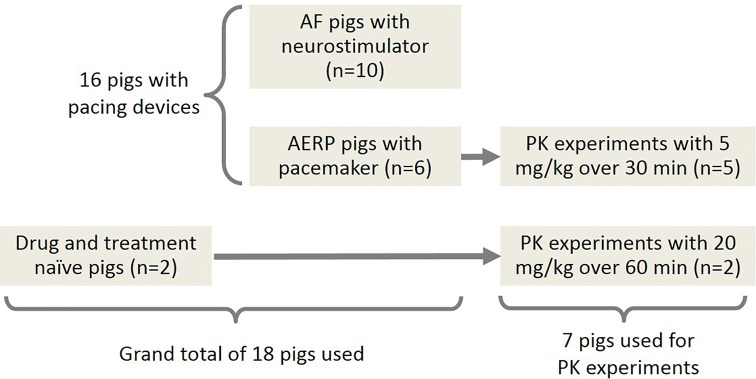
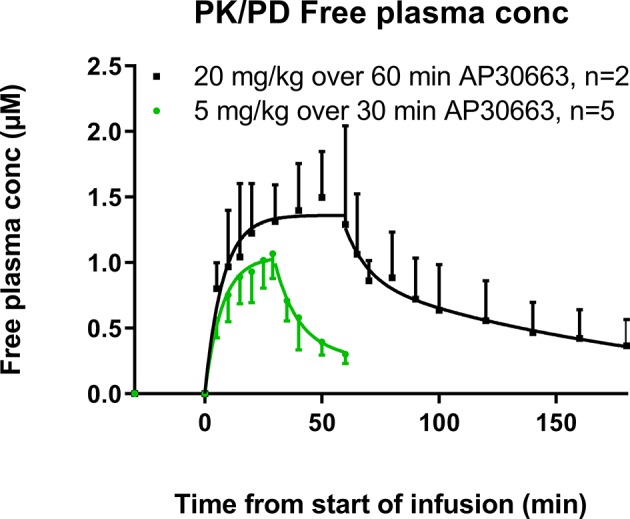
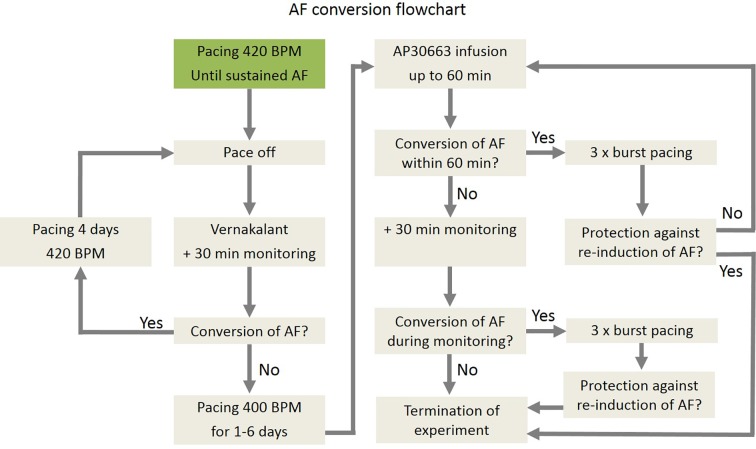
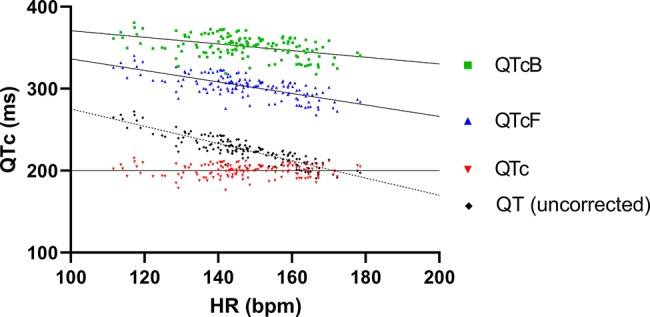
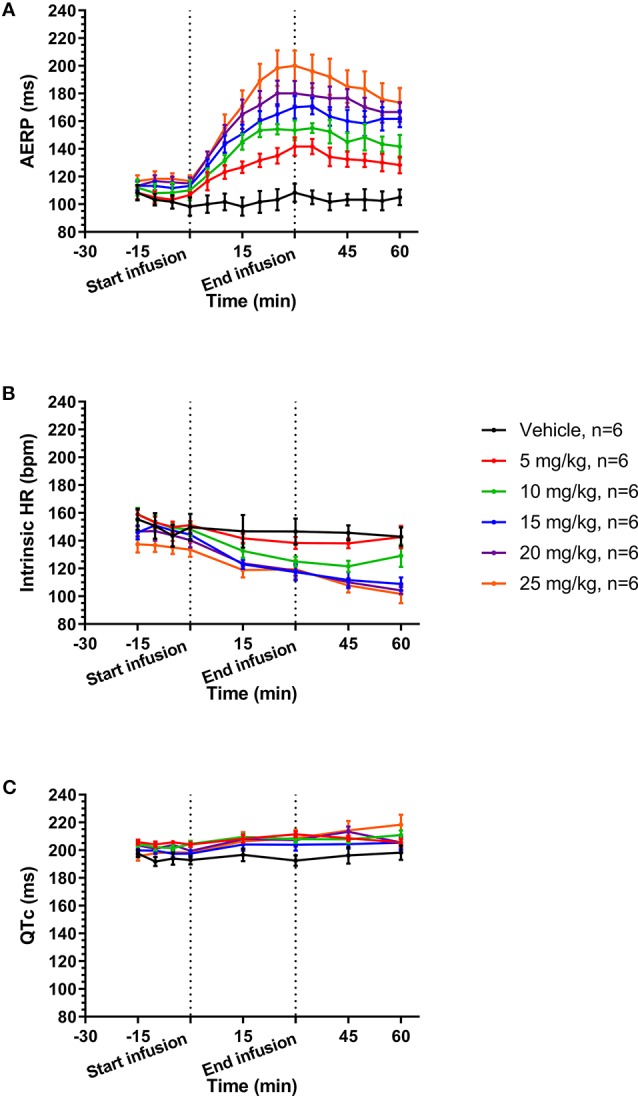
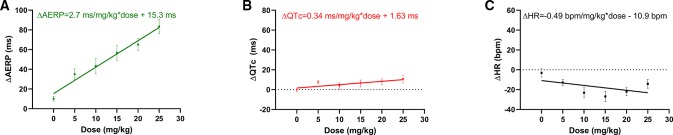
Six healthy pigs with implanted pacemakers and equipped with a Holter monitor were used to compare the effects of increasing doses (0, 5, 10, 15, 20, and 25 mg/kg) of AP30663 on the right atrial effective refractory period (AERP) and on various ECG parameters, including the QT interval. Ten pigs with implanted neurostimulators were long-term atrially tachypaced (A-TP) until sustained vernakalant-resistant AF was present. 20 mg/kg AP30663 was tested to discover if it could successfully convert vernakalant-resistant AF to sinus rhythm (SR) and protect against reinduction of AF. Seven anesthetized pigs were used for pharmacokinetic experiments. Two pigs received an infusion of 20 mg/kg AP30663 over 60 min while five pigs received 5 mg/kg AP30663 over 30 min. Blood samples were collected before, during, and after infusion on AP30663. AP30663 was well-tolerated and prominently increased the AERP in pigs with little effect on ventricular repolarization. Furthermore, it converted A-TP induced AF that had become unresponsive to vernakalant, and it prevented reinduction of AF in pigs. Both a >30 ms increase of the AERP and conversion of AF occurred in different pigs at a free plasma concentration level of around 1.0-1.4 µM of AP30663, which was achieved at a dose level of 5 mg/kg.
AP30663 has shown properties in animals that would be of clinical interest in man.
描述钾离子通道抑制剂AP30663对猪的耐受性、心脏电生理学、药代动力学、心房功能选择性、对快速起搏诱导的维纳卡兰耐药性心房颤动(AF)转复的有效性以及预防AF再诱发的影响。
使用6只植入起搏器并配备动态心电图监测仪的健康猪,比较递增剂量(0、5、10、15、20和25mg/kg)的AP30663对右心房有效不应期(AERP)和包括QT间期在内的各种心电图参数的影响。10只植入神经刺激器的猪进行长期心房快速起搏(A-TP),直至出现持续的维纳卡兰耐药性AF。测试20mg/kg的AP30663是否能成功将维纳卡兰耐药性AF转复为窦性心律(SR)并预防AF再诱发。7只麻醉猪用于药代动力学实验。2只猪在60分钟内输注20mg/kg的AP30663,而5只猪在30分钟内输注5mg/kg的AP30663。在输注AP30663之前、期间和之后采集血样。AP30663耐受性良好,显著增加猪的AERP,对心室复极化影响很小。此外,它能转复对维纳卡兰无反应的A-TP诱导的AF,并预防猪AF再诱发。在游离血浆浓度约为1.0 - 1.4µM的AP30663水平时,不同猪出现AERP增加>30ms和AF转复,该浓度在剂量水平为5mg/kg时达到。
AP30663在动物身上显示出对人类具有临床意义的特性。