Aderibigbe Adeniyi S, Famurewa Olushola C, Komolafe Morenikeji A, Omisore Adeleye D, Adetiloye Victor A
Department of Radiology, Obafemi Awolowo University, Ile-Ife, Nigeria.
Department of Internal Medicine, Obafemi Awolowo University, Ile-Ife, Nigeria.
Pol J Radiol. 2020 Jan 27;85:e45-e52. doi: 10.5114/pjr.2020.93149. eCollection 2020.
Post-stroke arthritic changes that may compromise rehabilitation have been described in the upper and lower limbs. We aimed at evaluating the soft tissue arthritic changes associated with pain in hemiplegic knees of stroke patients in our environment.
Hemiplegic and non-hemiplegic knees of 48 stroke patients as well as both knees of 26 apparently healthy controls were evaluated with a 7.5-12 MHz linear ultrasound probe. History of knee pain, and socio-demographic, laboratory, and clinical data were recorded for all study participants. Muscle tone and power as well as functional ambulatory category (FAC) were graded for the stroke patients. Data was analysed using SPSS version 20.
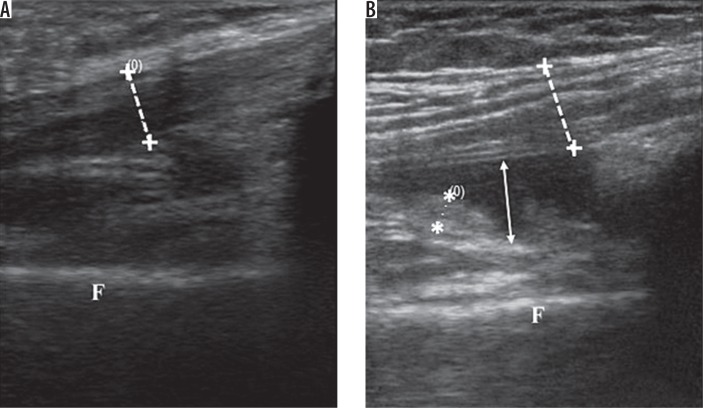
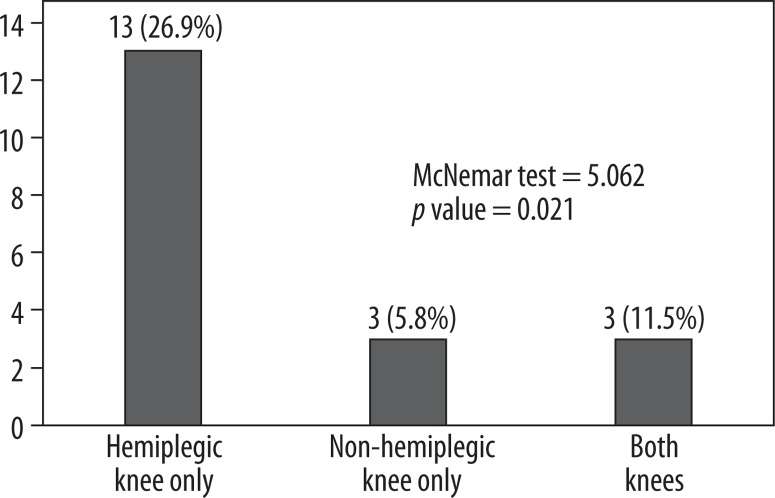
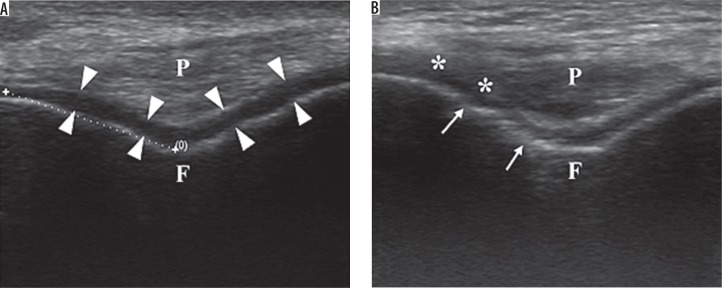
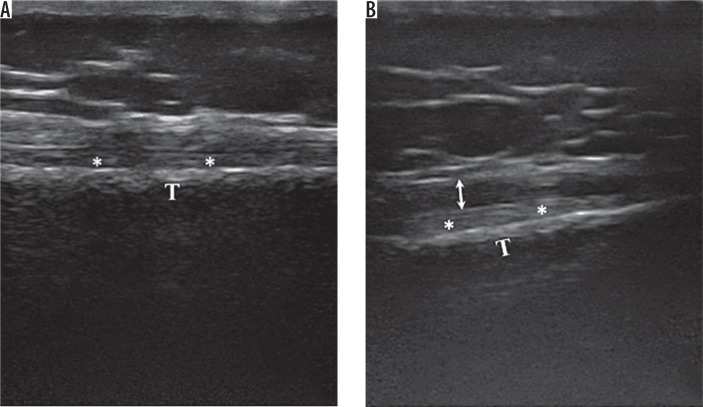
Pain was reported more often in hemiplegic than non-hemiplegic knees ( = 16 vs. = 6, = 0.021). The frequencies of soft tissue arthritic changes found, which included reduced lateral and medial femoral cartilage thickness, suprapatellar effusion, and irregular cartilage-bone margin, were similar between hemiplegic and non-hemiplegic knees ( > 0.05). Suprapatellar effusion and reduced lateral femoral cartilage thickness were more prevalent in the hemiplegic knees compared to the healthy control knees ( < 0.05). Stroke patients with pes anserinus tendinosis had greater risk of hemiplegic knee pain (HKP) when compared to stroke patients without this lesion (OR = 10; 95% CI: 1.7-61). FAC, muscle tone, and power showed no association with HKP.
Soft tissue arthritic changes associated with knee pain are comparable between hemiplegic and non-hemiplegic knees of stroke patients. The risk of knee pain in stroke is higher in the presence of pes anserinus tendinosis.
中风后上肢和下肢可能出现影响康复的关节炎变化。我们旨在评估在我们的环境中中风患者偏瘫膝关节疼痛相关的软组织关节炎变化。
使用7.5 - 12兆赫线性超声探头对48例中风患者的偏瘫和非偏瘫膝关节以及26例明显健康对照者的双膝进行评估。记录所有研究参与者的膝关节疼痛史、社会人口统计学、实验室和临床数据。对中风患者的肌张力、肌力以及功能步行分类(FAC)进行分级。使用SPSS 20版软件进行数据分析。
偏瘫膝关节疼痛的报告频率高于非偏瘫膝关节(= 16 vs. = 6,= 0.021)。发现的软组织关节炎变化频率,包括股骨内外侧软骨厚度减少、髌上积液和软骨 - 骨边缘不规则,在偏瘫和非偏瘫膝关节之间相似(> 0.05)。与健康对照膝关节相比,髌上积液和股骨外侧软骨厚度减少在偏瘫膝关节中更为普遍(< 0.05)。与无鹅足肌腱病的中风患者相比,有鹅足肌腱病的中风患者发生偏瘫膝关节疼痛(HKP)的风险更高(OR = 10;95% CI:1.7 - 61)。FAC、肌张力和肌力与HKP无关联。
中风患者偏瘫和非偏瘫膝关节中与膝关节疼痛相关的软组织关节炎变化相当。存在鹅足肌腱病时,中风患者膝关节疼痛的风险更高。