Fabiyi-Edebor Temitope Deborah
Department of Physiology, Afe Babalola University Ado Ekiti, Ado 5454, Ekiti, Nigeria.
World J Diabetes. 2020 Mar 15;11(3):52-65. doi: 10.4239/wjd.v11.i3.52.
Vitamin C (VC) is a common antioxidant with cell protection potentials. However, its possible protective effect on cardiac autonomic nerves from diabetic induced insults is yet to be explored.
To investigate the effects of VC on diabetic cardiac autonomic neuropathy.
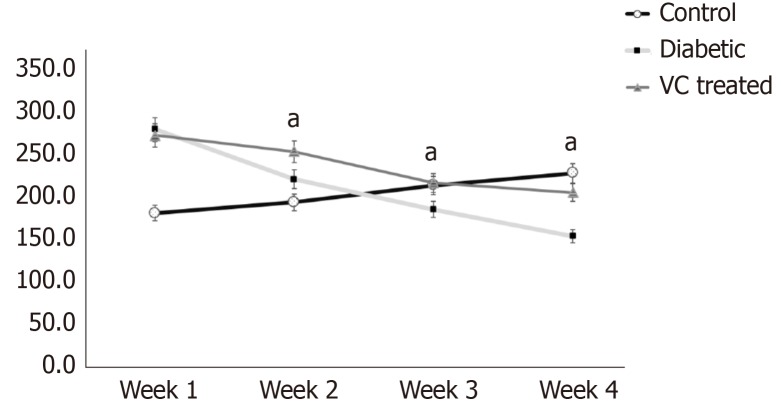
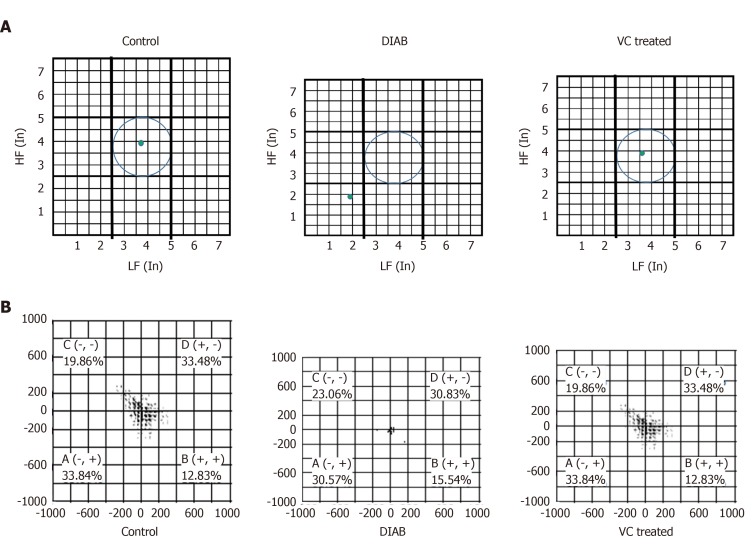
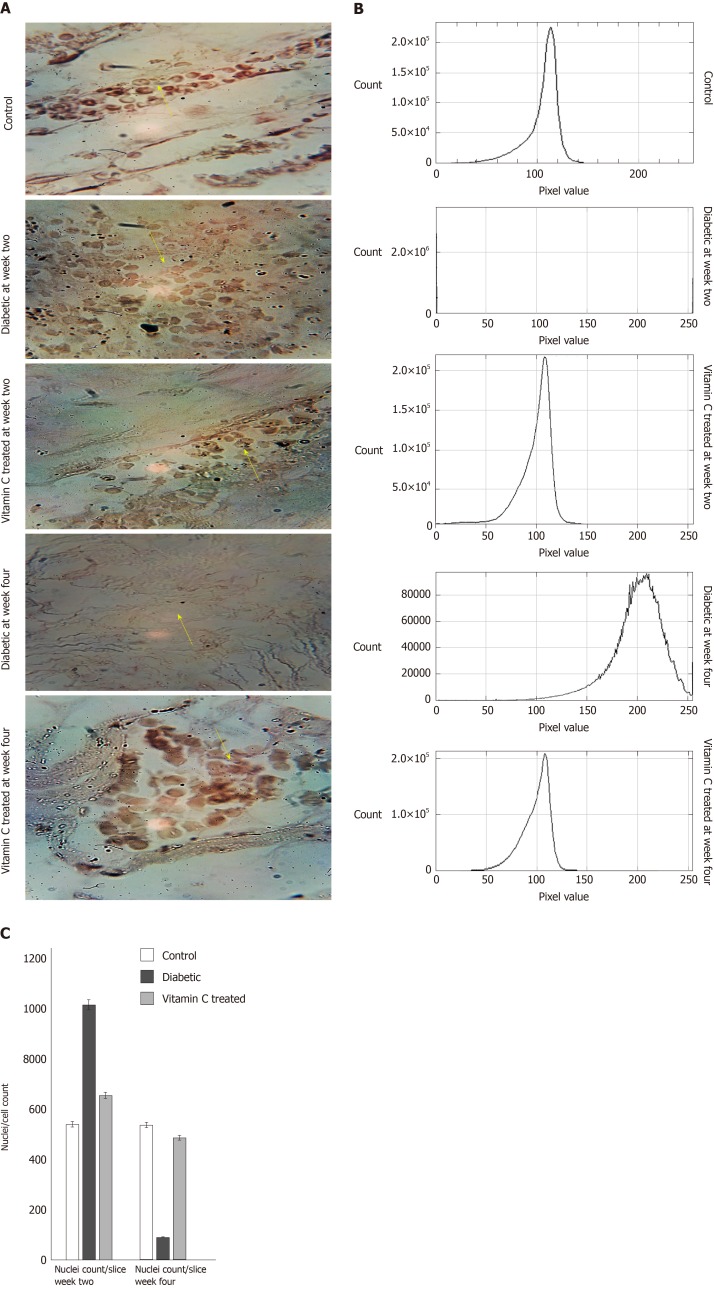
Thirty male Wistar rats were equally grouped into control, diabetic and diabetic + VC. Type 2 diabetes was induced with fructose diet and alloxan. VC (1 g/kg) was administered for 4 wk oral canula. Blood pressure and heart rate were measured non-invasively using tail flick blood pressure monitor. Spectral analysis of heart rate variability (HRV) was used to assess cardiac autonomic neuropathy. Blood was collected from the ocular sinus for biochemical analysis. Urethane (1 g/kg-ip) was used for anaesthesia prior to HRV and cervical dislocation to harvest hearts. Intracardiac autonomic nerve was assessed using tyrosine hydroxylase immunohistochemistry on fixed heart sections.
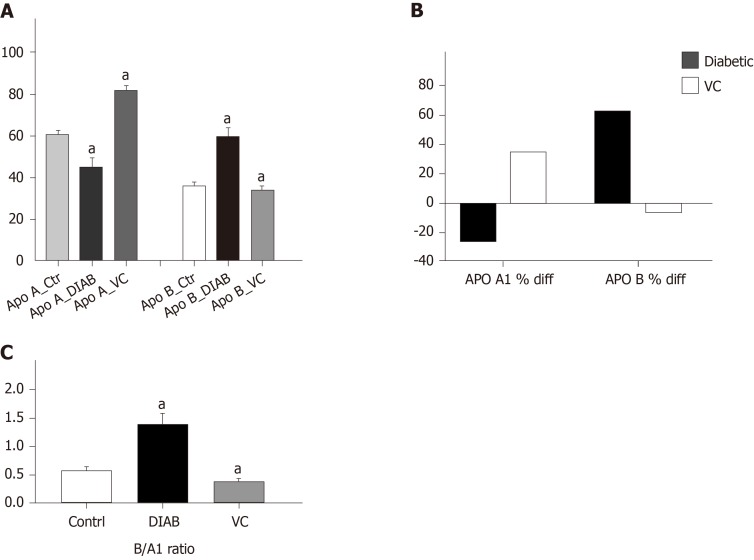
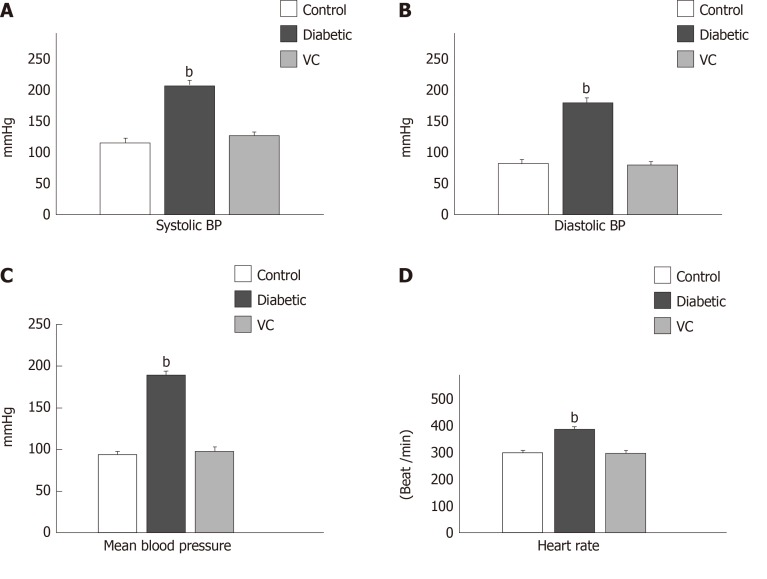
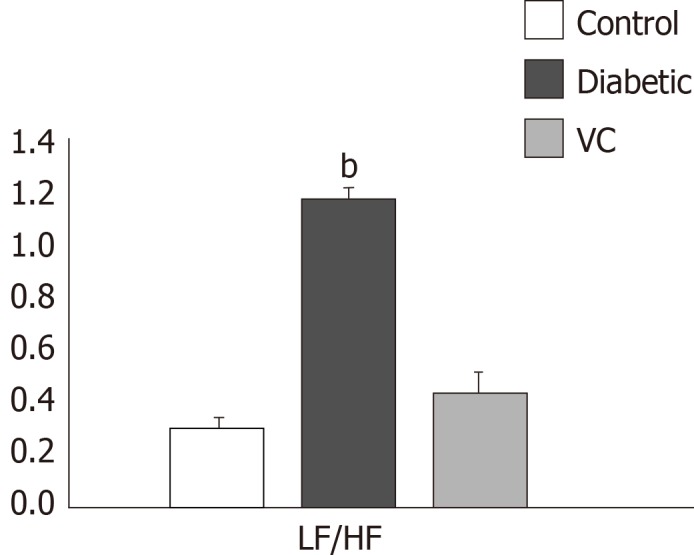
Results were analysed using ANOVA at α Unlike VC and control groups, diabetic rats showed significantly ( < 0.0001) reduced HRV, increased heart-rate and blood pressure, initial increase in cardiac tyrosine hydroxylase activities at week-2 and sparse activity at week-4 of diabetes. Furthermore, apolipoprotein B, Oxidative stress and inflammatory markers were significantly ( < 0.01) reduced in VC treated rats.
VC possesses cardio-autonomic nerve protective potential and ameliorates the symptoms of cardiac autonomic neuropathy in type 2 diabetes. The possible mechanisms which VC exert these effects may be downregulation of oxidative stress, inflammation and apolipoprotein B.
维生素C(VC)是一种具有细胞保护潜力的常见抗氧化剂。然而,其对糖尿病所致心脏自主神经损伤的潜在保护作用尚待探索。
研究VC对糖尿病性心脏自主神经病变的影响。
将30只雄性Wistar大鼠平均分为对照组、糖尿病组和糖尿病+VC组。采用果糖饮食和四氧嘧啶诱导2型糖尿病。通过口服插管给予VC(1 g/kg),持续4周。使用尾动脉血压监测仪无创测量血压和心率。采用心率变异性(HRV)频谱分析评估心脏自主神经病变。从眼静脉窦采集血液进行生化分析。在进行HRV检测前,使用氨基甲酸乙酯(1 g/kg,腹腔注射)麻醉大鼠,然后通过颈椎脱臼法取心脏。在固定的心脏切片上,采用酪氨酸羟化酶免疫组织化学法评估心脏内自主神经。
使用方差分析在α水平分析结果。与VC组和对照组不同,糖尿病大鼠的HRV显著降低(<0.0001),心率和血压升高,糖尿病第2周时心脏酪氨酸羟化酶活性最初增加,第4周时活性稀疏。此外,VC治疗的大鼠载脂蛋白B、氧化应激和炎症标志物显著降低(<0.01)。
VC具有保护心脏自主神经的潜力,并可改善2型糖尿病心脏自主神经病变的症状。VC发挥这些作用的可能机制可能是下调氧化应激、炎症和载脂蛋白B。