Gwida Mayada, Lüth Stefanie, El-Ashker Maged, Zakaria Amira, El-Gohary Fatma, Elsayed Mona, Kleta Sylvia, Al Dahouk Sascha
Department of Hygiene and Zoonoses, Faculty of Veterinary Medicine, Mansoura University, Mansoura 35516, Egypt.
Department of Biological Safety, German Federal Institute for Risk Assessment, Max-Dohrn-Straße 8-10, 10589 Berlin, Germany.
Microorganisms. 2020 Mar 14;8(3):414. doi: 10.3390/microorganisms8030414.
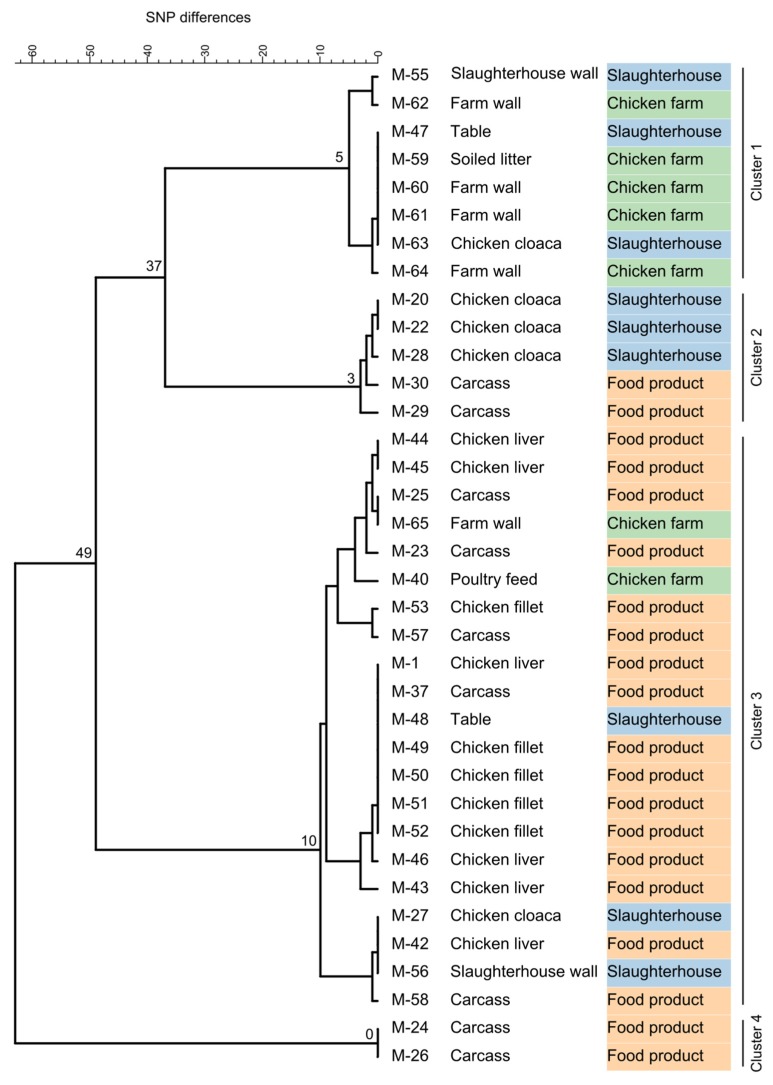
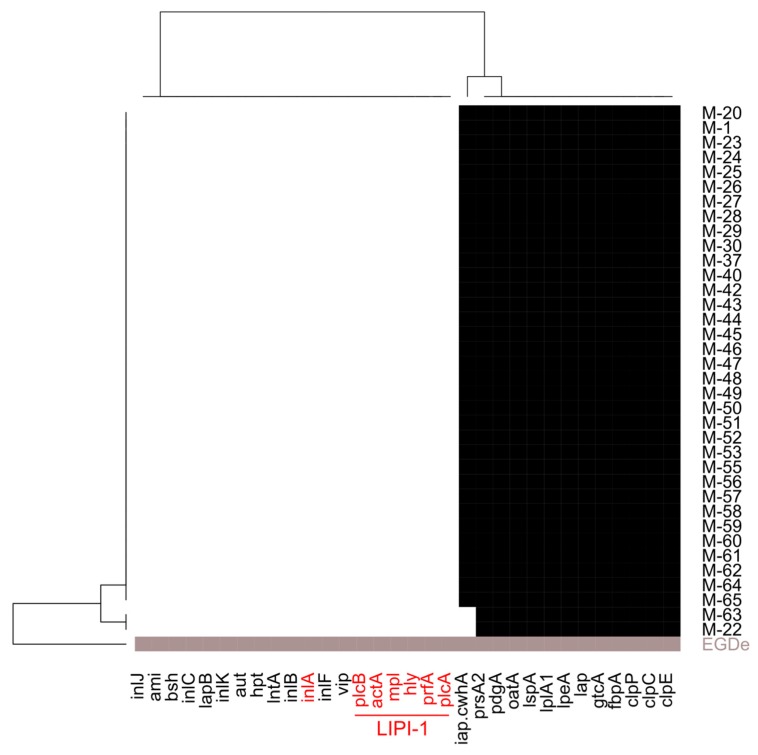
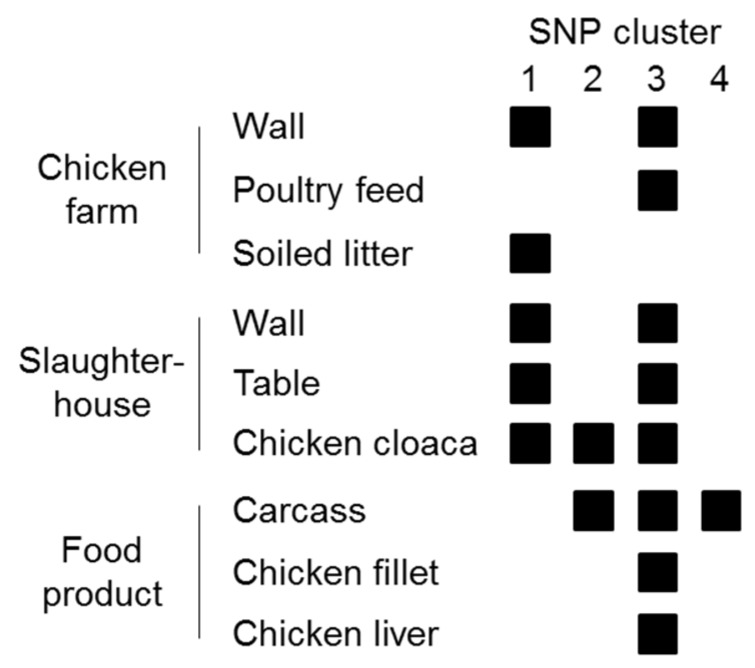
Foodborne infection with causes potentially life-threatening disease listeriosis. is widely recognized as the only species of public health concern, and the closely related species is commonly used by the food industry as an indicator to identify environmental conditions that allow for presence, growth, and persistence of spp. in general. In our study, we analyze the occurrence of spp. in a farm-to-fork approach in a poultry production chain in Egypt and identify bacterial entry gates and transmission systems. Prevalence of at the three production stages (farm, slaughterhouse, food products) ranged from 11% to 28%. The pathogenic species was not detected, and strains under study did not show genetic virulence determinants. However, the close genetic relatedness of isolates (maximum 63 SNP differences) indicated cross-contamination between all stages from farm to final food product. Based on these results, chicken can be seen as a natural source of . Last but not least, sanitary measures during production should be reassessed to prevent bacterial contamination from entering the food chain and to consequently prevent human listeriosis infections. For this purpose, surveillance must not be restricted to pathogenic species.
食源性感染[病原体名称未给出]会引发潜在威胁生命的李斯特菌病。[病原体名称未给出]被广泛认为是唯一具有公共卫生意义的物种,而与之密切相关的物种通常被食品行业用作指标,以识别一般情况下允许[病原体名称未给出]属存在、生长和持续存在的环境条件。在我们的研究中,我们采用从农场到餐桌的方法分析了埃及家禽生产链中[病原体名称未给出]属的出现情况,并确定了细菌的进入途径和传播系统。在三个生产阶段(农场、屠宰场、食品)中[病原体名称未给出]的患病率在11%至28%之间。未检测到致病物种[病原体名称未给出],且所研究的[病原体名称未给出]菌株未显示出遗传毒力决定因素。然而,[病原体名称未给出]分离株之间密切的遗传相关性(最大63个单核苷酸多态性差异)表明从农场到最终食品的所有阶段都存在交叉污染。基于这些结果,鸡肉可被视为[病原体名称未给出]的天然来源。最后但同样重要的是,应重新评估生产过程中的卫生措施,以防止细菌污染进入食物链,从而预防人类李斯特菌病感染。为此,监测不应仅限于致病物种。