The State Key Laboratory for Conservation and Utilization of Subtropical Agro-bioresources, South China Agricultural University, Guangzhou 510642, China.
The Guangdong Provincial Laboratory of Lingnan Modern Agricultural Science and Technology, South China Agricultural University, Guangzhou 510642, China.
Int J Mol Sci. 2020 Mar 15;21(6):2004. doi: 10.3390/ijms21062004.
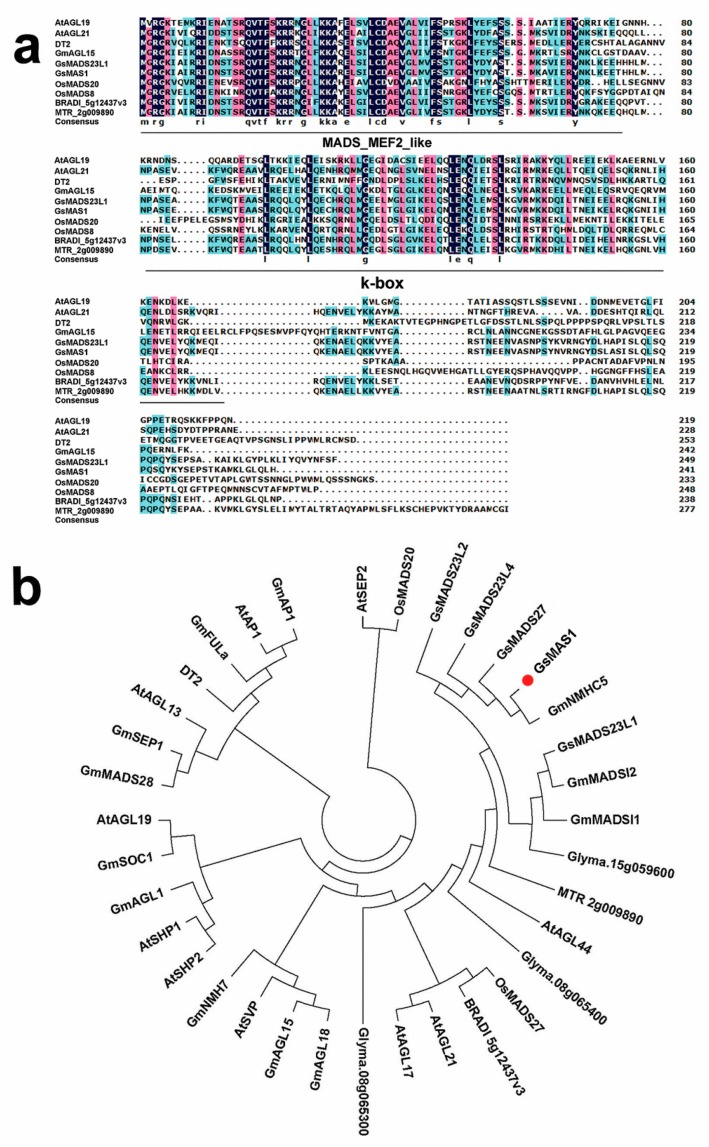
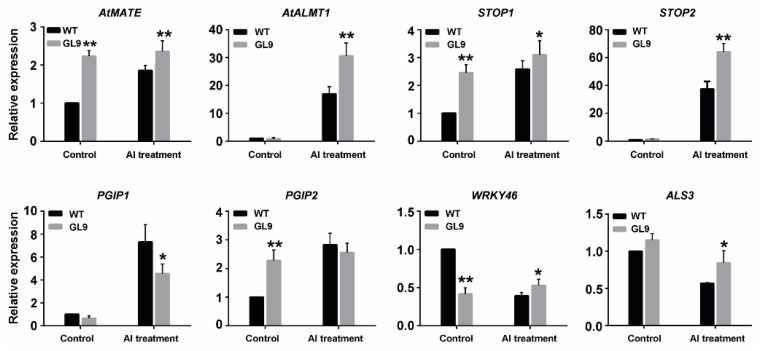
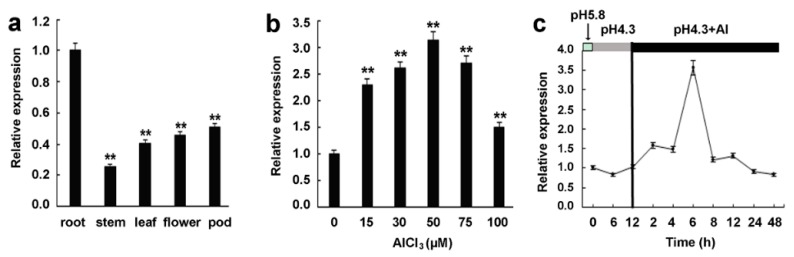
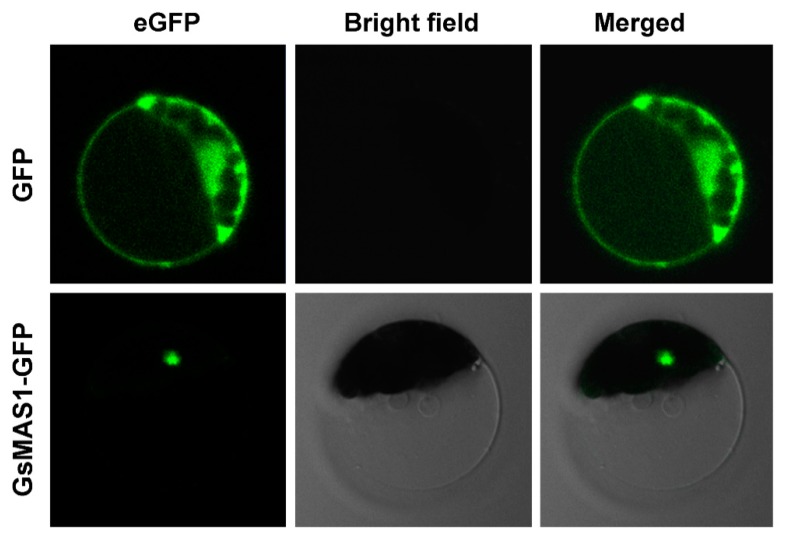
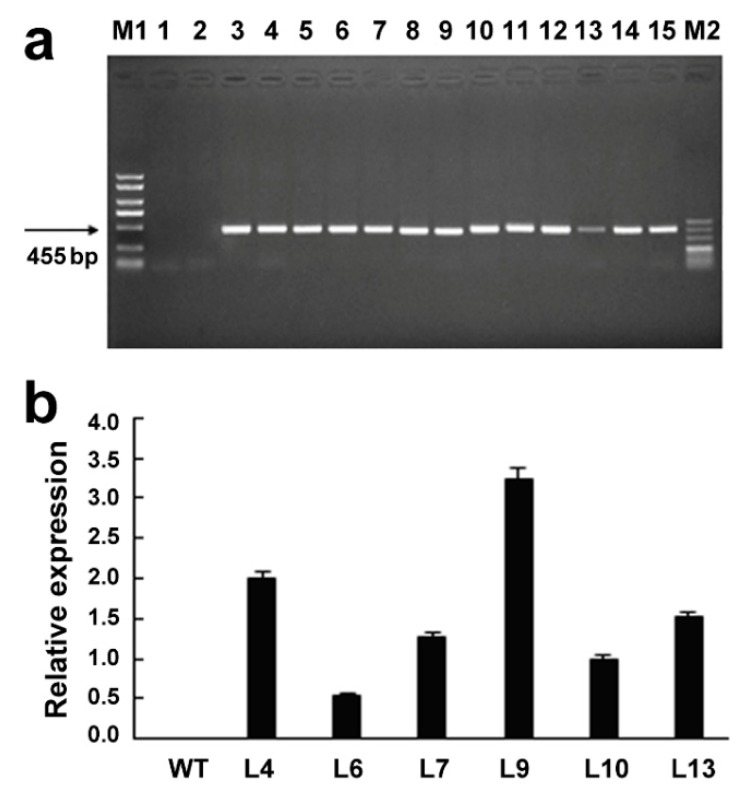
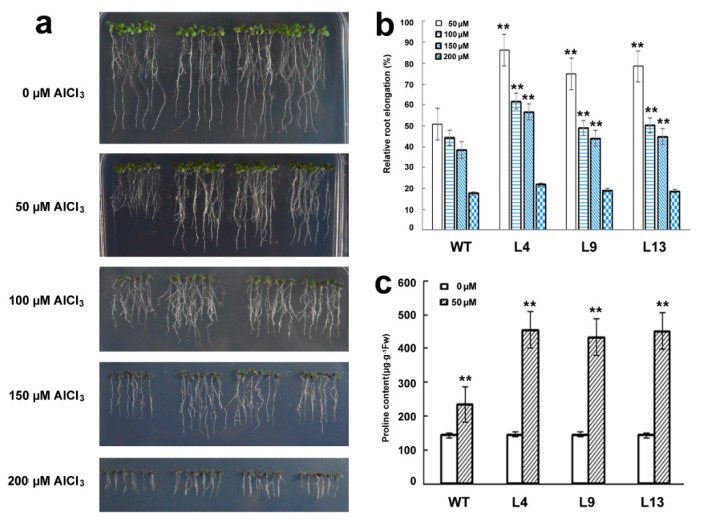
The MADS-box transcription factors (TFs) are essential in regulating plant growth and development, and conferring abiotic and metal stress resistance. This study aims to investigate function in conferring tolerance to aluminum stress in Arabidopsis. The from the wild soybean BW69 line encodes a MADS-box transcription factor in by bioinformatics analysis. The putative GsMAS1 protein was localized in the nucleus. The gene was rich in soybean roots presenting a constitutive expression pattern and induced by aluminum stress with a concentration-time specific pattern. The analysis of phenotypic observation demonstrated that overexpression of enhanced the tolerance of Arabidopsis plants to aluminum (Al) stress with larger values of relative root length and higher proline accumulation compared to those of wild type at the AlCl treatments. The genes and/or pathways regulated by were further investigated under Al stress by qRT-PCR. The results indicated that six genes resistant to Al stress were upregulated, whereas and were significantly activated by Al stress and overexpression. After treatment of 50 μM AlCl, the RNA abundance of and went up to 17-fold and 37-fold than those in wild type, respectively. Whereas the RNA transcripts of and were much higher than those in wild type with over 82% and 67% of relative expression in transgenic plants, respectively. In short, the results suggest that may increase resistance to Al toxicity through certain pathways related to Al stress in Arabidopsis.
MADS 框转录因子(TFs)在调节植物生长发育和赋予非生物及金属胁迫抗性方面发挥着重要作用。本研究旨在探讨大豆 BW69 品系中的 GsMAS1 基因在赋予拟南芥耐铝胁迫中的功能。通过生物信息学分析,发现来自野生大豆 BW69 品系的 GsMAS1 基因编码一个 MADS 框转录因子。推测的 GsMAS1 蛋白定位于细胞核内。该基因在大豆根中丰富,表现为组成型表达模式,并在铝胁迫下呈现浓度和时间特异性诱导表达。表型观察分析表明,与野生型相比,过表达 GsMAS1 基因增强了拟南芥植株对铝(Al)胁迫的耐受性,表现为相对根长较大,脯氨酸积累较高。通过 qRT-PCR 进一步分析了 GsMAS1 基因在 Al 胁迫下调节的基因和/或通路。结果表明,有 6 个耐 Al 胁迫的基因被上调,而 和 在 Al 胁迫和 GsMAS1 过表达下显著激活。在 50 μM AlCl3 处理后, 和 的 RNA 丰度分别比野生型增加了 17 倍和 37 倍。而 和 的 RNA 转录本在 GsMAS1 过表达植株中比野生型高得多,相对表达量分别高于野生型 82%和 67%。总之,研究结果表明,GsMAS1 可能通过与拟南芥中 Al 胁迫相关的某些途径增加对 Al 毒性的抗性。