Sultana Razia, Lee Charles C
Neural Systems Laboratory, Department of Comparative Biomedical Sciences, Louisiana State University School of Veterinary Medicine, Baton Rouge, LA, United States.
Front Behav Neurosci. 2020 Feb 28;14:29. doi: 10.3389/fnbeh.2020.00029. eCollection 2020.
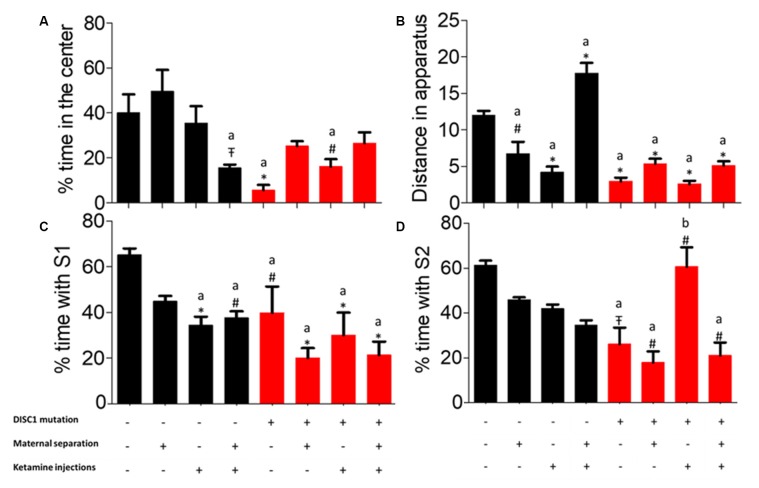
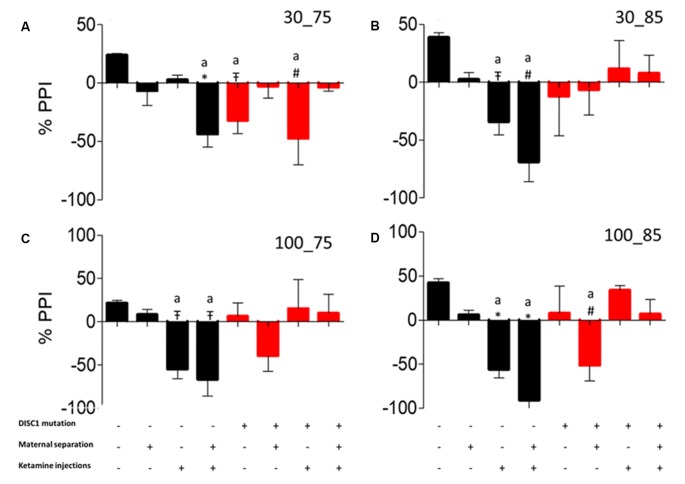
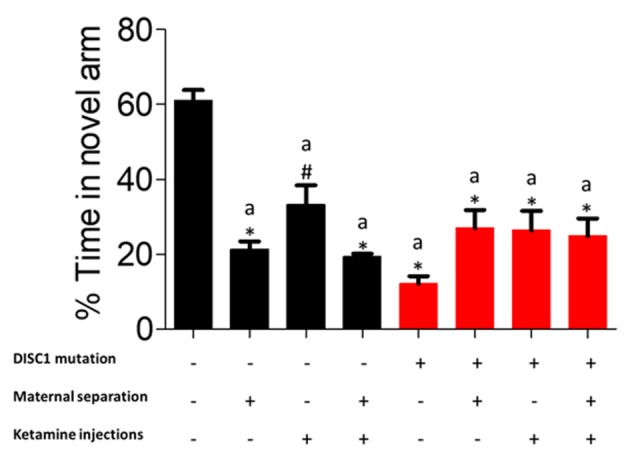
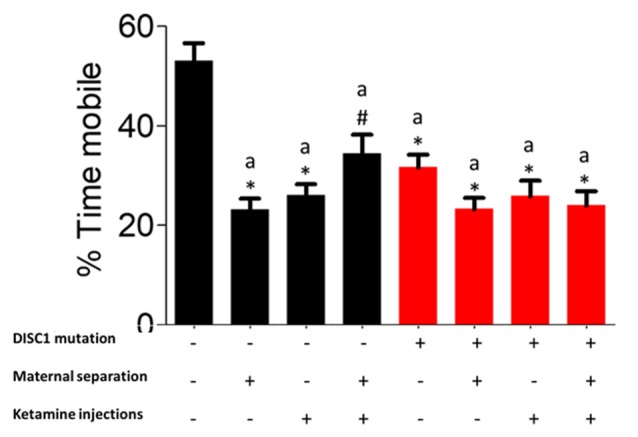
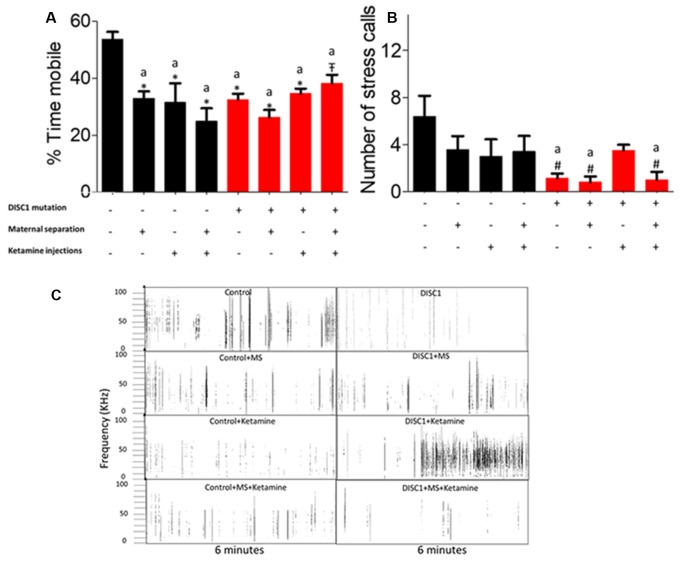
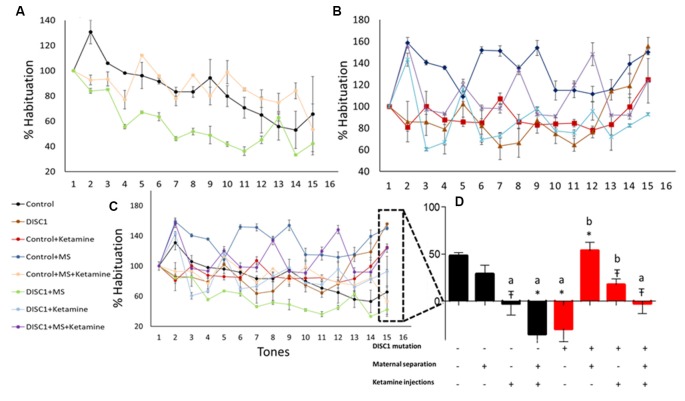
Schizophrenia is a neuropsychiatric disorder characterized by multifactorial etiology involving complex interactions among genetic and environmental factors. "Multiple-hit" models of the disorder can explain its variable incidence and prevalence in related individuals. Hence, there is a dire need to understand these interactions in the emergence of schizophrenia. To test these factors in the emergence of schizophrenia-like behaviors, we employed a genetic mouse model of the disorder (harboring the DISC1 mutation) along with various environmental insults, such as early life stress (maternal separation of pups) and/or pharmacological interventions (ketamine injections). When assessed on a battery of behavioral tests, we found that environmental interventions affect the severity of behavioral phenotypes in terms of increased negative behavior, as shown by reduced mobility in the forced swim and tail suspension tests, and changes to positive and cognitive symptoms, such as increased locomotion and disrupted PPI along with reduced working memory, respectively. Among the various interventions, the genetic mutation had the most profound effect on behavioral aberrations, followed by an environmental intervention by ketamine injections and ketamine-injected animals that were maternally separated during early postnatal days. We conclude that although environmental factors increased the prevalence of aberrant behavioral phenotypes, genetic background is still the predominant influence on phenotypic alterations in these mouse models of schizophrenia.
精神分裂症是一种神经精神障碍,其病因涉及多因素,包括遗传和环境因素之间的复杂相互作用。该疾病的“多重打击”模型可以解释其在相关个体中的发病率和患病率的变化。因此,迫切需要了解这些相互作用在精神分裂症发生过程中的作用。为了测试这些因素在精神分裂症样行为出现中的作用,我们使用了该疾病的遗传小鼠模型(携带DISC1突变)以及各种环境应激因素,如早期生活应激(幼崽与母鼠分离)和/或药物干预(注射氯胺酮)。当通过一系列行为测试进行评估时,我们发现环境干预会影响行为表型的严重程度,表现为消极行为增加,如在强迫游泳和悬尾测试中活动能力降低,以及阳性和认知症状的改变,如运动增加、预脉冲抑制破坏以及工作记忆减退。在各种干预措施中,基因突变对行为异常的影响最为深远,其次是注射氯胺酮的环境干预以及在出生后早期与母鼠分离的注射氯胺酮的动物。我们得出结论,尽管环境因素增加了异常行为表型的发生率,但在这些精神分裂症小鼠模型中,遗传背景仍然是影响表型改变的主要因素。