Bach Institute of Biochemistry, Federal Research Centre "Fundamentals of Biotechnology" of the Russian Academy of Sciences, Leninsky pr. 33, 119071 Moscow, Russia.
Int J Mol Sci. 2020 Mar 16;21(6):2039. doi: 10.3390/ijms21062039.
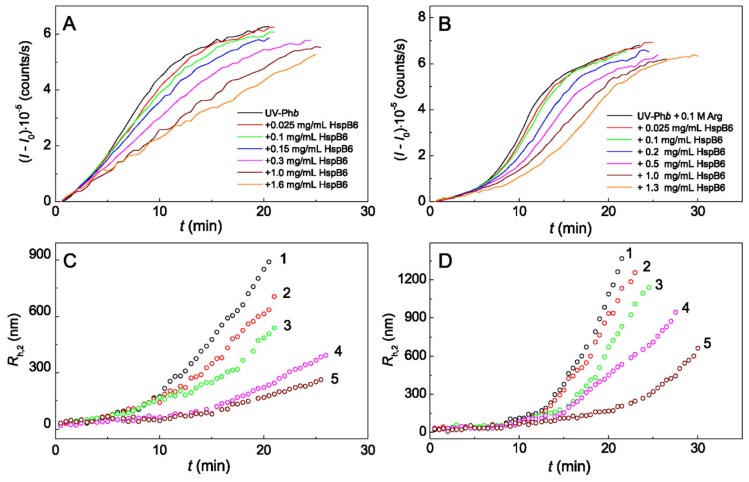
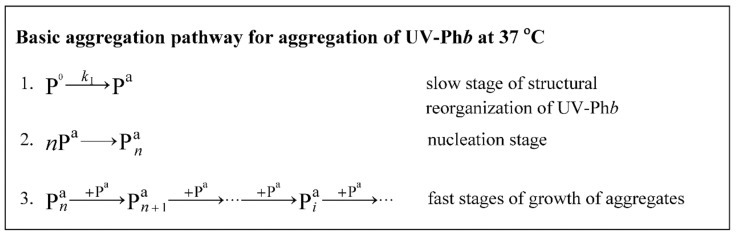
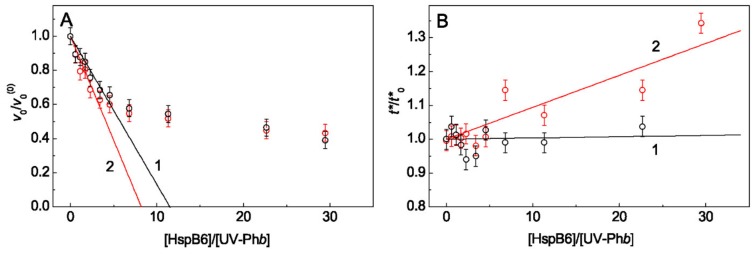
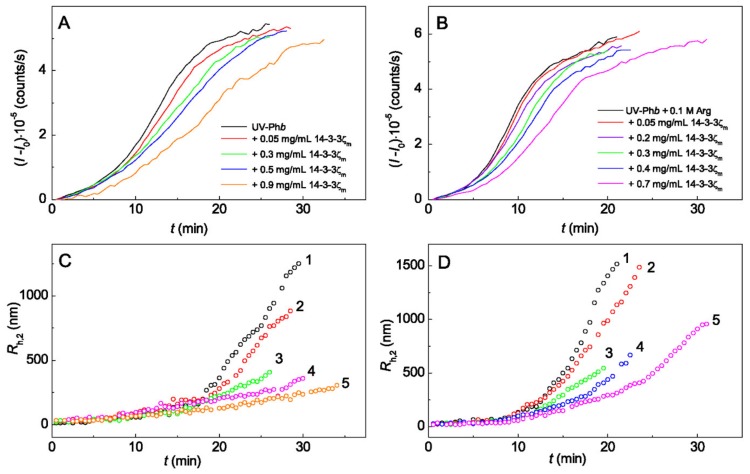
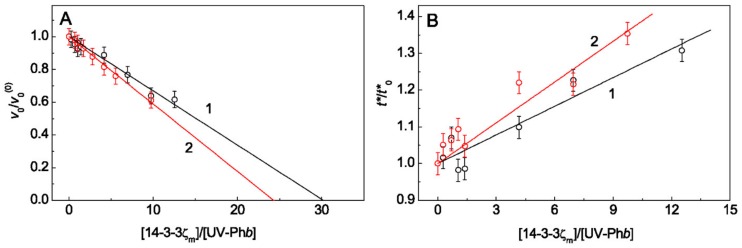
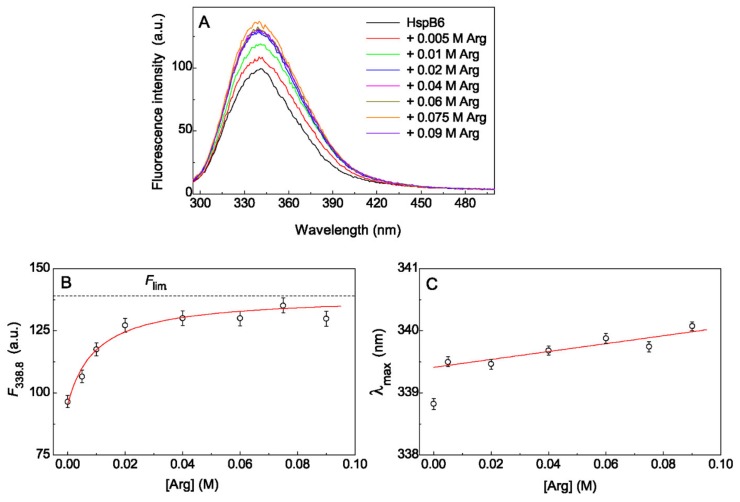
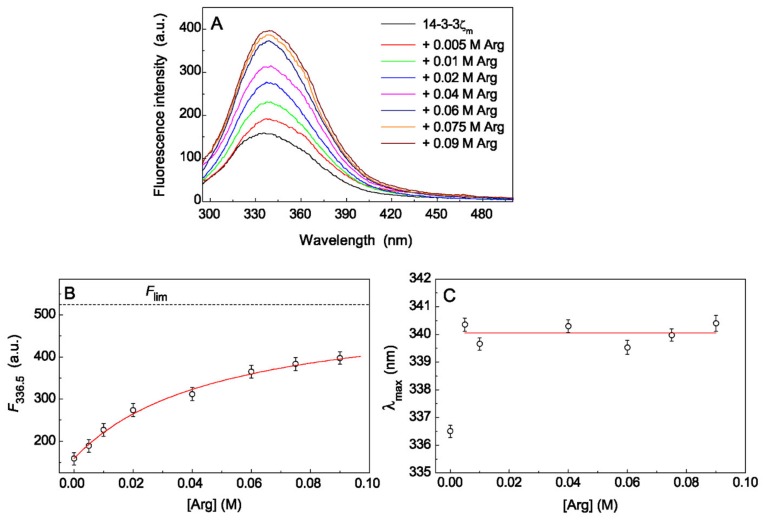
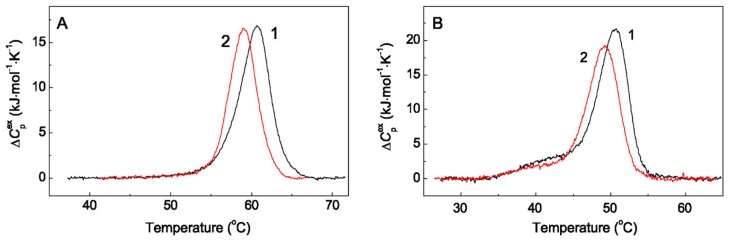
The effect of protein chaperones HspB6 and the monomeric form of the protein 14-3-3ζ (14-3-3ζ) on a test system based on thermal aggregation of UV-irradiated glycogen phosphorylase (UV-Ph) at 37 °C and a constant ionic strength (0.15 M) was studied using dynamic light scattering. A significant increase in the anti-aggregation activity of HspB6 and 14-3-3ζ was demonstrated in the presence of 0.1 M arginine (Arg). To compare the effects of these chaperones on UV-Ph aggregation, the values of initial stoichiometry of the chaperone-target protein complex () were used. The analysis of the values shows that in the presence of Arg fewer chaperone subunits are needed to completely prevent aggregation of the UV-Ph subunit. The changes in the structures of HspB6 and 14-3-3ζ induced by binding of Arg were evaluated by the fluorescence spectroscopy and differential scanning calorimetry. It was suggested that Arg caused conformational changes in chaperone molecules, which led to a decrease in the thermal stability of protein chaperones and their destabilization.
采用动态光散射法研究了在 37°C 和恒定离子强度(0.15 M)条件下,热诱导的 UV 照射糖原磷酸化酶(UV-Ph)在测试体系中的聚集,以及蛋白伴侣 HspB6 和单体形式的蛋白 14-3-3ζ(14-3-3ζ)对该体系的影响。结果表明,在 0.1 M 精氨酸(Arg)存在的情况下,HspB6 和 14-3-3ζ 的抗聚集活性显著增强。为了比较这两种伴侣蛋白对 UV-Ph 聚集的影响,使用了伴侣蛋白-靶标蛋白复合物的初始计量比()值。对 值的分析表明,在 Arg 存在的情况下,完全阻止 UV-Ph 亚基聚集所需的伴侣蛋白亚基数量减少。通过荧光光谱法和差示扫描量热法评估了 Arg 结合诱导的 HspB6 和 14-3-3ζ 结构变化。结果表明,Arg 导致伴侣蛋白分子构象发生变化,从而降低了蛋白伴侣的热稳定性并使其失稳。