J Am Chem Soc. 2020 Apr 8;142(14):6554-6568. doi: 10.1021/jacs.9b11622. Epub 2020 Mar 30.
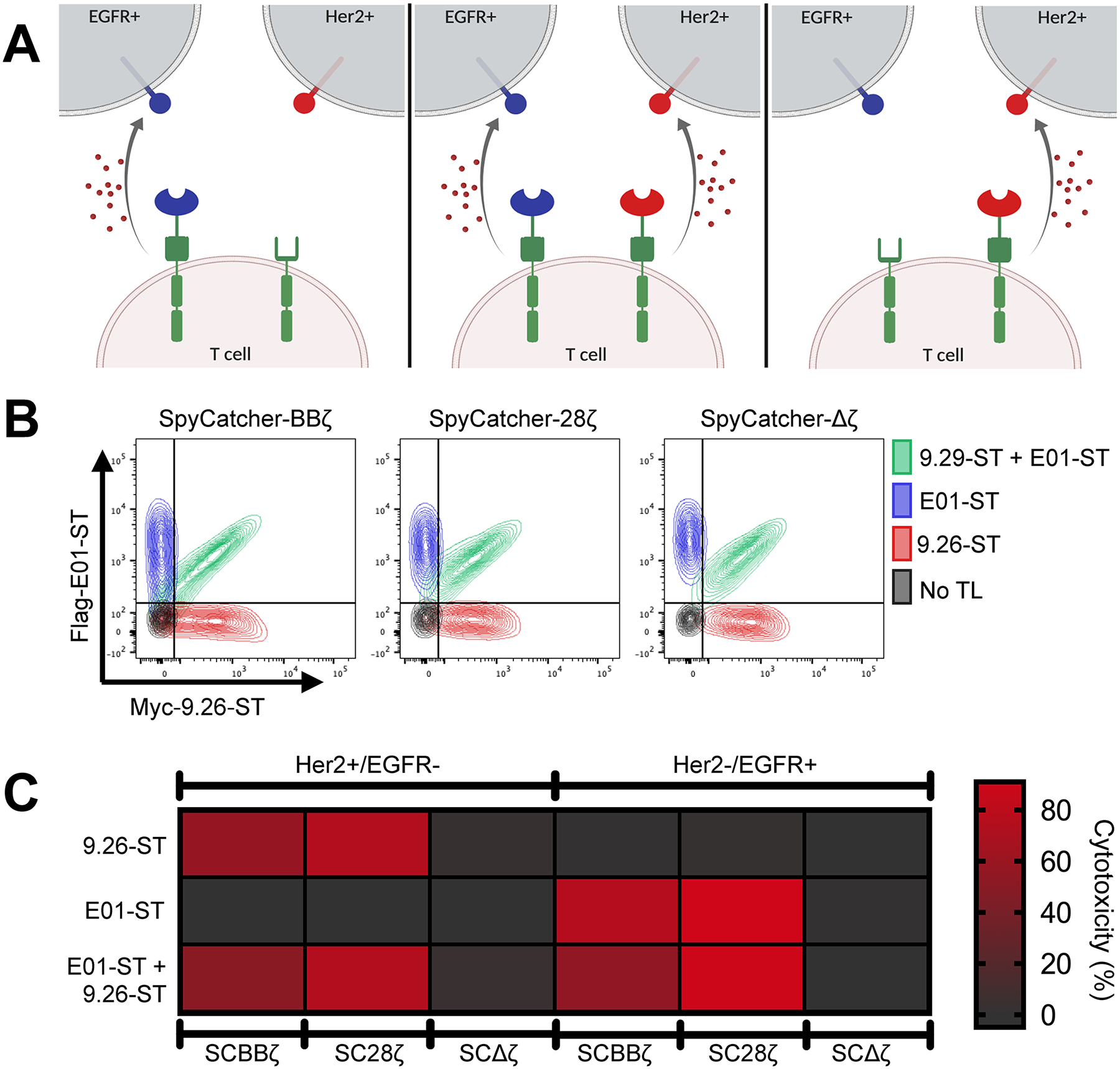
Universal immune receptors represent a rapidly emerging form of adoptive T-cell therapy with the potential to overcome safety and antigen escape challenges faced by conventional chimeric antigen receptor (CAR) T-cell therapy. By decoupling antigen recognition and T-cell signaling domains via bifunctional antigen-specific targeting ligands, universal immune receptors can regulate T-cell effector function and target multiple antigens with a single receptor. Here, we describe the development of the SpyCatcher immune receptor, the first universal immune receptor that allows for the post-translational covalent attachment of targeting ligands at the T-cell surface through the application of SpyCatcher-SpyTag chemistry. The SpyCatcher immune receptor redirected primary human T cells against a variety of tumor antigens via the addition of SpyTag-labeled targeting ligands, both in vitro and in vivo. SpyCatcher T-cell activity relied upon the presence of both target antigen and SpyTag-labeled targeting ligand, allowing for dose-dependent control of function. The mutational disruption of covalent bond formation between the receptor and the targeting ligand still permitted redirected T-cell function but significantly compromised antitumor function. Thus, the SpyCatcher immune receptor allows for rapid antigen-specific receptor assembly, multiantigen targeting, and controllable T-cell activity.
通用免疫受体代表了一种新兴的过继性 T 细胞疗法形式,具有克服传统嵌合抗原受体 (CAR) T 细胞疗法所面临的安全性和抗原逃逸挑战的潜力。通过将双功能抗原特异性靶向配体分离抗原识别和 T 细胞信号转导结构域,通用免疫受体可以调节 T 细胞效应功能,并通过单个受体靶向多种抗原。在这里,我们描述了 SpyCatcher 免疫受体的开发,这是第一个通用免疫受体,它允许通过 SpyCatcher-SpyTag 化学在 T 细胞表面进行靶向配体的翻译后共价连接。SpyCatcher 免疫受体通过添加 SpyTag 标记的靶向配体,在体外和体内将原发性人 T 细胞重新导向多种肿瘤抗原。SpyCatcher T 细胞活性依赖于靶抗原和 SpyTag 标记的靶向配体的存在,允许功能的剂量依赖性控制。受体和靶向配体之间共价键形成的突变破坏仍然允许重定向的 T 细胞功能,但严重损害了抗肿瘤功能。因此,SpyCatcher 免疫受体允许快速的抗原特异性受体组装、多抗原靶向和可控的 T 细胞活性。