National Engineering Research Center for Sugarcane, Fujian Agriculture and Forestry University, Fuzhou, 350002, China.
State Key Laboratory for Protection and Utilization of Subtropical Agro-Bioresources, Guangxi University, Nanning, 530004, China.
Sci Rep. 2020 Mar 19;10(1):5016. doi: 10.1038/s41598-020-62086-9.
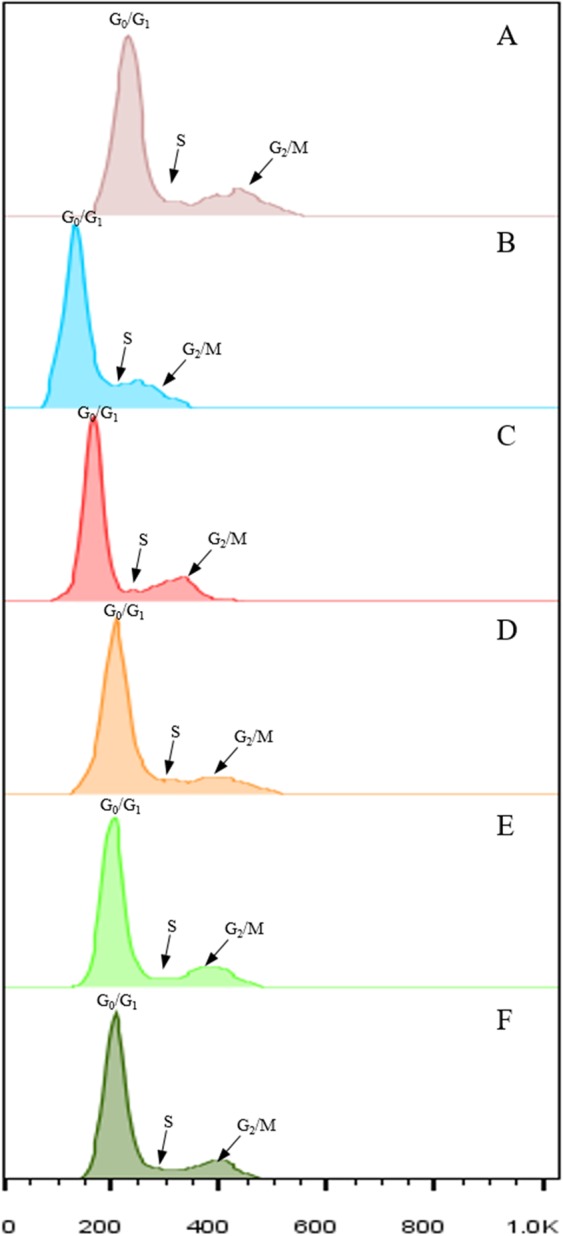
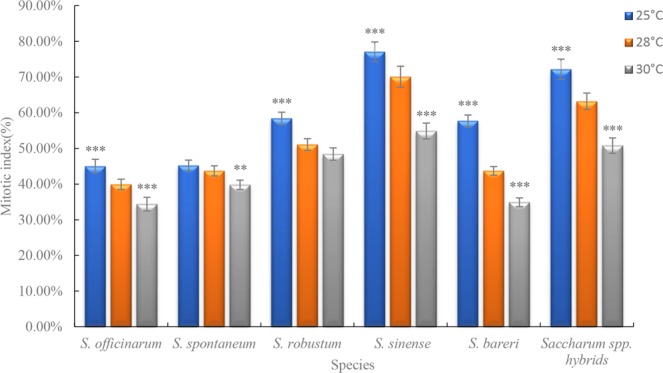
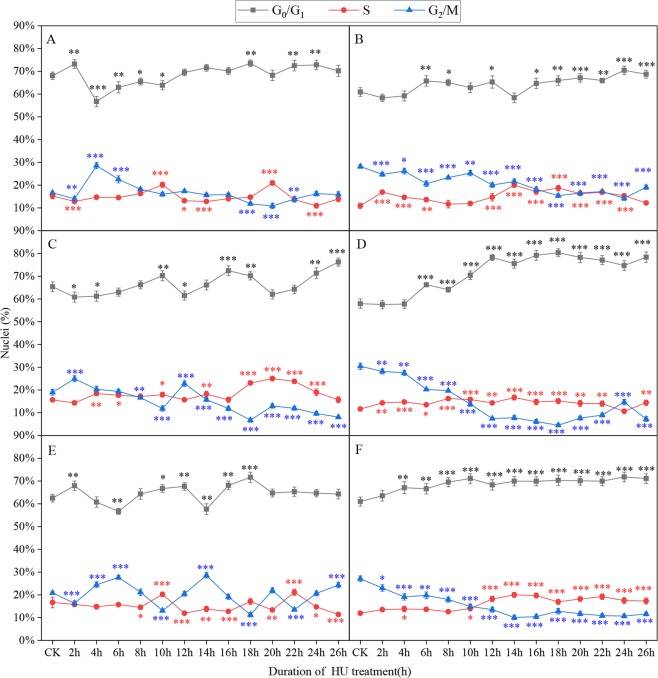
Modern sugarcane is an unusually complex heteroploid crop, and its genome comprises two or three subgenomes. To reduce the complexity of sugarcane genome research, the ploidy level and number of chromosomes can be reduced using flow chromosome sorting. However, a cell cycle synchronization (CCS) protocol for Saccharum spp. is needed that maximizes the accumulation of metaphase chromosomes. For flow cytometry analysis in this study, we optimized the lysis buffer, hydroxyurea(HU) concentration, HU treatment time and recovery time for sugarcane. We determined the mitotic index by microscopic observation and calculation. We found that WPB buffer was superior to other buffers for preparation of sugarcane nuclei suspensions. The optimal HU treatment was 2 mM for 18 h at 25 °C, 28 °C and 30 °C. Higher recovery treatment temperatures were associated with shorter recovery times (3.5 h, 2.5 h and 1.5 h at 25 °C, 28 °C and 30 °C, respectively). The optimal conditions for treatment with the inhibitor of microtubule polymerization, amiprophos-methyl (APM), were 2.5 μM for 3 h at 25 °C, 28 °C and 30 °C. Meanwhile, preliminary screening of CCS protocols for Badila were used for some main species of genus Saccharum at 25 °C, 28 °C and 30 °C, which showed that the average mitotic index decreased from 25 °C to 30 °C. The optimal sugarcane CCS protocol that yielded a mitotic index of >50% in sugarcane root tips was: 2 mM HU for 18 h, 0.1 X Hoagland's Solution without HU for 3.5 h, and 2.5 μM APM for 3.0 h at 25 °C. The CCS protocol defined in this study should accelerate the development of genomic research and cytobiology research in sugarcane.
现代甘蔗是一种异常复杂的异源多倍体作物,其基因组由两个或三个亚基因组组成。为了降低甘蔗基因组研究的复杂性,可以使用流式染色体分选来降低倍性水平和染色体数目。然而,需要一种能够最大限度地积累中期染色体的细胞周期同步(CCS)方案。在这项研究的流式细胞分析中,我们优化了用于甘蔗的裂解缓冲液、羟基脲(HU)浓度、HU 处理时间和恢复时间。我们通过显微镜观察和计算来确定有丝分裂指数。我们发现 WPB 缓冲液优于其他缓冲液,可用于制备甘蔗核悬浮液。最佳的 HU 处理条件是在 25°C、28°C 和 30°C 下 2mM 处理 18 小时。较高的恢复处理温度与较短的恢复时间相关(在 25°C、28°C 和 30°C 下分别为 3.5 小时、2.5 小时和 1.5 小时)。微管聚合抑制剂氨甲酰磷酸甲酯(APM)的最佳处理条件是在 25°C、28°C 和 30°C 下 2.5μM 处理 3 小时。同时,在 25°C、28°C 和 30°C 下,初步筛选了一些主要种属的 CCS 方案,结果表明,有丝分裂指数从 25°C 降低到 30°C。在甘蔗根尖中获得 >50%有丝分裂指数的最佳甘蔗 CCS 方案为:2mM HU 处理 18 小时,0.1 X Hoagland 无 HU 溶液处理 3.5 小时,2.5μM APM 处理 3.0 小时,25°C。本研究中定义的 CCS 方案应加速甘蔗基因组研究和细胞生物学研究的发展。