Zou Yuchi, Hu Jian, Huang Wenting, Ye Shasha, Han Fanyi, Du Jingting, Shao Mingjie, Guo Ruili, Lin Jingjing, Zhao Yeli, Xiong Ye, Wang Xue
The Frist Affiliated Hospital of Wenzhou Medical University, Wenzhou, China.
School of Pharmaceutical Sciences, Wenzhou Medical University, Wenzhou, China.
Front Pharmacol. 2020 Mar 3;11:59. doi: 10.3389/fphar.2020.00059. eCollection 2020.
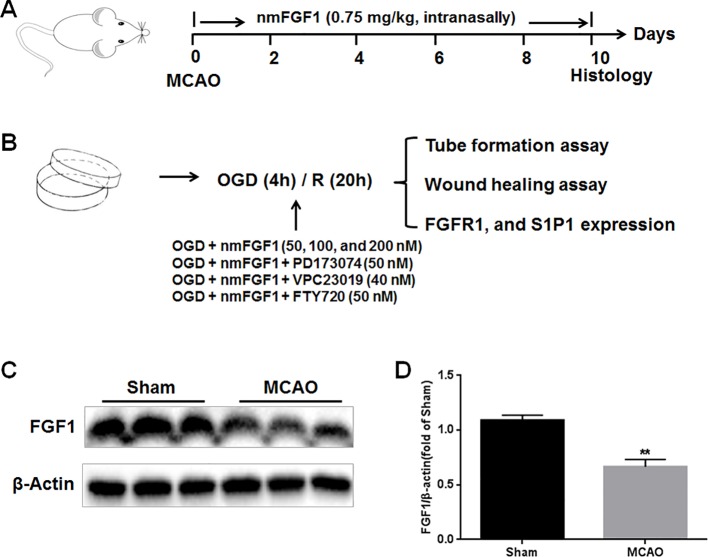
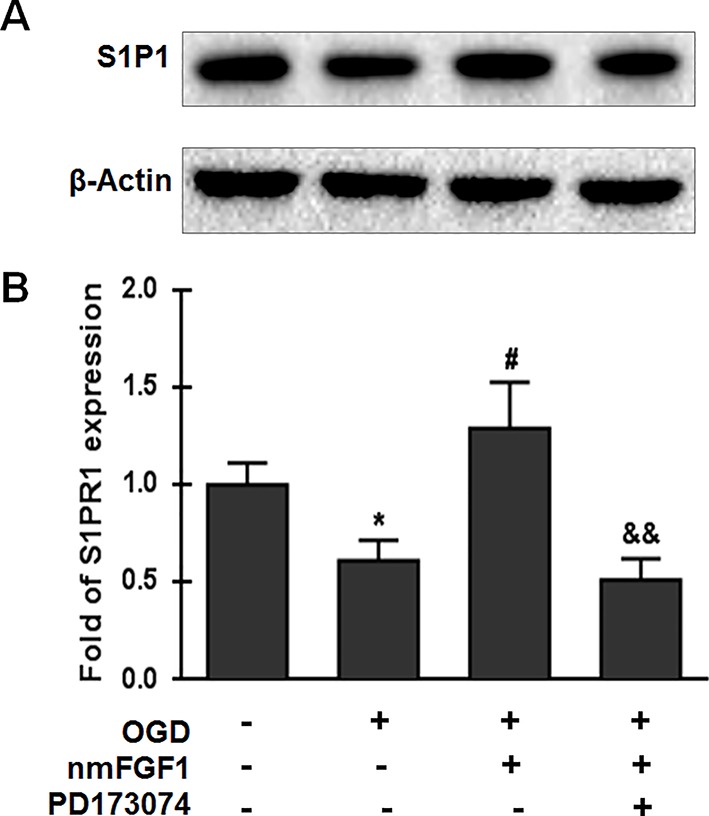
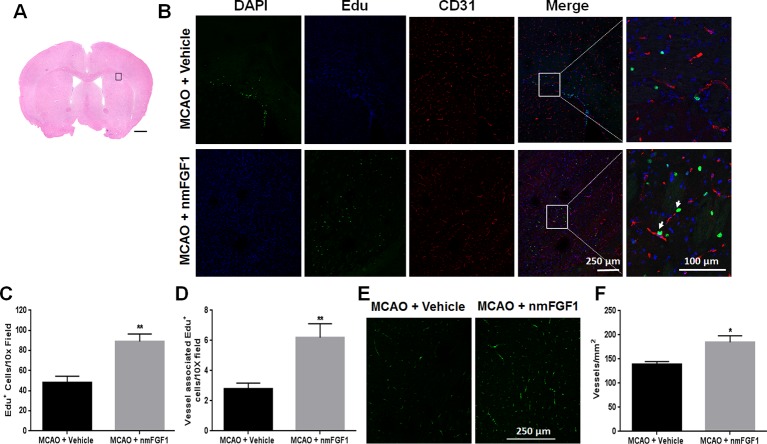
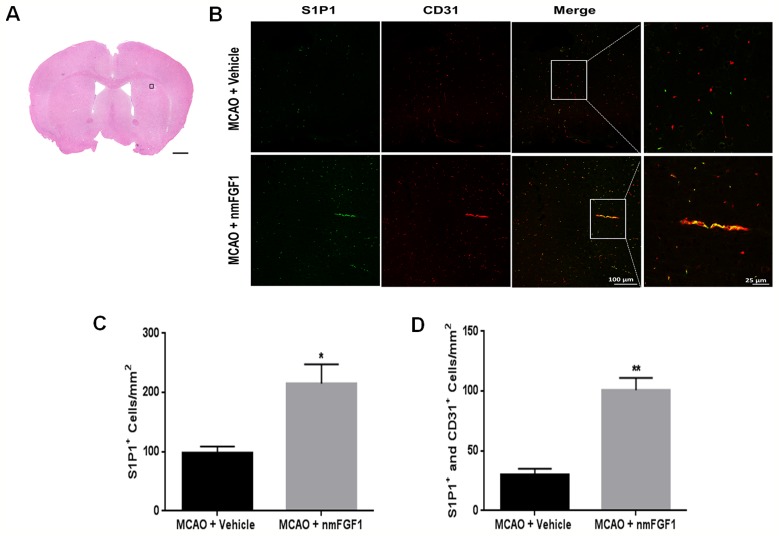
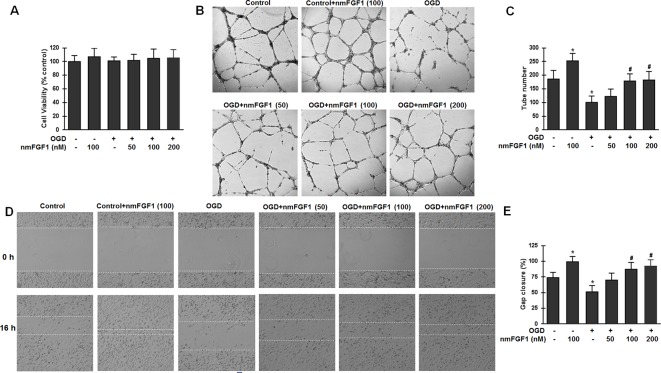
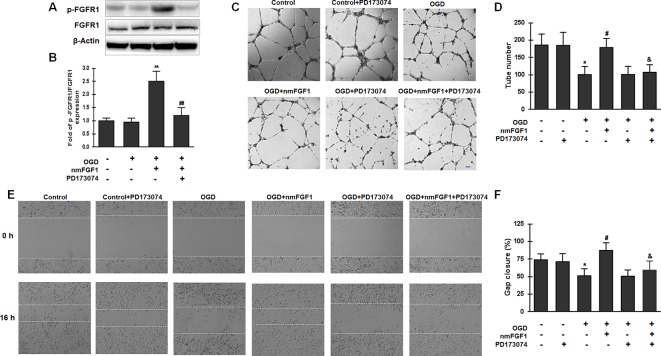
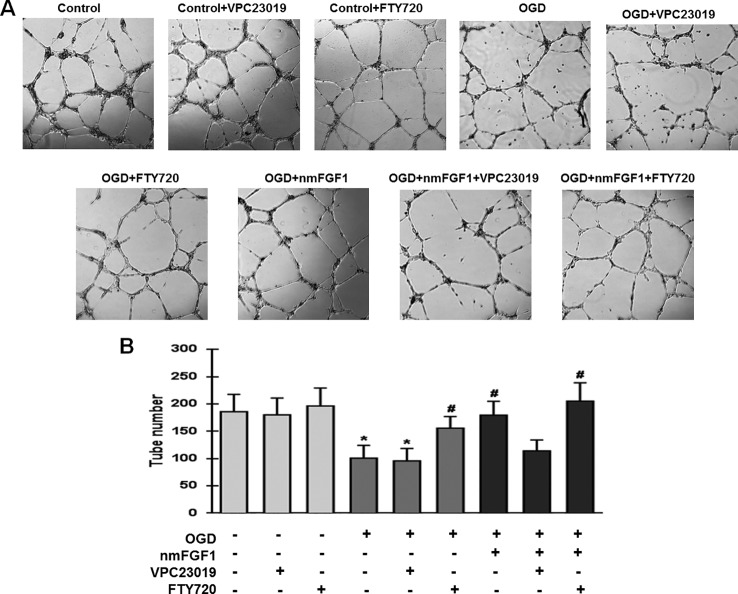
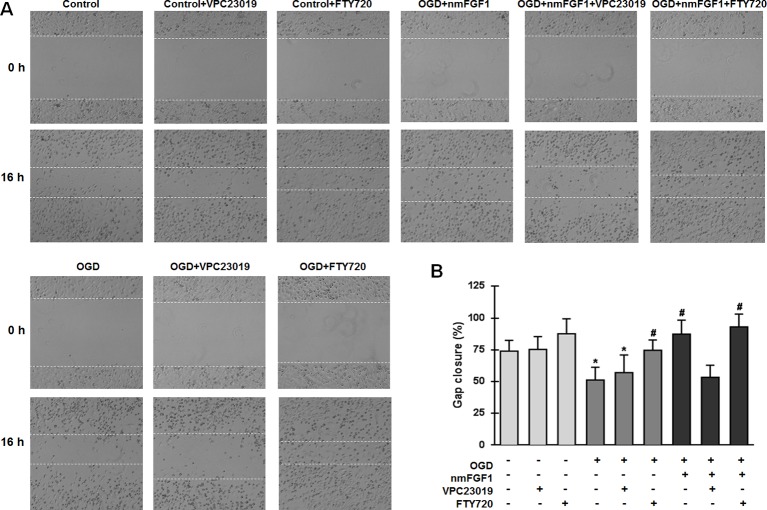
Ischemic strokes account for about 80% of all strokes and are associated with a high risk of mortality. Angiogenesis of brain microvascular endothelial cells may contribute to functional restoration following ischemia. Fibroblast growth factor 1 (FGF1), a member of FGF superfamily, involved in embryonic development, angiogenesis, wound healing, and neuron survival. However, the mitogenic activity of FGF1 is known to contribute to several human pathologies, thereby questioning the safety of its clinical applications. Here, we explored the effects and mechanism of action of non-mitogenic FGF1 (nmFGF1) on angiogenesis in mice after ischemia stroke and an oxygen-glucose deprivation (OGD)-induced human brain microvascular endothelial cells (HBMECs) injury model. We found that intranasal administration nmFGF1 significantly promoted angiogenesis in mice after stroke, and significantly increased the formation of matrigel tube and promoted scratch migration in a dose-dependent manner in OGD-induced HBMECs . However, the co-administration of an FGF receptor 1 (FGFR1)-specific inhibitor PD173074 significantly reversed the effects of nmFGF1 , suggesting that nmFGF1 functions FGFR1 activation. Moreover, nmFGF1 activated sphingosine-1-phosphate receptor 1 (S1PR1, S1P1) in mice after stroke . S1P1 protein antagonist VPC23019 and agonist FTY720 were used to confirm that nmFGF1 promotes angiogenesis partially through the S1P1 pathway. OGD induced downregulation of S1P1 expression. The S1P1 antagonist VPC23019 blocked the stimulatory effects of nmFGF1, whereas the S1P1 agonist FTY720 exerted effects comparable with those of nmFGF1. Furthermore, PD173074 reversed the effect of nmFGF1 on upregulating S1P1 signaling. In conclusion, nmFGF1 enhanced angiogenesis in mice following stroke and OGD-induced HBMECs through S1P1 pathway regulation mediated FGFR1 activation. This new discovery suggests the potential therapeutic role of nmFGF1 for the treatment of ischemic strokes.
缺血性中风约占所有中风的80%,且与高死亡率相关。脑微血管内皮细胞的血管生成可能有助于缺血后的功能恢复。成纤维细胞生长因子1(FGF1)是FGF超家族的成员,参与胚胎发育、血管生成、伤口愈合和神经元存活。然而,已知FGF1的促有丝分裂活性会导致多种人类疾病,因此对其临床应用的安全性提出了质疑。在此,我们探讨了非促有丝分裂FGF1(nmFGF1)对缺血性中风后小鼠血管生成以及氧糖剥夺(OGD)诱导的人脑微血管内皮细胞(HBMECs)损伤模型的作用及其作用机制。我们发现,经鼻给予nmFGF1可显著促进中风后小鼠的血管生成,并以剂量依赖的方式显著增加基质胶管的形成并促进OGD诱导的HBMECs的划痕迁移。然而,联合给予FGF受体1(FGFR1)特异性抑制剂PD173074可显著逆转nmFGF1的作用,表明nmFGF1通过激活FGFR1发挥作用。此外,nmFGF1可激活中风后小鼠的鞘氨醇-1-磷酸受体1(S1PR1,S1P1)。使用S1P1蛋白拮抗剂VPC23019和激动剂FTY720来证实nmFGF1部分通过S1P1途径促进血管生成。OGD诱导S1P1表达下调。S1P1拮抗剂VPC23019阻断了nmFGF1的刺激作用,而S1P1激动剂FTY720发挥了与nmFGF1相当的作用。此外,PD173074逆转了nmFGF1对上调S1P1信号的作用。总之,nmFGF1通过介导FGFR1激活的S1P1途径调节增强了中风后小鼠和OGD诱导的HBMECs的血管生成。这一新发现提示了nmFGF1在治疗缺血性中风方面的潜在治疗作用。