Yao Qunyan, Li Shuyu, Li Xi, Wang Fu, Tu Chuantao
Department of Gastroenterology and Hepatology, Zhongshan Hospital, Fudan University, Shanghai, China.
Shanghai Institute of Liver Diseases, Shanghai, China.
Front Med (Lausanne). 2020 Mar 4;7:71. doi: 10.3389/fmed.2020.00071. eCollection 2020.
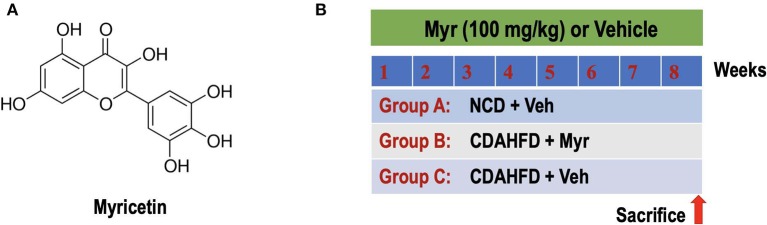
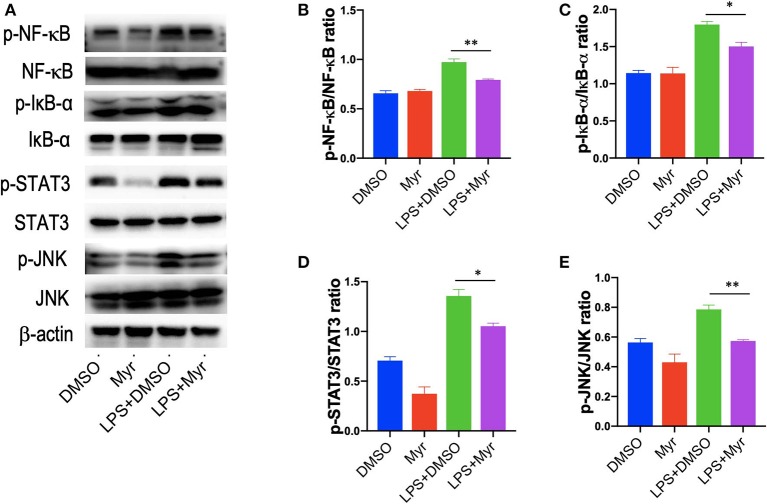
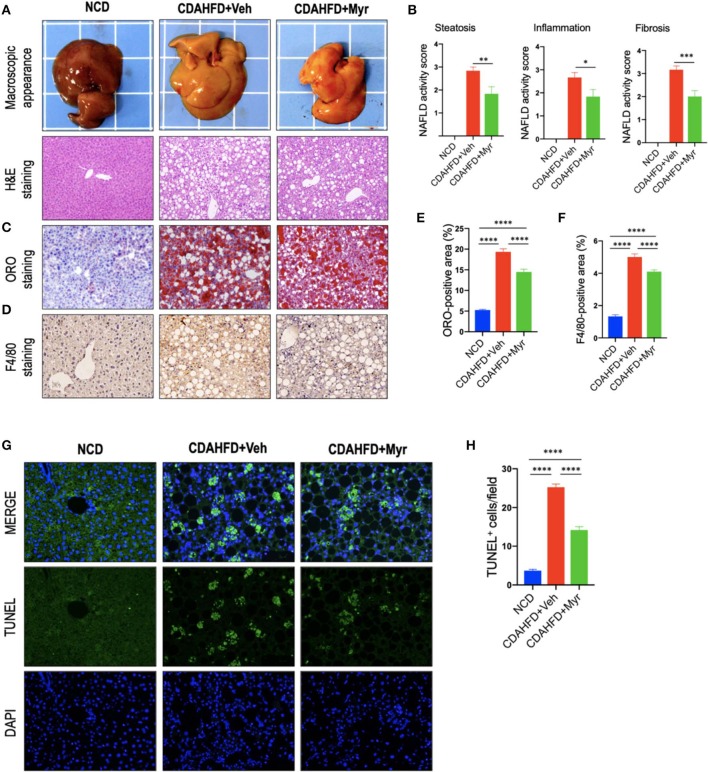
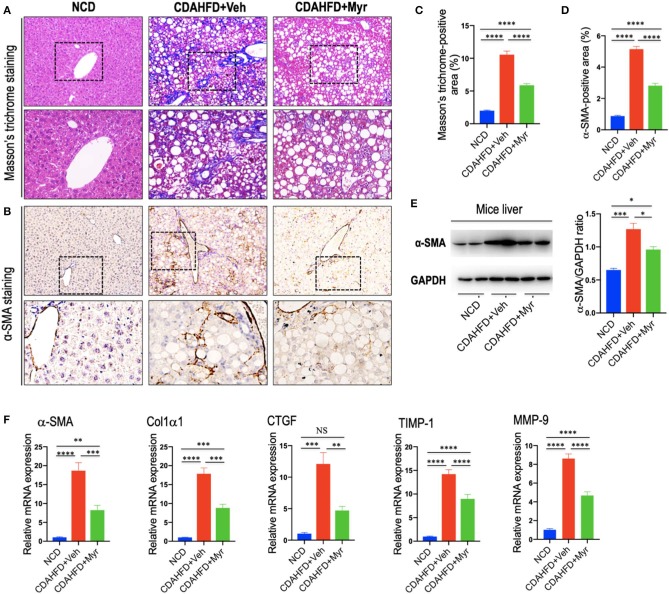
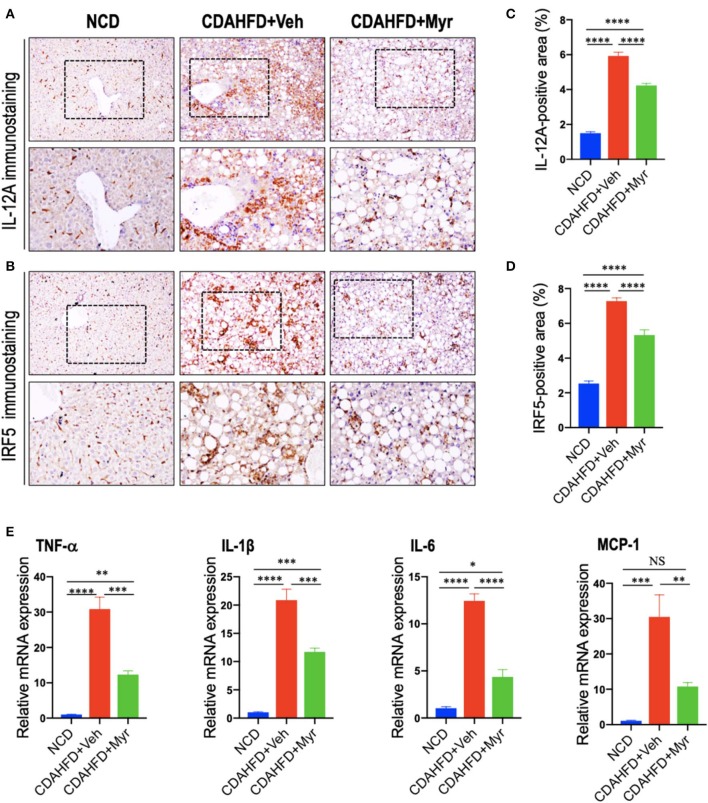
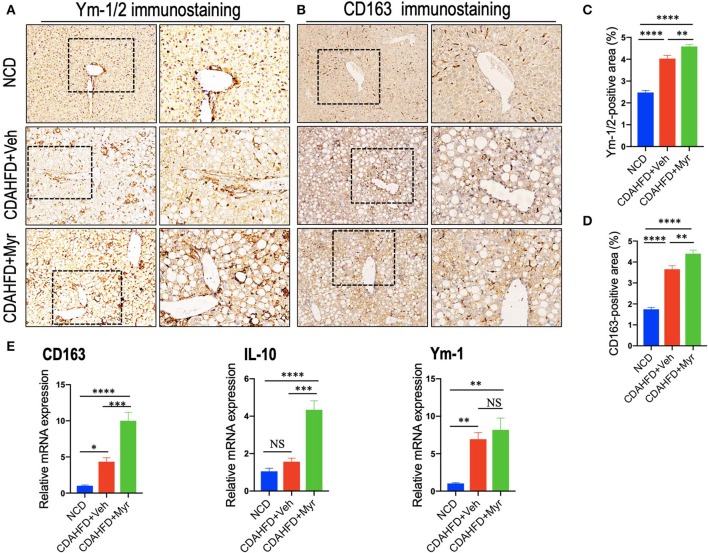
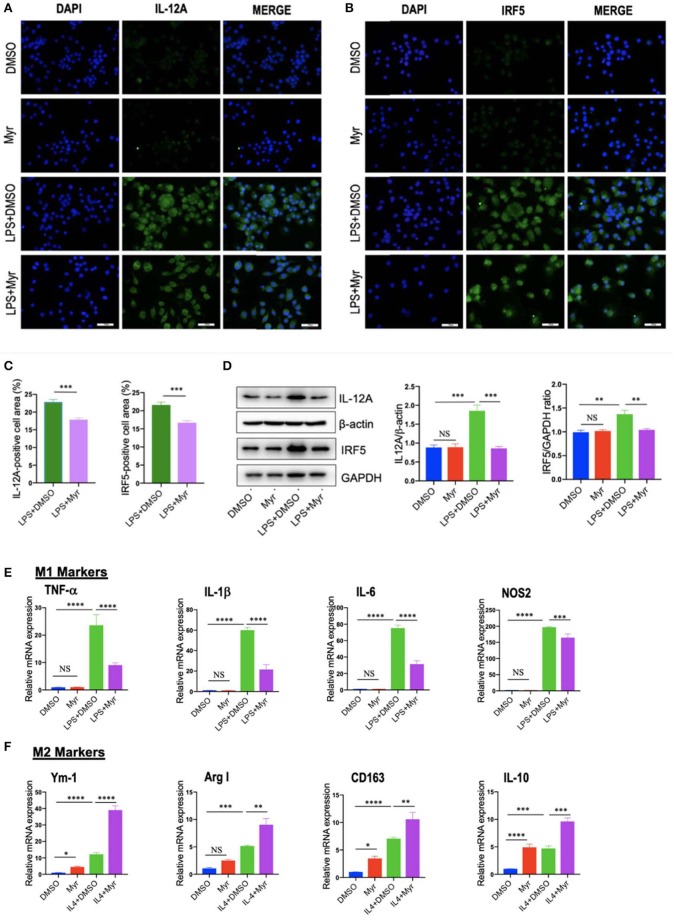
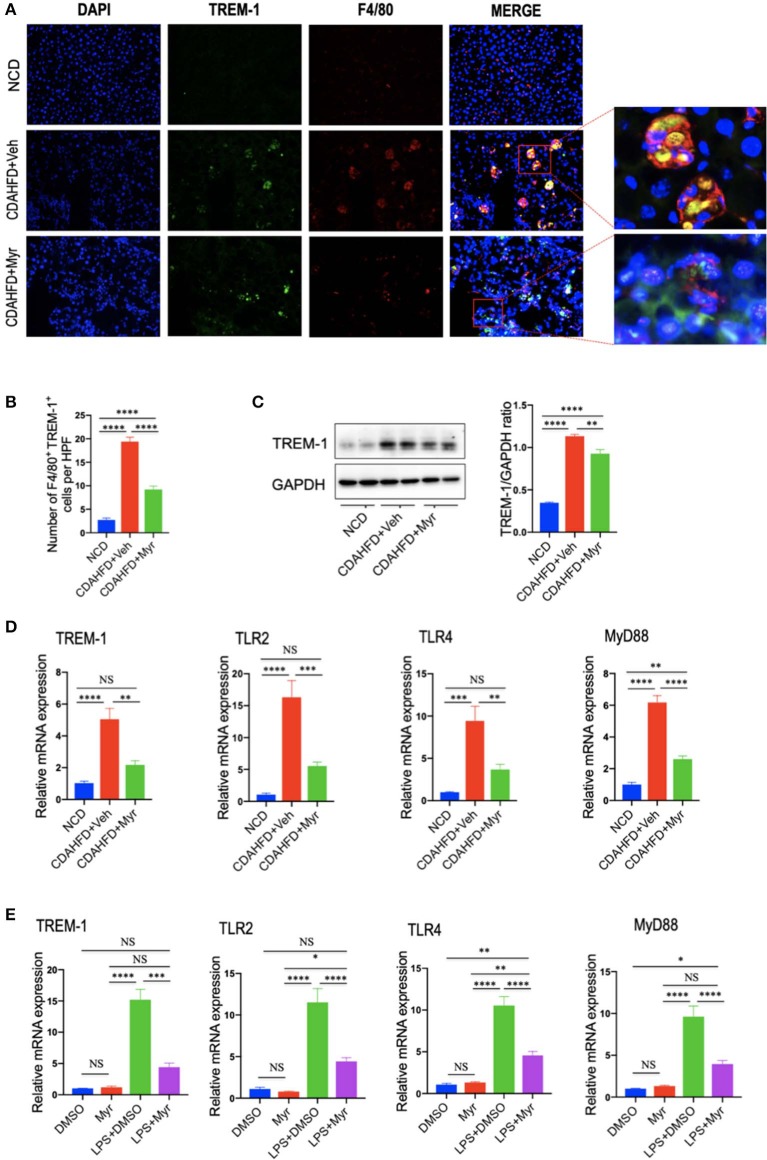
This study aimed to investigate the beneficial effects of myricetin in a diet-induced nonalcoholic steatohepatitis (NASH) model and the underlying mechanism. C57BL/6J mice were fed a standard chow or the choline-deficient, L-amino acid-defined, high-fat diet (CDAHFD) for 8 weeks with the treatment of myricetin (100 mg/kg) or vehicle by daily gavage. Hepatic inflammation, steatosis, fibrosis, and hepatic stellate cells (HSC) activation were assessed. We also analyzed M1 and M2 macrophages and its related markers in livers from NASH mice and in RAW264.7 macrophages stimulated by lipopolysaccharide (LPS) or interleukin 4 (IL-4) . Furthermore, we determined the effect of myricetin on the triggering receptor expressed on myeloid cells-1 (TREM-1), toll like receptor (TLR) 2 and 4, and myeloid differentiation factor 88 (MyD88) signaling both in livers from mice and in RAW264.7 cells stimulated by LPS. Our results revealed that myricetin remarkably ameliorated hepatic steatosis, inflammation, and inhibited hepatic macrophage infiltration in CDAHFD-fed mice. Myricetin-treated to CDAHFD-fed mice also inhibited liver fibrosis and HSC activation when compared with vehicle-treated to those mice. Moreover, myricetin inhibited M1 macrophage polarization and its relative markers in livers of NASH mice while induced M2 polarization. Similarly, study, myricetin inhibited the LPS-induced mRNA expression of M1 macrophages marker genes and induced IL-4-induced M2 macrophage marker genes in RAW264.7 macrophages. Mechanically, myricetin inhibited the expression of TREM-1 and TLR2/4-MyD88 signaling molecules in livers from NASH mice and in RAW264.7 macrophages stimulated by LPS . Additionally, myricetin inhibited the activation of nuclear factor (NF)-κB signaling and the phosphorylation of the signal transducer and activation of transcription 3 (STAT3) in LPS-stimulated RAW264.7 macrophages. Taken together, our data indicated that myricetin modulated the polarization of macrophages via inhibiting the TREM-1-TLR2/4-MyD88 signaling molecules in macrophages and therefore mitigated NASH and hepatic fibrosis in the CDAHFD-diet-induced NASH model in mice.
本研究旨在探讨杨梅素在饮食诱导的非酒精性脂肪性肝炎(NASH)模型中的有益作用及其潜在机制。将C57BL/6J小鼠分为两组,一组喂食标准饲料,另一组喂食胆碱缺乏、L-氨基酸限定的高脂肪饮食(CDAHFD),持续8周,期间通过每日灌胃给予杨梅素(100 mg/kg)或溶剂。评估肝脏炎症、脂肪变性、纤维化以及肝星状细胞(HSC)激活情况。我们还分析了NASH小鼠肝脏以及脂多糖(LPS)或白细胞介素4(IL-4)刺激的RAW264.7巨噬细胞中的M1和M2巨噬细胞及其相关标志物。此外,我们测定了杨梅素对骨髓细胞上表达的触发受体-1(TREM-1)、Toll样受体(TLR)2和4以及髓样分化因子88(MyD88)信号通路的影响,实验对象包括小鼠肝脏和LPS刺激的RAW264.7细胞。我们的结果显示,杨梅素显著改善了CDAHFD喂养小鼠的肝脏脂肪变性、炎症,并抑制了肝脏巨噬细胞浸润。与给予溶剂的小鼠相比,给予杨梅素的CDAHFD喂养小鼠还抑制了肝纤维化和HSC激活。此外, 杨梅素抑制NASH小鼠肝脏中M1巨噬细胞极化及其相关标志物,同时诱导M2极化。同样,在RAW264.7巨噬细胞的研究中,杨梅素抑制LPS诱导的M1巨噬细胞标志物基因的mRNA表达,并诱导IL-4诱导的M2巨噬细胞标志物基因表达。机制上,杨梅素抑制NASH小鼠肝脏以及LPS刺激的RAW264.7巨噬细胞中TREM-1和TLR2/4-MyD88信号分子的表达。此外,杨梅素抑制LPS刺激的RAW264.7巨噬细胞中核因子(NF)-κB信号通路的激活以及信号转导和转录激活因子3(STAT3)的磷酸化。综上所述,我们的数据表明,杨梅素通过抑制巨噬细胞中TREM-1-TLR2/4-MyD88信号分子来调节巨噬细胞极化,从而减轻CDAHFD饮食诱导的小鼠NASH模型中的NASH和肝纤维化。