Department of Biology and Biochemistry, University of Bath, Claverton Down, Bath BA2 7AY, U.K.
Department of Integrative Biomedical Sciences, Institute of Infectious Disease and Molecular Medicine, University of Cape Town, Observatory, 7925 Cape Town, Republic of South Africa.
Biochem J. 2020 Apr 17;477(7):1241-1259. doi: 10.1042/BCJ20200060.
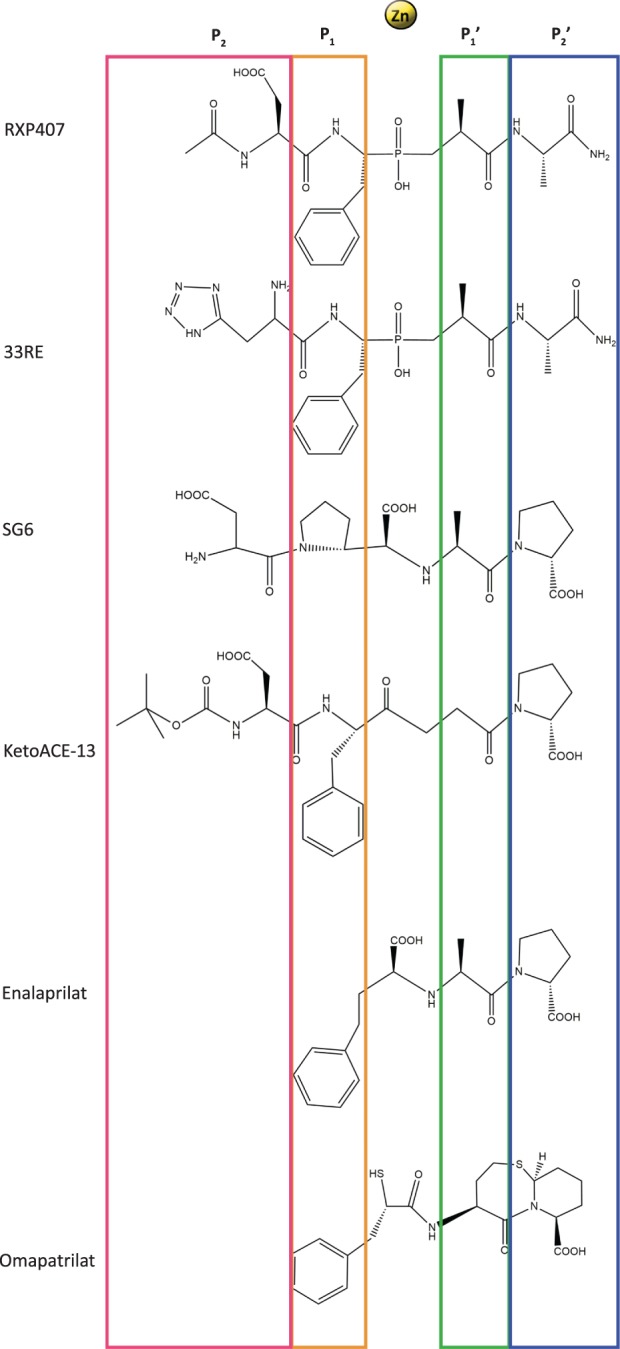
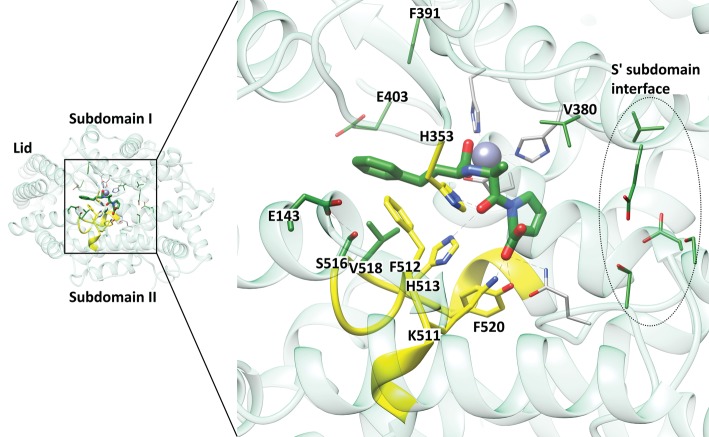
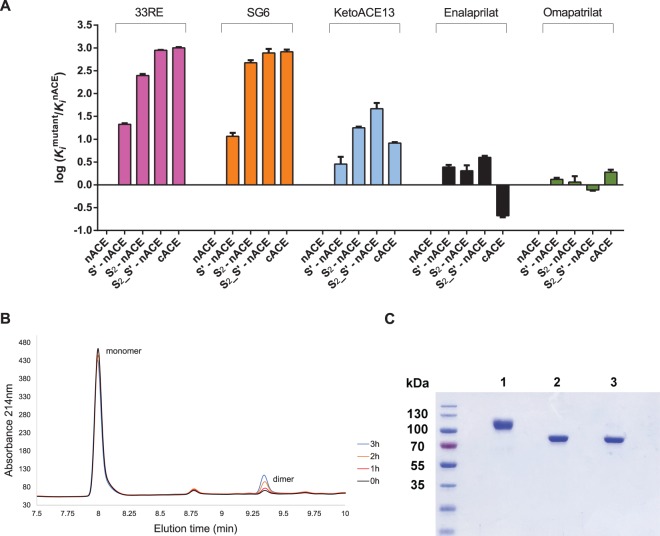
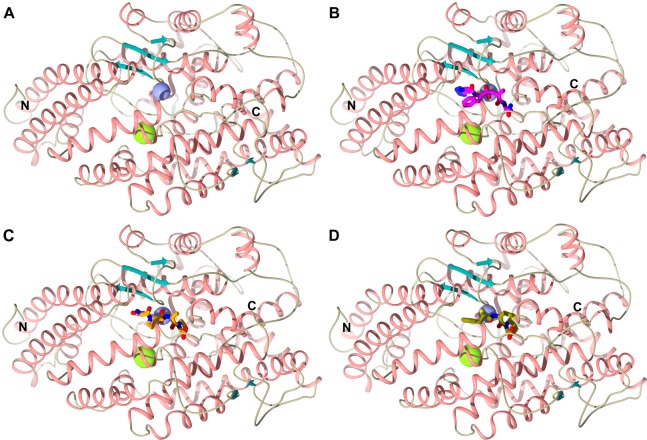
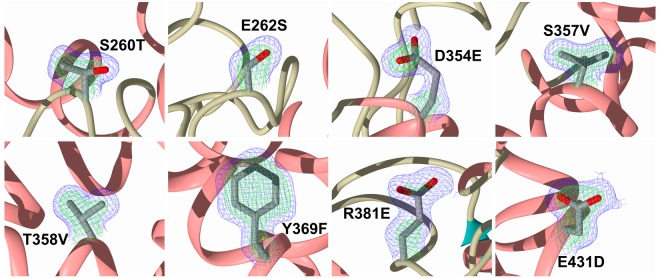
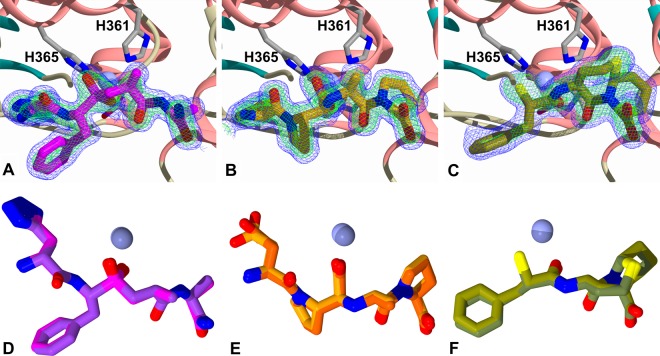
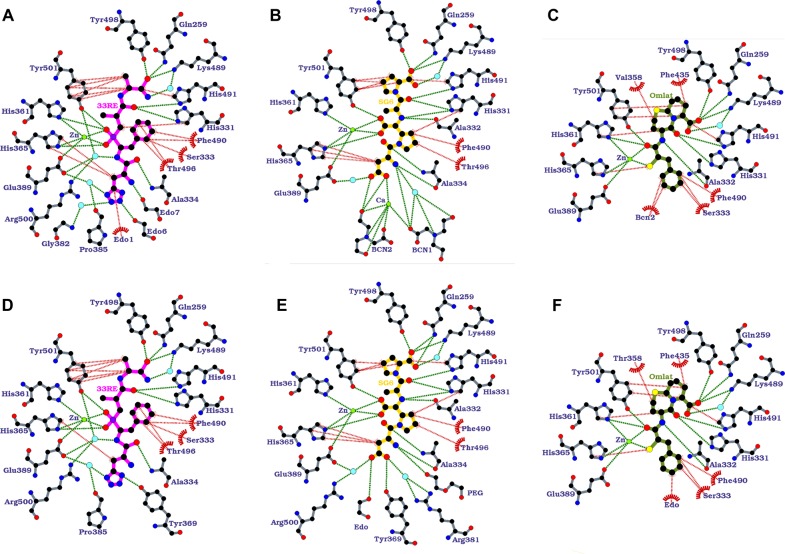
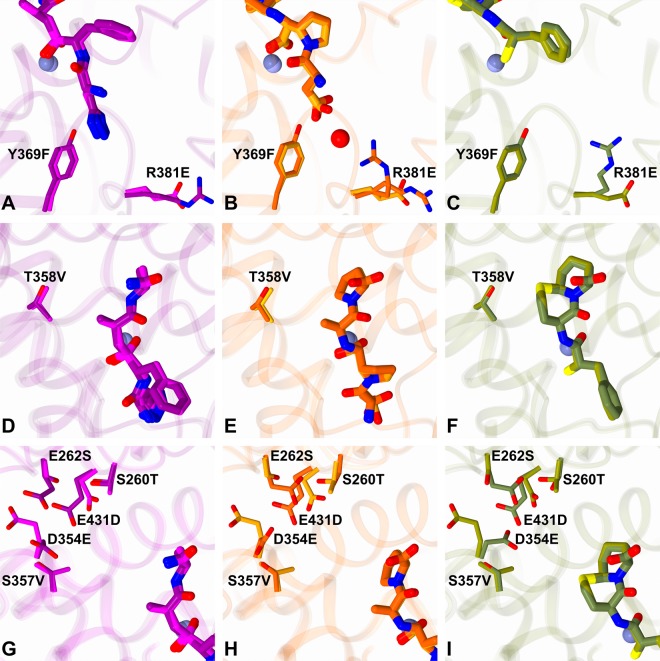
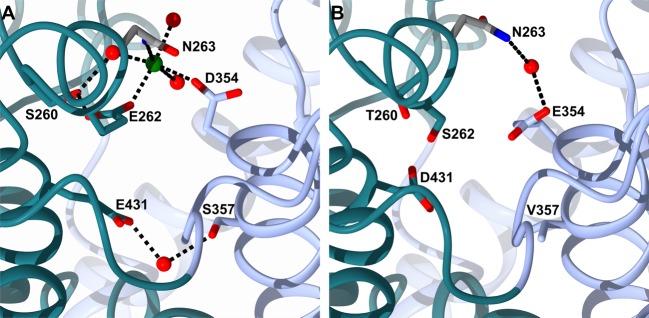
Angiotensin-converting enzyme (ACE) is best known for its formation of the vasopressor angiotensin II that controls blood pressure but is also involved in other physiological functions through the hydrolysis of a variety of peptide substrates. The enzyme contains two catalytic domains (nACE and cACE) that have different affinities for ACE substrates and inhibitors. We investigated whether nACE inhibitor backbones contain a unique property which allows them to take advantage of the hinging of nACE. Kinetic analysis showed that mutation of unique nACE residues, in both the S2 pocket and around the prime subsites (S') to their C-domain counterparts, each resulted in a decrease in the affinity of nACE specific inhibitors (SG6, 33RE and ketoACE-13) but it required the combined S2_S' mutant to abrogate nACE-selectivity. However, this was not observed with the non-domain-selective inhibitors enalaprilat and omapatrilat. High-resolution structures were determined for the minimally glycosylated nACE with the combined S2_S' mutations in complex with the ACE inhibitors 33RE (1.8 Å), omapatrilat (1.8 Å) and SG6 (1.7 Å). These confirmed that the affinities of the nACE-selective SG6, 33RE and ketoACE-13 are not only affected by direct interactions with the immediate environment of the binding site, but also by more distal residues. This study provides evidence for a more general mechanism of ACE inhibition involving synergistic effects of not only the S2, S1' and S2' subsites, but also residues involved in the sub-domain interface that effect the unique ways in which the two domains stabilize active site loops to favour inhibitor binding.
血管紧张素转换酶(ACE)最为人所知的是它形成血管加压素血管紧张素 II,控制血压,但也通过水解各种肽底物参与其他生理功能。该酶包含两个催化结构域(nACE 和 cACE),它们对 ACE 底物和抑制剂具有不同的亲和力。我们研究了 nACE 抑制剂骨架是否具有独特的性质,使其能够利用 nACE 的铰链。动力学分析表明,突变独特的 nACE 残基,在 S2 口袋和主要部位(S')周围的残基到它们的 C 结构域对应物,都导致 nACE 特异性抑制剂(SG6、33RE 和 ketoACE-13)的亲和力降低,但需要组合 S2_S'突变来消除 nACE 选择性。然而,这在非结构选择性抑制剂依那普利和奥美普利中没有观察到。对于最小糖基化的 nACE 与 ACE 抑制剂 33RE(1.8 Å)、奥美普利(1.8 Å)和 SG6(1.7 Å)的复合物,确定了高分辨率结构。这些结构证实了 nACE 选择性的 SG6、33RE 和 ketoACE-13 的亲和力不仅受到与结合位点直接相互作用的影响,还受到更远端残基的影响。这项研究为 ACE 抑制的更一般机制提供了证据,涉及不仅 S2、S1'和 S2'亚位点,而且还涉及亚结构域界面的残基的协同作用,这些残基影响两个结构域稳定活性位点环以促进抑制剂结合的独特方式。