Shentu Nanying, Wang Sheng, Li Qing, Tong Renyuan, An Siguang, Qiu Guohua
College of Mechanical and Electrical Engineering, China Jiliang University, Hangzhou 310018, China.
College of Information Enginerrig, China Jiliang University, Hangzhou 310018, China.
Sensors (Basel). 2020 Mar 18;20(6):1689. doi: 10.3390/s20061689.
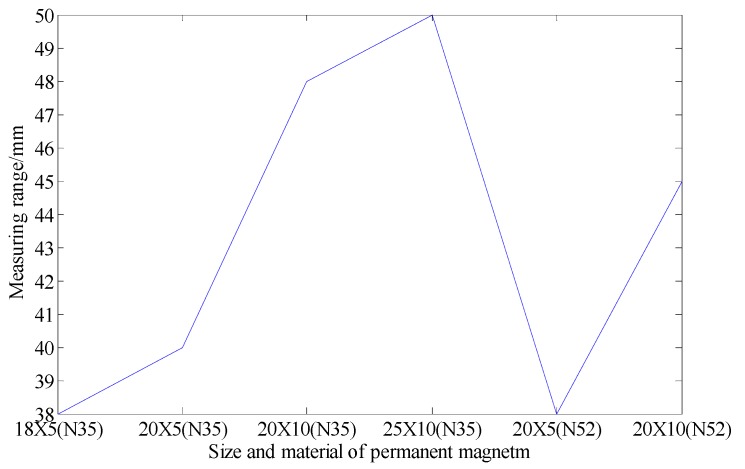
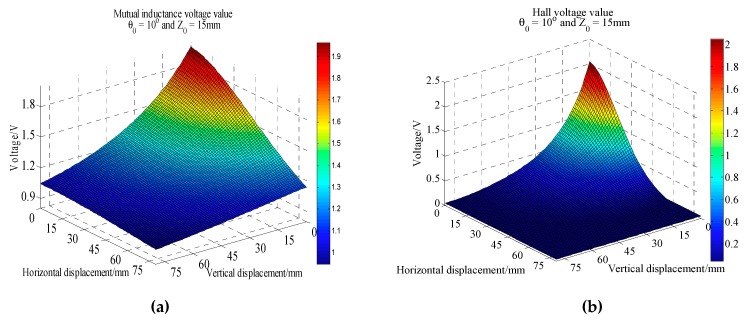
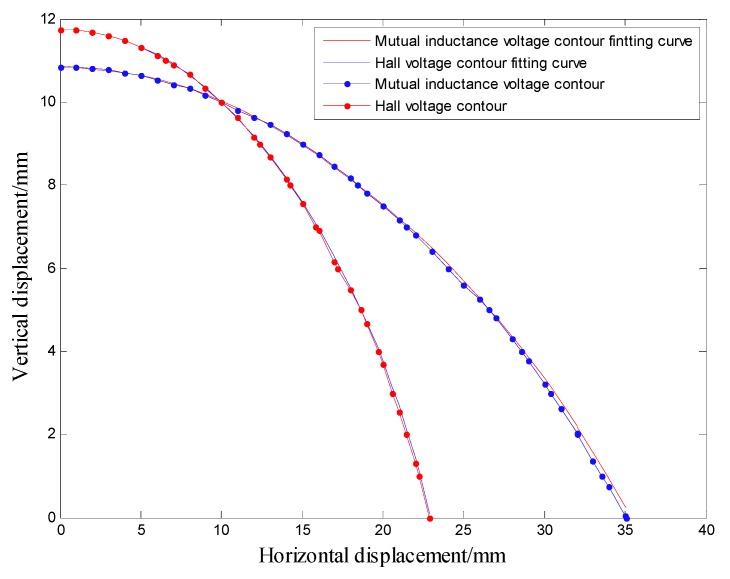
Deep displacement monitoring of rock and soil mass is the focus of current geological hazard research. In the previous works, we proposed a geophysical deep displacement characteristic information detection method by implanting magneto-electric sensing arrays in boreholes, and preliminarily designed the sensor prototype and algorithm of deep displacement three-dimensional (3D) measurement. On this basis, we optimized the structure of the sensing unit through 3D printing and other technologies, and improved the shape and material parameters of the permanent magnet after extensive experiments. Through in-depth analysis of the experimental data, based on the data query algorithm and the polynomial least square curve fitting theory, a new mathematical model for 3D measurement of deep displacement has been proposed. By virtue of it, the output values of mutual inductance voltage, Hall voltage and tilt measuring voltage measured by the sensing units can be converted into the variations of relative horizontal displacement, vertical displacement and axial tilt angle between any two adjacent sensing units in real time, and the measuring errors of horizontal and vertical displacement are tested to be 0-1.5 mm. The combination of structural optimization and measurement method upgrading extends the measurement range of the sensing unit from 0-30 mm to 0-50 mm. It shows that our revised deep displacement 3D measuring sensor can better meet the needs of high-precision monitoring at the initial stage of rock and soil deformation and large deformation monitoring at the rapid change and imminent-sliding stage.
岩土体深部位移监测是当前地质灾害研究的重点。在前期工作中,我们提出了一种通过在钻孔中植入磁电传感阵列的地球物理深部位移特征信息检测方法,并初步设计了深部位移三维(3D)测量的传感器原型和算法。在此基础上,我们通过3D打印等技术优化了传感单元的结构,并在大量实验后改进了永磁体的形状和材料参数。通过对实验数据的深入分析,基于数据查询算法和多项式最小二乘曲线拟合理论,提出了一种新的深部位移三维测量数学模型。借助该模型,传感单元测量的互感电压、霍尔电压和倾斜测量电压的输出值可实时转换为任意两个相邻传感单元之间相对水平位移、垂直位移和轴向倾斜角的变化,经测试水平和垂直位移测量误差为0 - 1.5mm。结构优化与测量方法升级相结合,将传感单元的测量范围从0 - 30mm扩展到0 - 50mm。结果表明,我们改进后的深部位移三维测量传感器能够更好地满足岩土体变形初期高精度监测以及快速变化和临滑阶段大变形监测的需求。