Laboratory of Experimental Virology, Department of Medical Microbiology, Amsterdam UMC, University of Amsterdam, 1105AZ Amsterdam, The Netherlands.
Viruses. 2020 Mar 18;12(3):330. doi: 10.3390/v12030330.
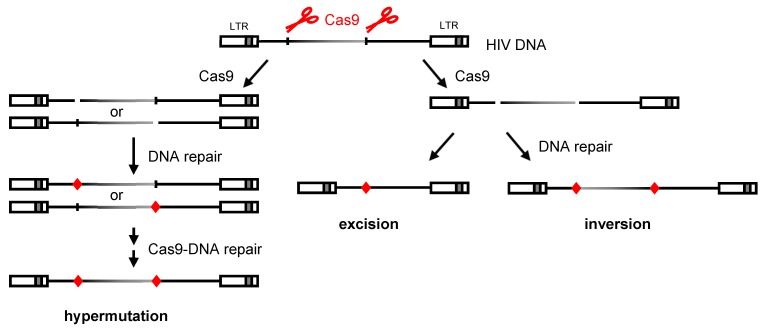
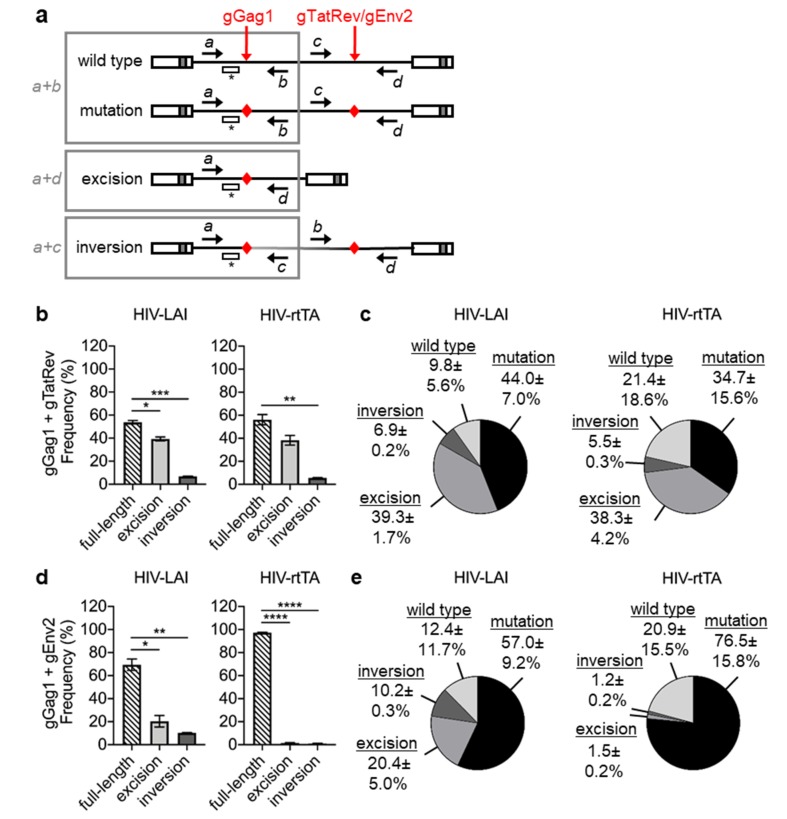
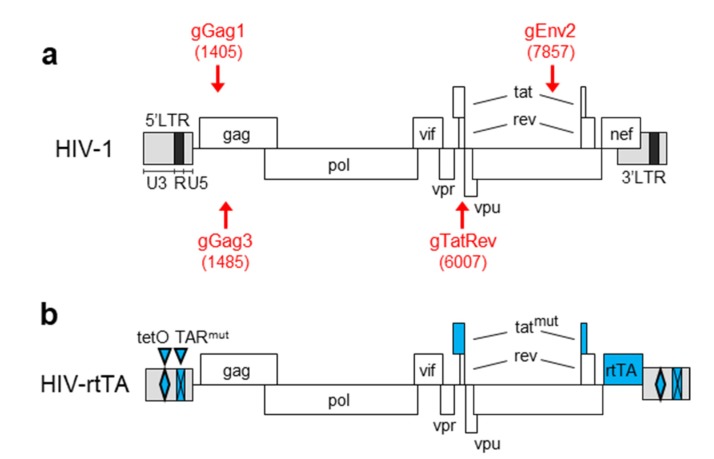
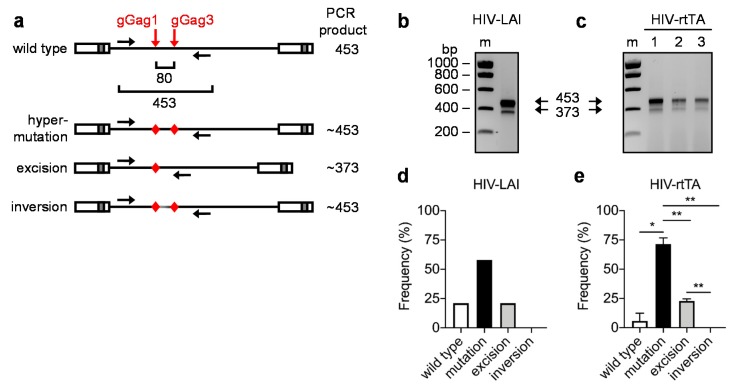
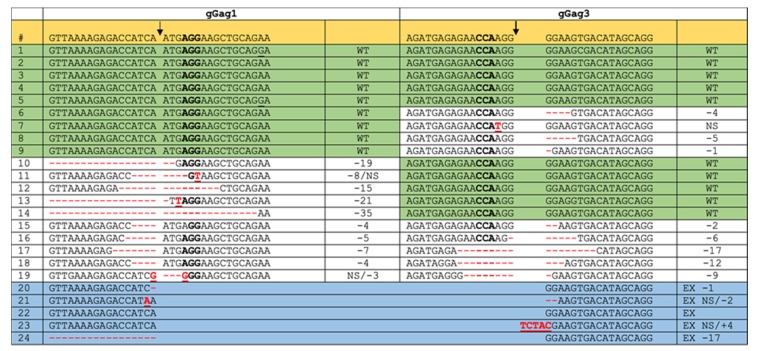
Although several studies demonstrated that the HIV proviral DNA can be effectively targeted and inactivated by the CRISPR-Cas9 system, the precise inactivation mechanism has not yet been analyzed. Whereas some studies suggested efficient proviral DNA excision upon dual-gRNA/Cas9 treatment, we previously demonstrated that hypermutation of the target sites correlated with permanent virus inactivation. To better understand the mechanism underlying HIV inactivation, we analyzed the proviral DNA upon Cas9 attack with gRNA pairs. We observed that dual-gRNA targeting resulted more frequently in target site mutation than fragment excision, while fragment inversion was rarely observed. The frequencies varied for different gRNA combinations without an obvious relationship with the distance between the target sites, indicating that other gRNA and target DNA characteristics influence the DNA cleavage and repair processes.
尽管有几项研究表明,CRISPR-Cas9 系统可以有效地靶向和失活 HIV 前病毒 DNA,但精确的失活机制尚未被分析。虽然一些研究表明,双重 gRNA/Cas9 处理后可以有效地切除前病毒 DNA,但我们之前的研究表明,靶位点的高频突变与病毒的永久失活相关。为了更好地理解 HIV 失活的机制,我们在 Cas9 攻击下分析了带有 gRNA 对的前病毒 DNA。我们观察到,双重 gRNA 靶向比片段切除更频繁地导致靶位点突变,而片段倒位很少观察到。不同 gRNA 组合的频率变化与靶位点之间的距离没有明显关系,这表明其他 gRNA 和靶 DNA 特征影响 DNA 切割和修复过程。