Department of Pediatric Surgery, Union Hospital, Tongji Medical College, Huazhong University of Science and Technology, Wuhan, 430022, China.
Institute of Hematology, Union Hospital, Tongji Medical College, Huazhong University of Science and Technology, Wuhan, China.
J Exp Clin Cancer Res. 2020 Mar 20;39(1):52. doi: 10.1186/s13046-020-01558-2.
Runt-related transcription factor 1 (RUNX1) is a heterodimeric transcription factor that binds to the core element of many enhancers and promoters and can accelerate apoptosis in various tumors. However, the regulatory mechanisms underlying RUNX1 expression in neuroblastoma (NB), a highly malignant tumor in childhood, remain largely unclear. In this study, we aimed to assess the role of RUNX1 in NB and to reveal the underlying mechanisms that may contribute to finding a potential therapeutics strategy against NB.
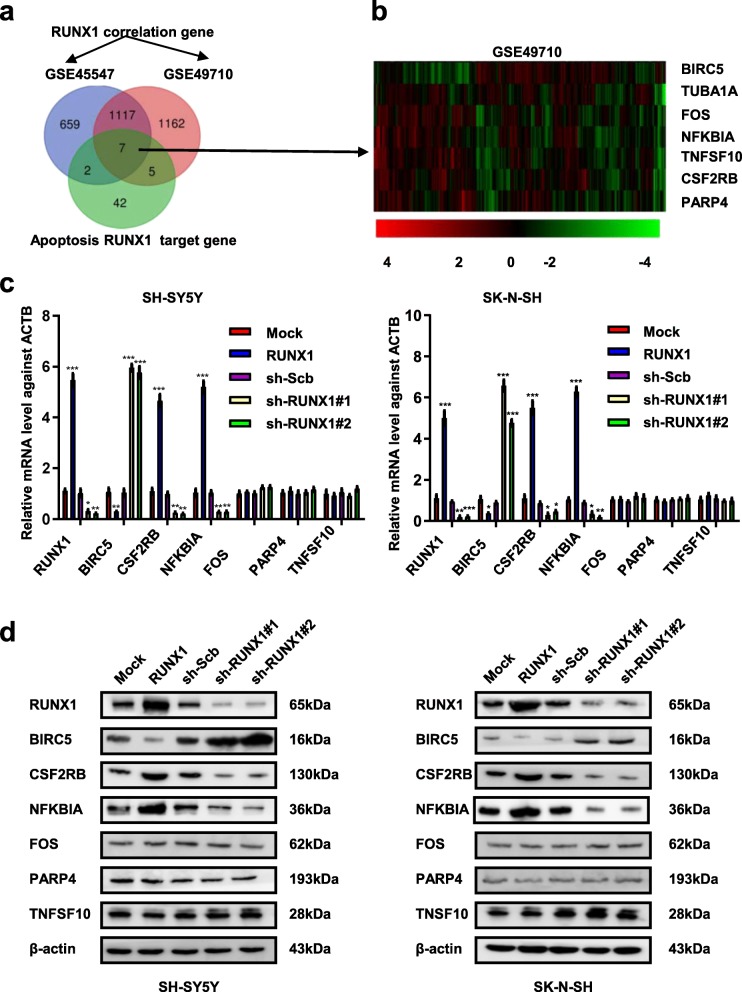
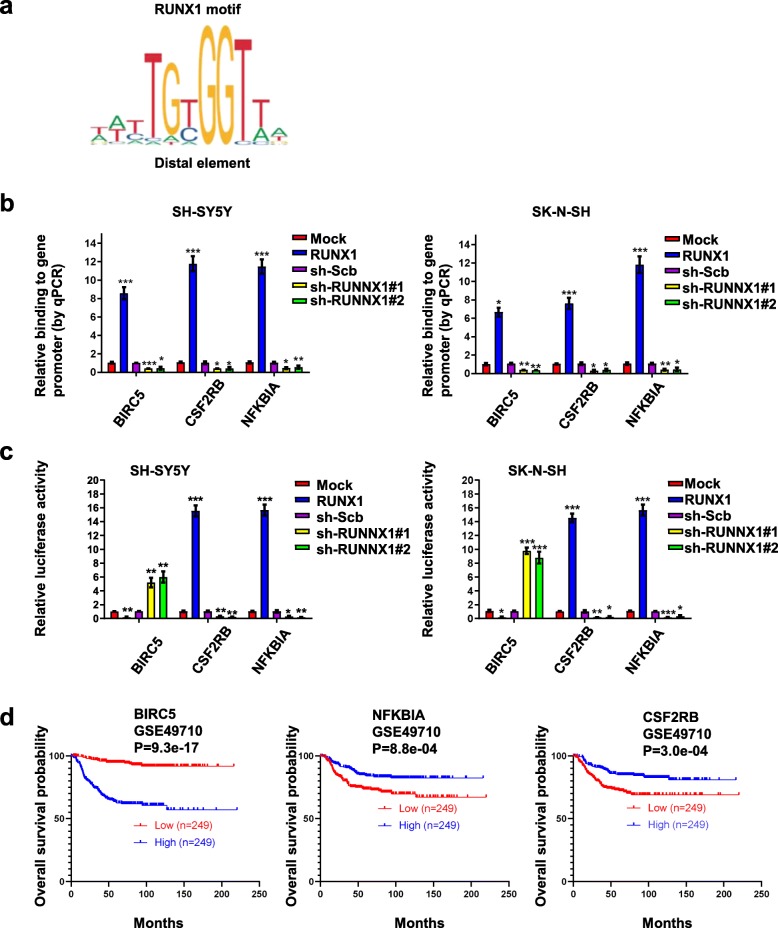
Growth, invasion, metastasis and angiogenesis were assessed using Cell Counting Kit-8 (CCK-8) immunocytochemistry, and studies involving soft agar, cell invasion, tube formation and whole animals. The levels of expression were measured using real-time quantitative PCR for RNA, Western blot and immunostaining analyses for proteins. Luciferase reporter and chromatin immunoprecipitation assays indicated that RUNX1 directly binds within the BIRC5, CSF2RB and NFKBIA promoter regions to facilitate transcription. The level of apoptosis was assessed by determining mitochondrial membrane potential and flow cytometry.
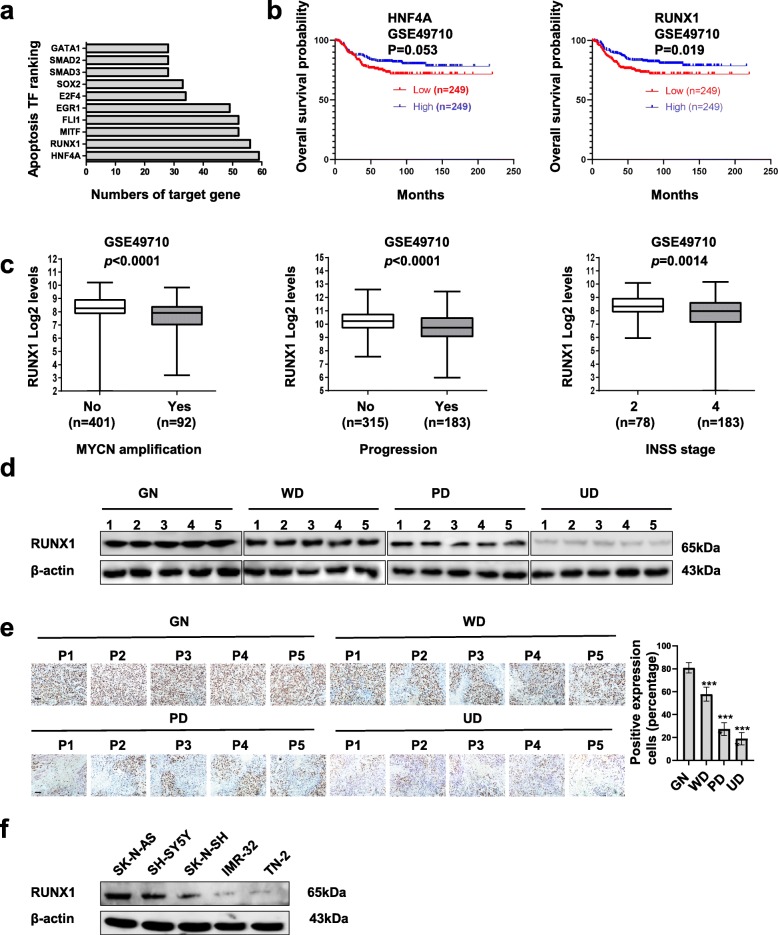
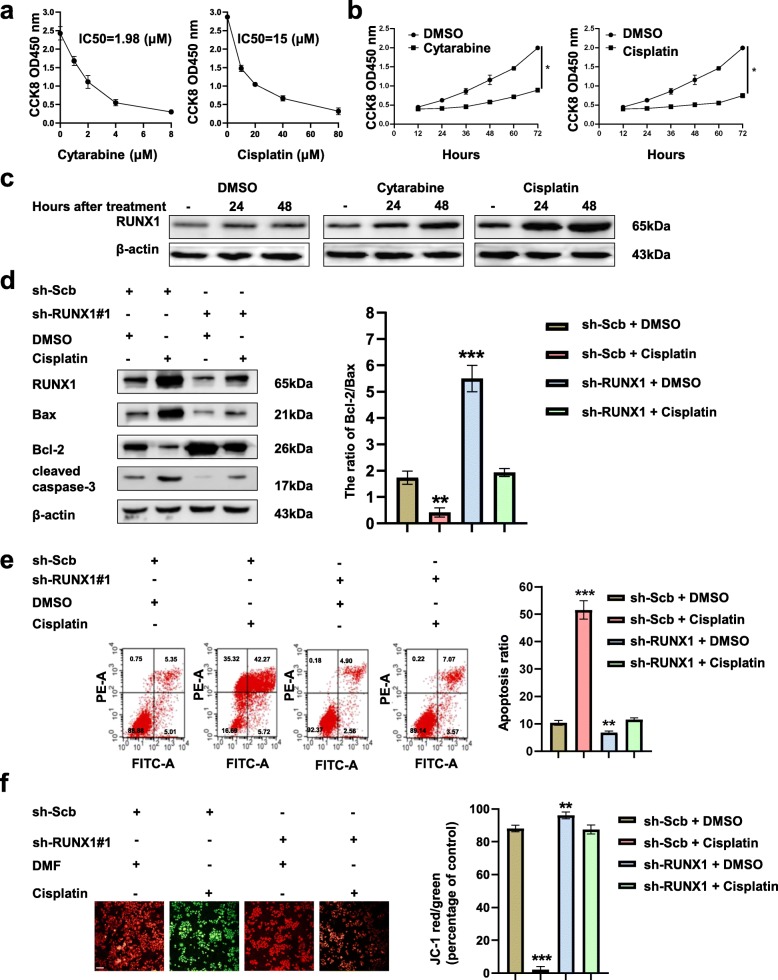
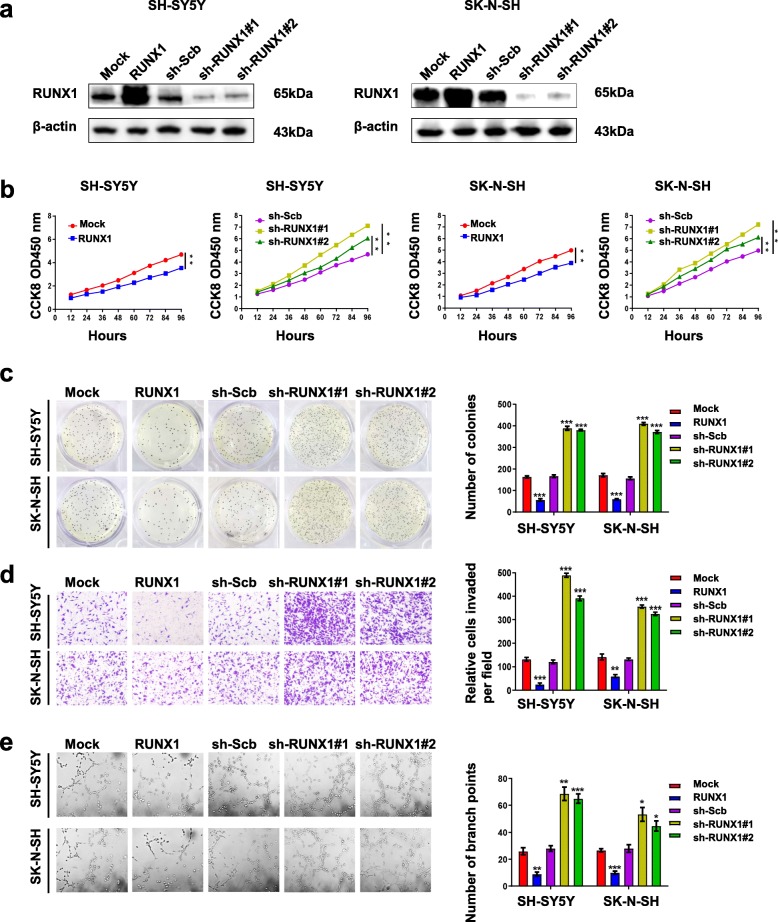
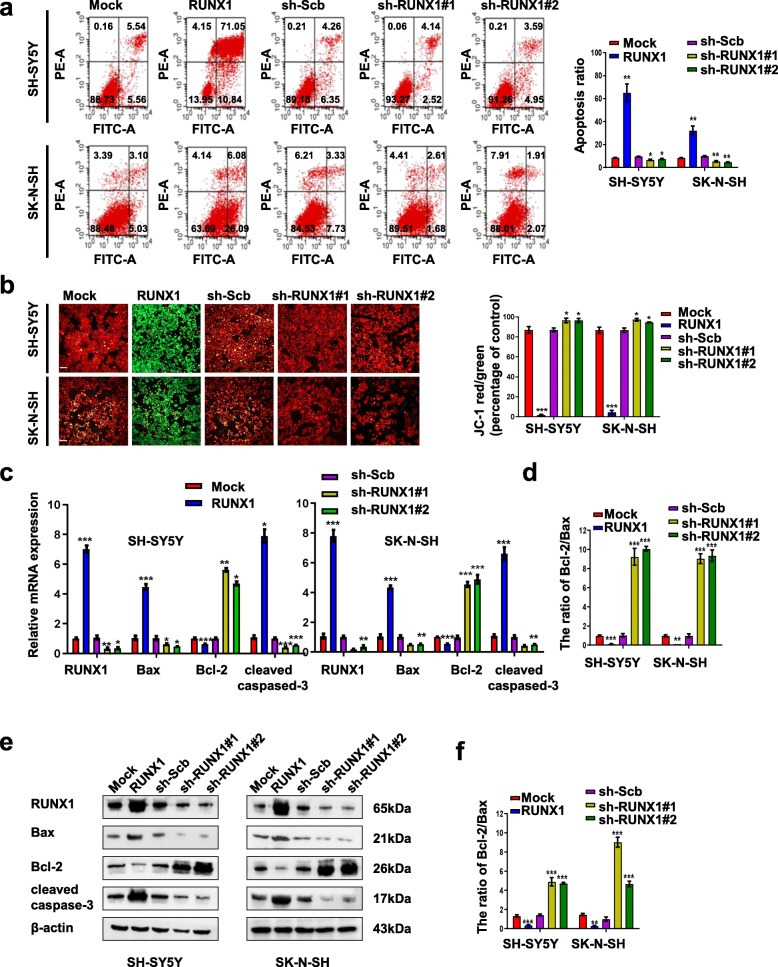
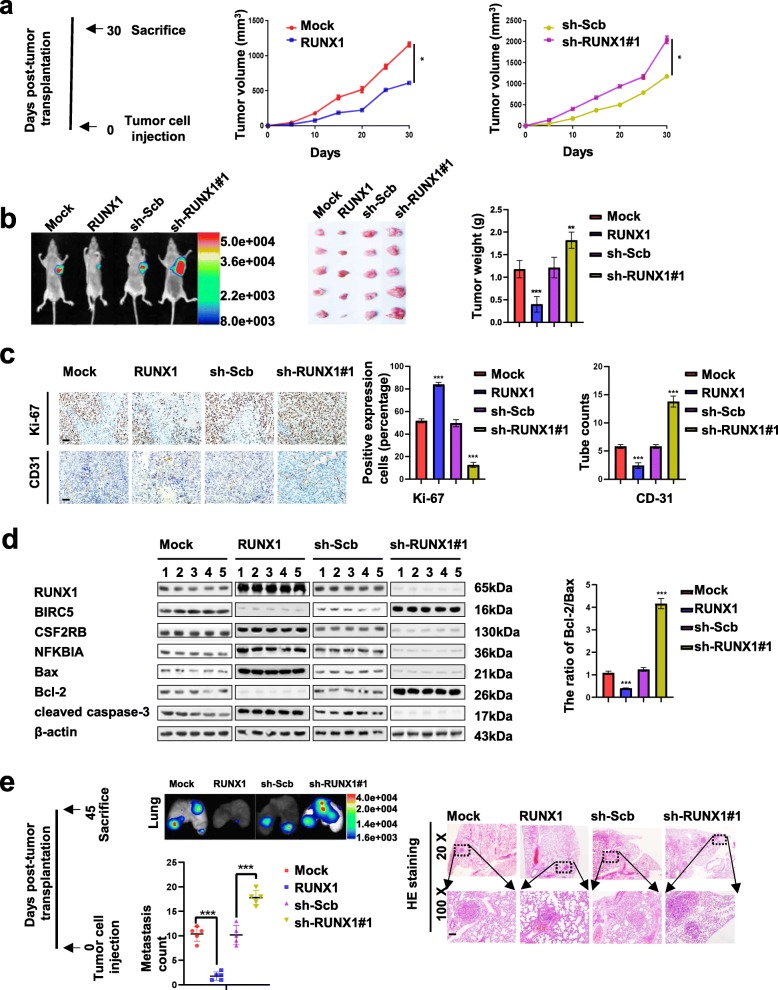
RUNX1 was highly expressed in ganglioneuroma (GN) and well-differentiated (WD) tissues relative to the poorly differentiated (PD) and undifferentiated (UD) ones. Moreover, RUNX1 effectively reduced cell viability, invasion, metastasis, angiogenesis, and promoted apoptosis in vitro and in vivo. RUNX1 reduced BIRC5 transcription and increased CSF2RB and NFKBIA transcription by directly binding BIRC5, CSF2RB and NFKBIA promoters. In addition, cytotoxic drugs, especially cisplatin, significantly increased RUNX1 expression in NB cells and promoted apoptosis.
These data show that RUNX1 is an independent surrogate marker for the progression of NB and it can be used for monitoring NB prognosis during therapy.
runt 相关转录因子 1(RUNX1)是一种异二聚体转录因子,它与许多增强子和启动子的核心元件结合,可以加速各种肿瘤的细胞凋亡。然而,在儿童期高度恶性肿瘤神经母细胞瘤(NB)中,RUNX1 表达的调控机制在很大程度上仍不清楚。在这项研究中,我们旨在评估 RUNX1 在 NB 中的作用,并揭示可能有助于寻找针对 NB 的潜在治疗策略的潜在机制。
使用细胞计数试剂盒-8(CCK-8)免疫细胞化学评估生长、侵袭、转移和血管生成,以及软琼脂、细胞侵袭、管形成和整体动物研究。使用 RNA 的实时定量 PCR、蛋白质的 Western blot 和免疫染色分析来测量表达水平。荧光素酶报告和染色质免疫沉淀测定表明 RUNX1 直接结合 BIRC5、CSF2RB 和 NFKBIA 启动子区域以促进转录。通过测定线粒体膜电位和流式细胞术来评估细胞凋亡水平。
RUNX1 在神经节细胞瘤(GN)和分化良好(WD)组织中的表达水平高于分化不良(PD)和未分化(UD)组织。此外,RUNX1 有效降低了体外和体内细胞活力、侵袭、转移、血管生成,并促进了细胞凋亡。RUNX1 通过直接结合 BIRC5、CSF2RB 和 NFKBIA 启动子,降低了 BIRC5 的转录并增加了 CSF2RB 和 NFKBIA 的转录。此外,细胞毒性药物,特别是顺铂,在 NB 细胞中显著增加了 RUNX1 的表达并促进了细胞凋亡。
这些数据表明,RUNX1 是 NB 进展的独立替代标志物,可用于监测治疗过程中 NB 的预后。