Eaden James A, Skeoch Sarah, Waterton John C, Chaudhuri Nazia, Bianchi Stephen M
POLARIS, Academic Radiology, Dept of Infection, Immunity and Cardiovascular Disease, The University of Sheffield, Sheffield, UK.
Sheffield Teaching Hospitals NHS Foundation Trust, Sheffield, UK.
ERJ Open Res. 2020 Mar 16;6(1). doi: 10.1183/23120541.00286-2019. eCollection 2020 Jan.
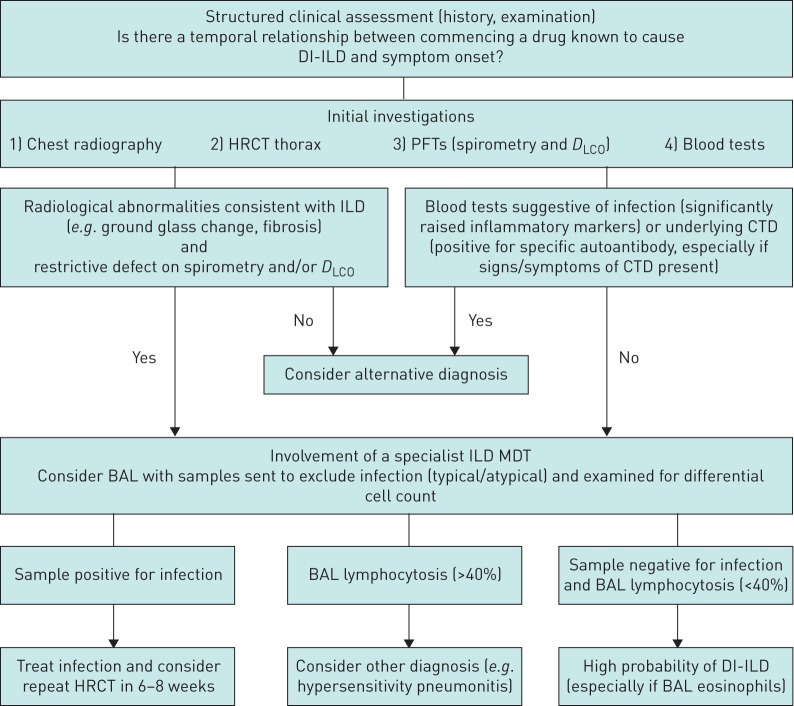
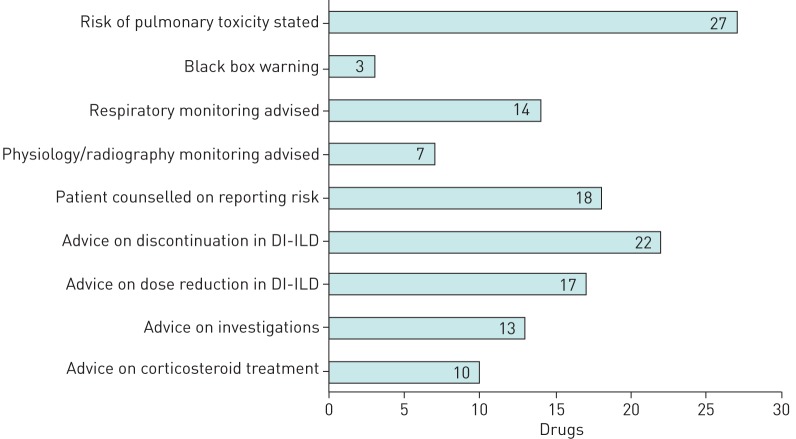
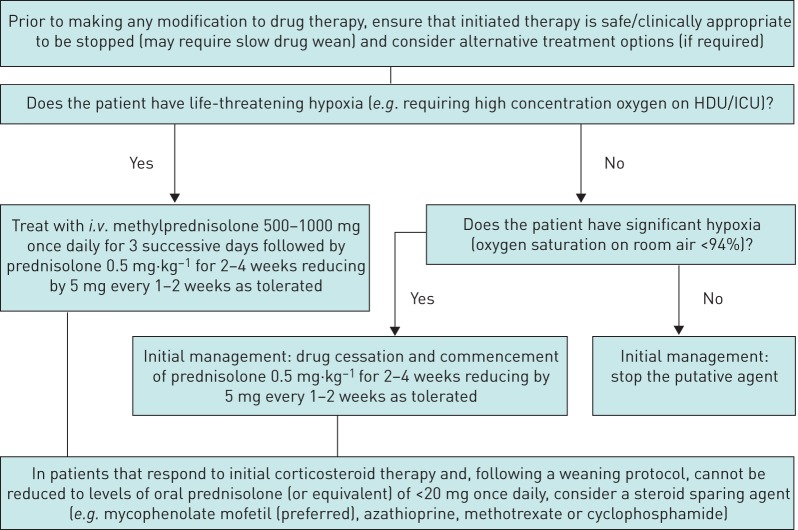
Currently there are no general guidelines for diagnosis or management of suspected drug-induced (DI) interstitial lung disease (ILD). The objective was to survey a sample of current European practice in the diagnosis and management of DI-ILD, in the context of the prescribing information approved by regulatory authorities for 28 licenced drugs with a recognised risk of DI-ILD.
Consultant physicians working in specialist ILD centres across Europe were emailed two surveys a website link. Initially, opinion was sought regarding various diagnostic and management options based on seven clinical ILD case vignettes and five general questions regarding DI-ILD. The second survey involved 29 statements regarding the diagnosis and management of DI-ILD, derived from the results of the first survey. Consensus agreement was defined as 75% or greater.
When making a diagnosis of DI-ILD, the favoured investigations used (other than computed tomography) included pulmonary function tests, bronchoscopy and blood tests. The preferred method used to decide when to stop treatment was a pulmonary function test. In the second survey, the majority of the statements were accepted by the 33 respondents, with only four of 29 statements not achieving consensus when the responses "agree" and "strongly agree" were combined as one answer.
The two surveys provide guidance for clinicians regarding an approach to the diagnosis and management of DI-ILD in which the current evidence base is severely lacking, as demonstrated by the limited information provided by the manufacturers of the drugs associated with a high risk of DI-ILD that we reviewed.
目前,对于疑似药物性(DI)间质性肺病(ILD)的诊断或管理尚无通用指南。目的是在监管机构批准的28种有公认DI-ILD风险的许可药物的处方信息背景下,调查欧洲当前DI-ILD诊断和管理的实践样本。
向欧洲各地专科ILD中心工作的顾问医生发送了两份调查问卷——一个网站链接。最初,基于七个临床ILD病例 vignettes 和五个关于DI-ILD的一般问题,征求了关于各种诊断和管理选项的意见。第二次调查涉及根据第一次调查结果得出的29条关于DI-ILD诊断和管理的陈述。共识性同意定义为75%或更高。
在诊断DI-ILD时,常用的检查方法(计算机断层扫描除外)包括肺功能测试、支气管镜检查和血液检查。决定何时停止治疗的首选方法是肺功能测试。在第二次调查中,33名受访者接受了大多数陈述,当将“同意”和“强烈同意”的回答合并为一个答案时,29条陈述中只有4条未达成共识。
这两项调查为临床医生提供了关于DI-ILD诊断和管理方法的指导,目前的证据基础严重不足,正如我们审查的与高DI-ILD风险相关的药物制造商提供的有限信息所表明的那样。