John Johnson V, McCarthy Alec, Wang Hongjun, Chen Shixuan, Su Yajuan, Davis Ethan, Li Xiaowei, Park Jae Sung, Reinhardt Richard A, Xie Jingwei
Department of Surgery-Transplant and Mary & Dick Holland Regenerative Medicine Program, College of Medicine, University of Nebraska Medical Center, Omaha, NE, 68198, USA.
Department of Mechanical and Materials Engineering, College of Engineering, University of Nebraska Lincoln, Lincoln, NE, 68588, USA.
Small. 2020 May;16(19):e1907393. doi: 10.1002/smll.201907393. Epub 2020 Mar 25.
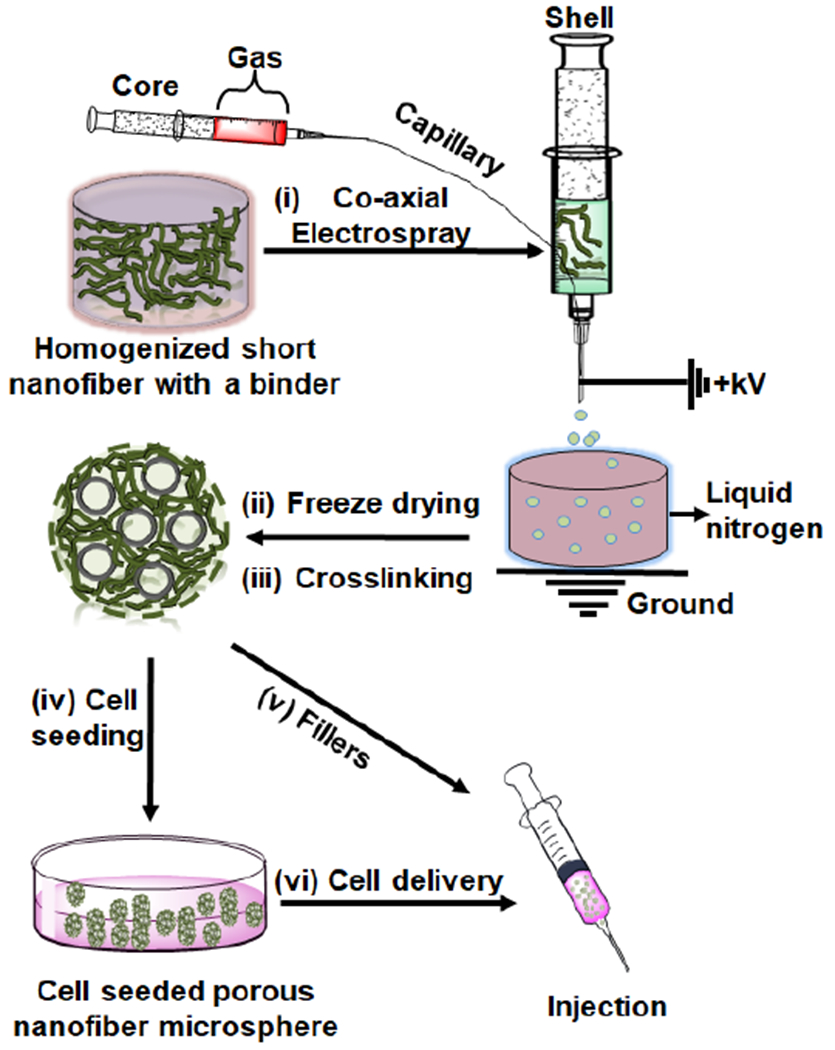
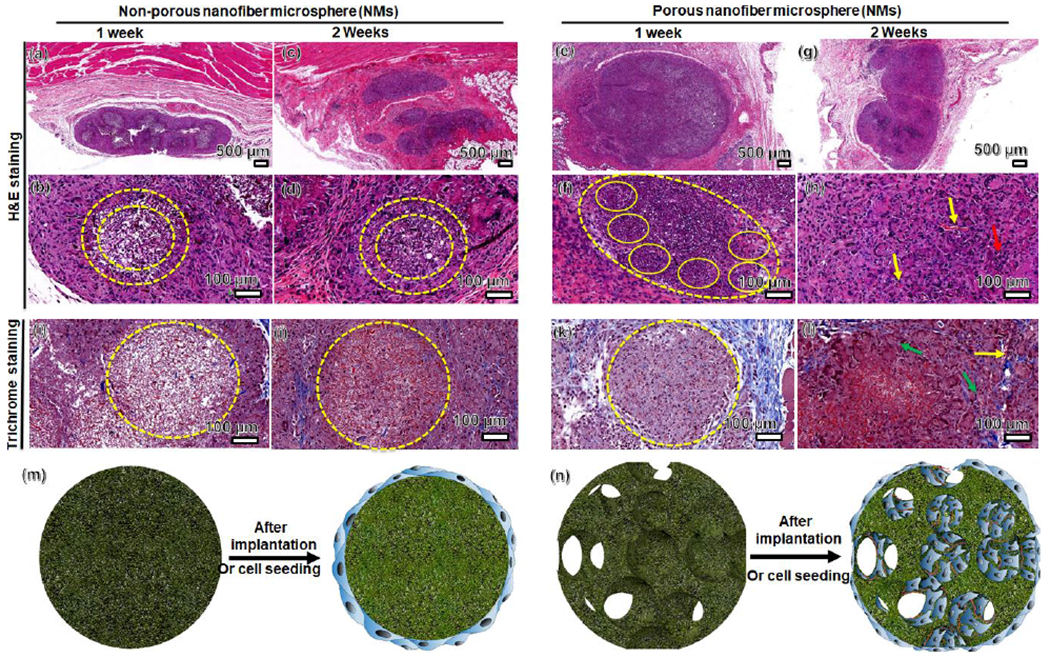
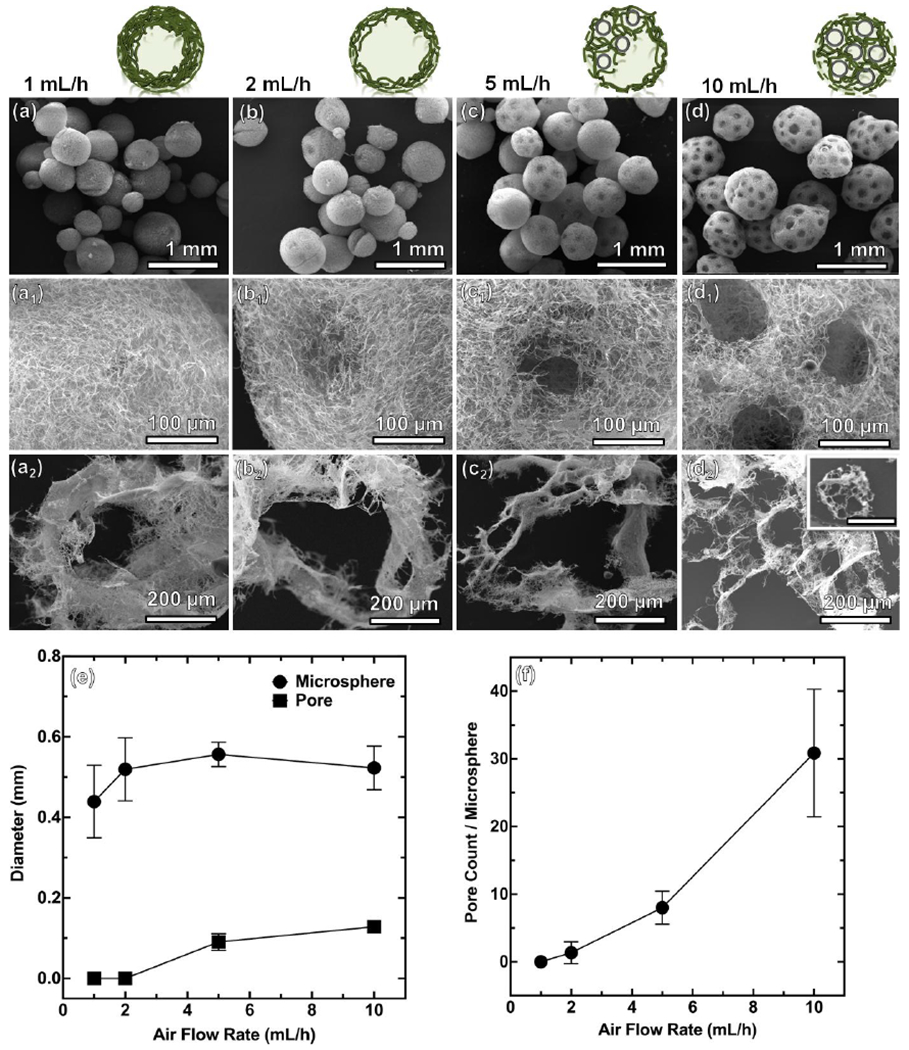
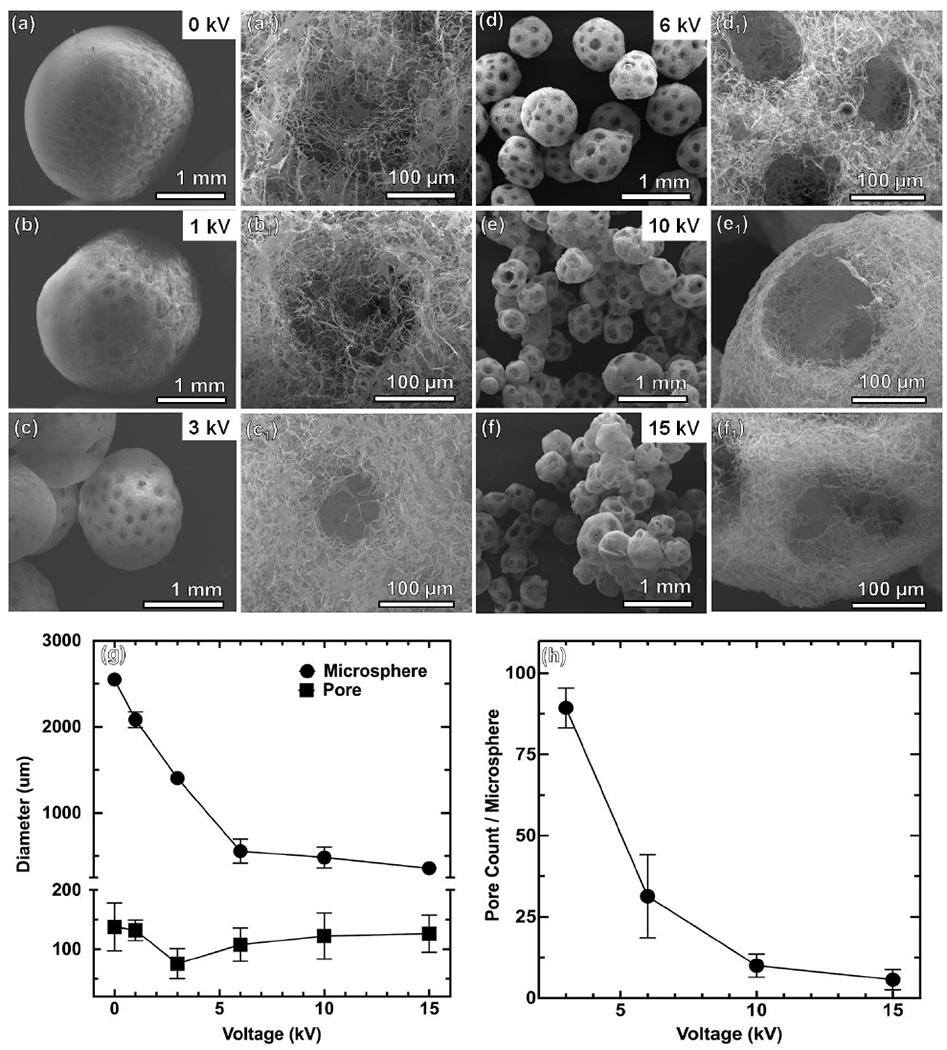
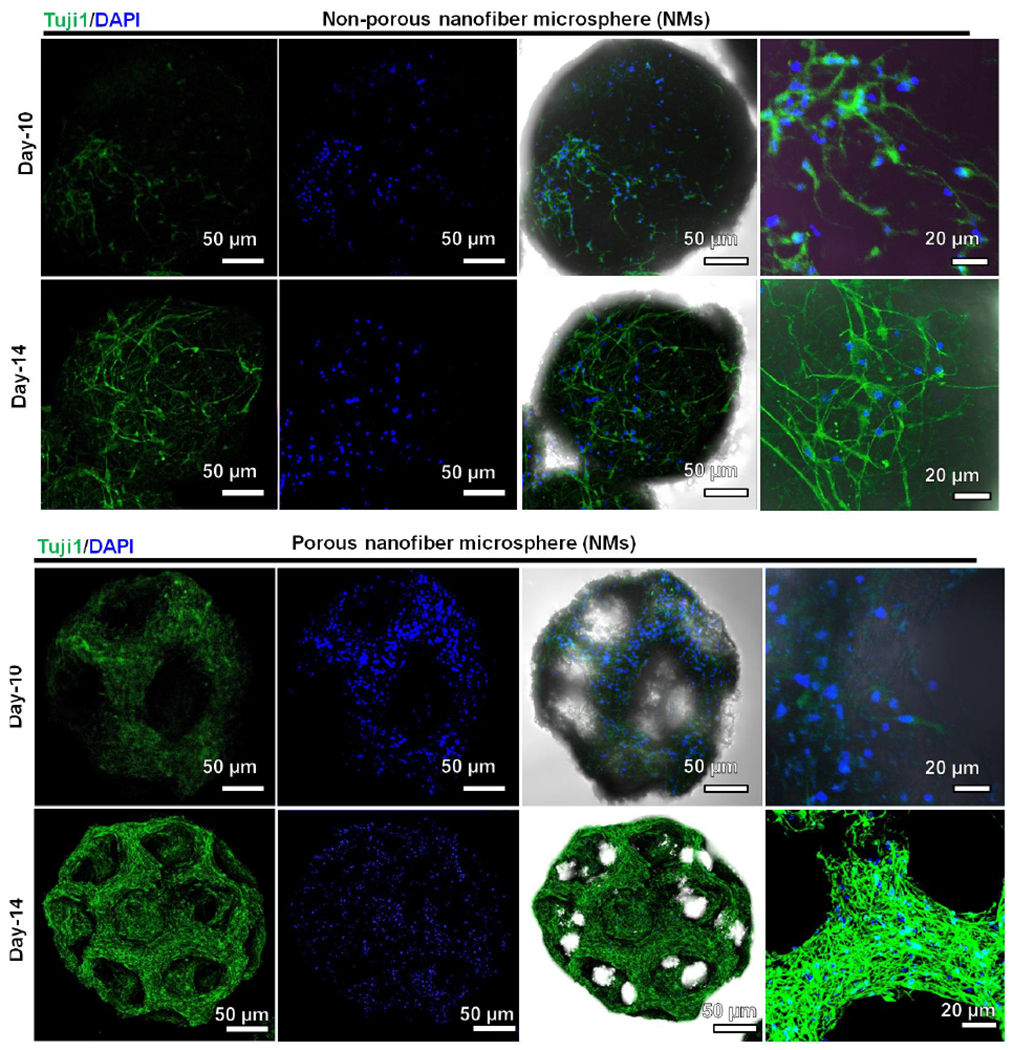
Minimally invasive therapies avoiding surgical complexities evoke great interest in developing injectable biomedical devices. Herein, a versatile approach is reported for engineering injectable and biomimetic nanofiber microspheres (NMs) with tunable sizes, predesigned structures, and desired compositions via gas bubble-mediated coaxial electrospraying. The sizes and structures of NMs are controlled by adjusting processing parameters including air flow rate, applied voltage, distance, and spinneret configuration in the coaxial setup. Importantly, unlike the self-assembly method, this technique can be used to fabricate NMs from any material feasible for electrospinning or other nanofiber fabrication techniques. To demonstrate the versatility, open porous NMs are successfully fabricated that consist of various short nanofibers made of poly(ε-caprolactone), poly(lactic-co-glycolic acid), gelatin, methacrylated gelatin, bioglass, and magneto-responsive polymer composites. Open porous NMs support human neural progenitor cell growth in 3D with a larger number and more neurites than nonporous NMs. Additionally, highly open porous NMs show faster cell infiltration and host tissue integration than nonporous NMs after subcutaneous injection to rats. Such a novel class of NMs holds great potential for many biomedical applications such as tissue filling, cell and drug delivery, and minimally invasive tissue regeneration.
避免手术复杂性的微创治疗方法引发了人们对开发可注射生物医学装置的极大兴趣。在此,我们报道了一种通用方法,通过气泡介导的同轴电喷雾技术来制备具有可调尺寸、预先设计结构和所需成分的可注射仿生纳米纤维微球(NMs)。通过调整同轴装置中的气流速率、施加电压、距离和喷丝头配置等加工参数,可以控制NMs的尺寸和结构。重要的是,与自组装方法不同,该技术可用于从任何适用于静电纺丝或其他纳米纤维制造技术的材料制备NMs。为了展示其通用性,成功制备了开孔多孔NMs,其由聚(ε-己内酯)、聚(乳酸-乙醇酸共聚物)、明胶、甲基丙烯酸化明胶、生物玻璃和磁响应聚合物复合材料制成的各种短纳米纤维组成。开孔多孔NMs在三维空间中支持人类神经祖细胞生长,与无孔NMs相比,其细胞数量更多,神经突更多。此外,在皮下注射到大鼠体内后,高度开孔多孔NMs比无孔NMs显示出更快的细胞浸润和宿主组织整合。这类新型NMs在许多生物医学应用中具有巨大潜力,如组织填充、细胞和药物递送以及微创组织再生。