Medway NHS Foundation Trust, Windmill Road, Gillingham, Kent, ME7 5NY, UK.
AELIA Organization, 9th Km Thessaloniki - Thermi, 57001, Thessaloniki, Greece.
Drugs R D. 2020 Jun;20(2):55-73. doi: 10.1007/s40268-020-00301-8.
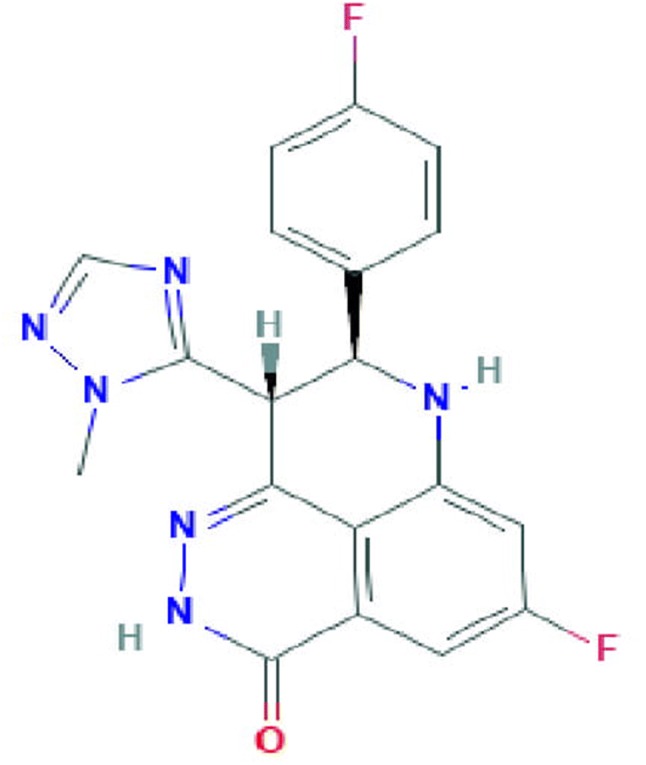
Genetic complexity and DNA damage repair defects are common in different cancer types and can induce tumor-specific vulnerabilities. Poly(ADP-ribose) polymerase (PARP) inhibitors exploit defects in the DNA repair pathway through synthetic lethality and have emerged as promising anticancer therapies, especially in tumors harboring deleterious germline or somatic breast cancer susceptibility gene (BRCA) mutations. However, the utility of PARP inhibitors could be expanded beyond germline BRCA1/2 mutated cancers by causing DNA damage with cytotoxic agents in the presence of a DNA repair inhibitor. US Food and Drug Administration (FDA)-approved PARP inhibitors include olaparib, rucaparib, and niraparib, while veliparib is in the late stage of clinical development. Talazoparib inhibits PARP catalytic activity, trapping PARP1/2 on damaged DNA, and it has been approved by the US FDA for the treatment of metastatic germline BRCA1/2 mutated breast cancers in October 2018. The talazoparib side effect profile more closely resembles traditional chemotherapeutics rather than other clinically approved PARP inhibitors. In this review, we discuss the scientific evidence that has emerged from both experimental and clinical studies in the development of talazoparib. Future directions will include optimizing combination therapy with chemotherapy, immunotherapies and targeted therapies, and in developing and validating biomarkers for patient selection and stratification, particularly in malignancies with 'BRCAness'.
遗传复杂性和 DNA 损伤修复缺陷在不同的癌症类型中很常见,并且可以诱导肿瘤特异性的弱点。聚(ADP-核糖)聚合酶(PARP)抑制剂通过合成致死利用 DNA 修复途径中的缺陷,并且已经成为有前途的抗癌疗法,尤其是在携带有害的种系或体细胞乳腺癌易感性基因(BRCA)突变的肿瘤中。然而,PARP 抑制剂的用途可以通过在 DNA 修复抑制剂存在的情况下用细胞毒性剂引起 DNA 损伤而扩展到种系 BRCA1/2 突变的癌症之外。美国食品和药物管理局(FDA)批准的 PARP 抑制剂包括奥拉帕利、鲁卡帕利和尼拉帕利,而 veliparib 处于临床开发的后期阶段。他拉唑帕利抑制 PARP 催化活性,将 PARP1/2 捕获在受损的 DNA 上,并且已于 2018 年 10 月被美国 FDA 批准用于治疗转移性种系 BRCA1/2 突变的乳腺癌。他拉唑帕利的副作用谱更类似于传统的化疗药物,而不是其他临床批准的 PARP 抑制剂。在这篇综述中,我们讨论了从实验和临床研究中出现的关于他拉唑帕利开发的科学证据。未来的方向将包括优化与化疗、免疫疗法和靶向疗法的联合治疗,并开发和验证用于患者选择和分层的生物标志物,特别是在具有“BRCAness”的恶性肿瘤中。