HAS-UD Vascular Biology and Myocardial Pathophysiology Research Group, Hungarian Academy of Sciences, 98, Nagyerdei krt, Debrecen, H-4032, Hungary.
Department of Pathology, Faculty of Medicine, University of Debrecen, 98, Nagyerdei krt, Debrecen, H-4032, Hungary.
BMC Med Genet. 2020 Mar 27;21(1):61. doi: 10.1186/s12881-020-0985-6.
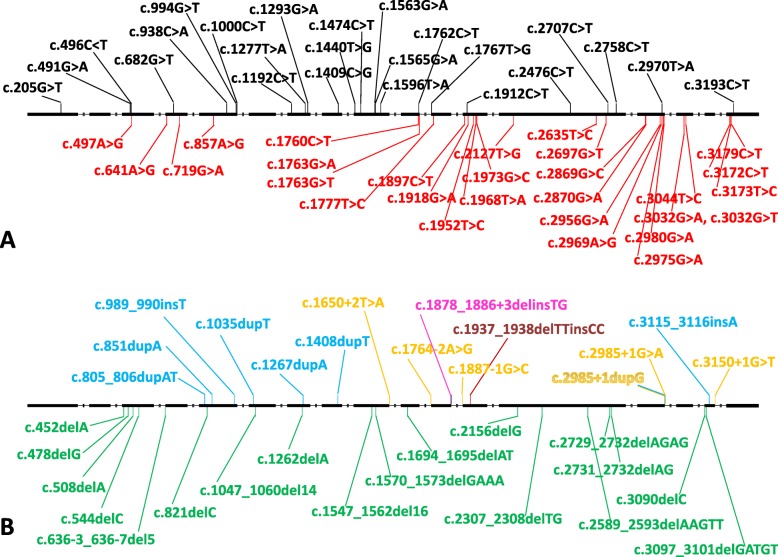
Wolcott-Rallison Syndrome (WRS) is a rare autosomal recessive disease that is the most common cause of neonatal diabetes in consanguineous families. WRS is caused by various genetic alterations of the Eukaryotic Translation Initiation Factor 2-Alpha Kinase 3 (EIF2AK3) gene.
Genetic analysis of a consanguineous family where two children were diagnosed with WRS was performed by Sanger sequencing. The altered protein was investigated by in vitro cloning, expression and immunohistochemistry.
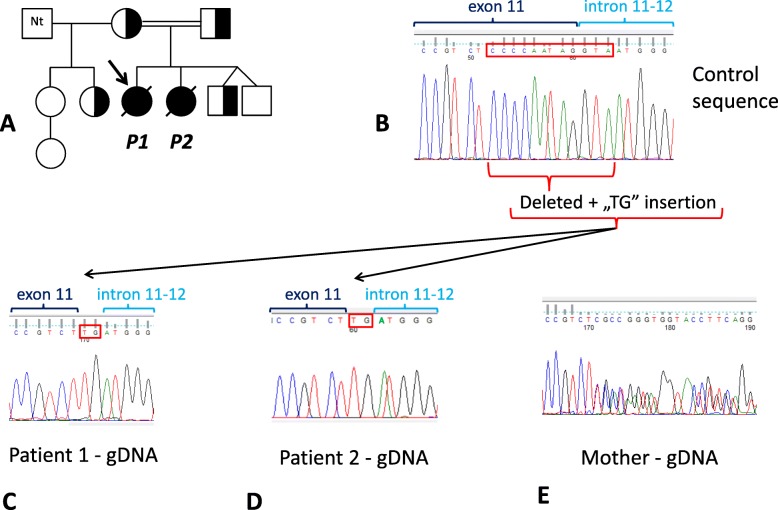
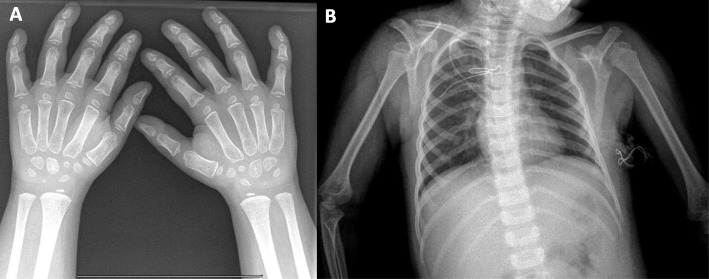
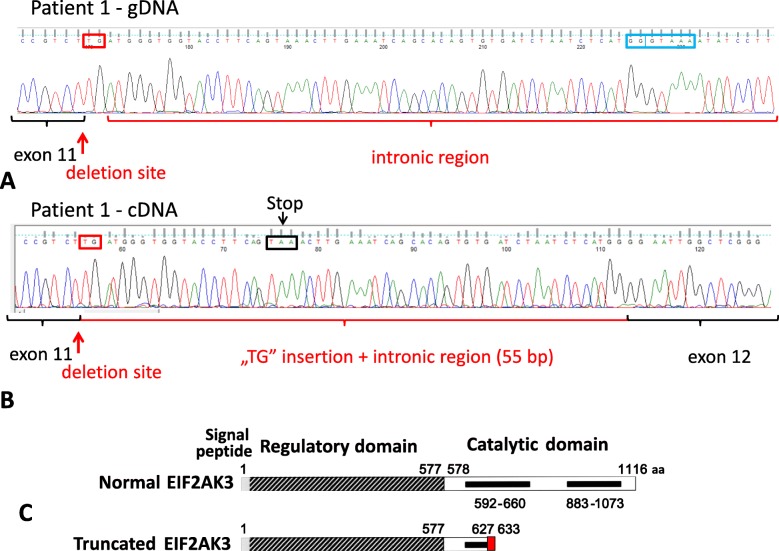
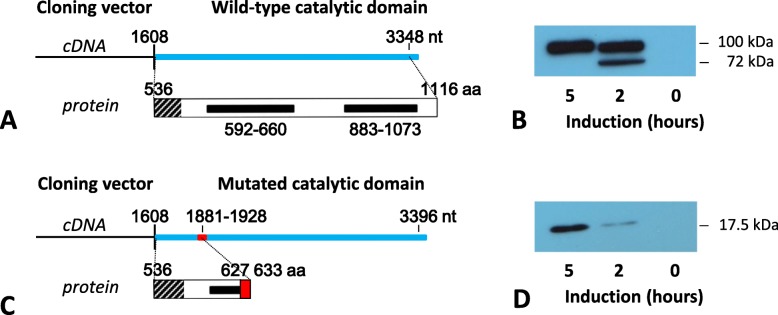
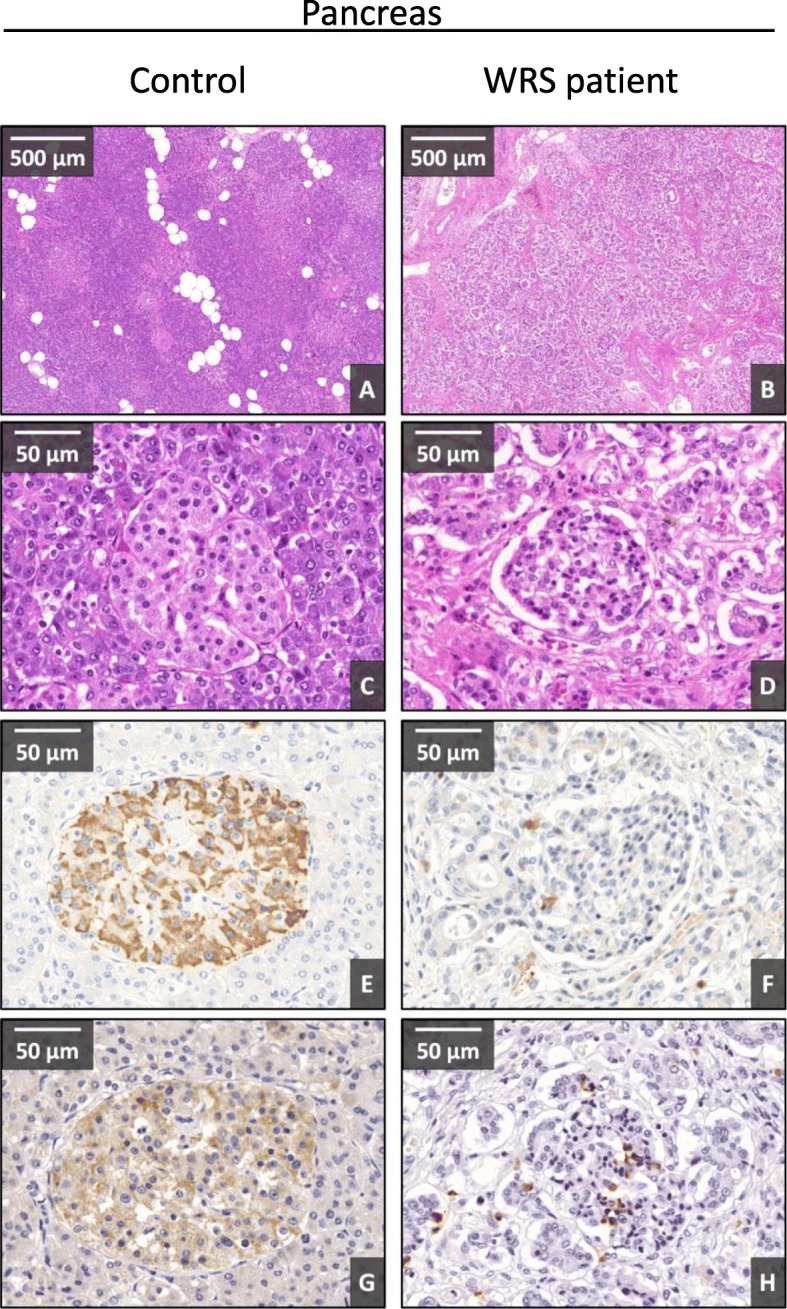
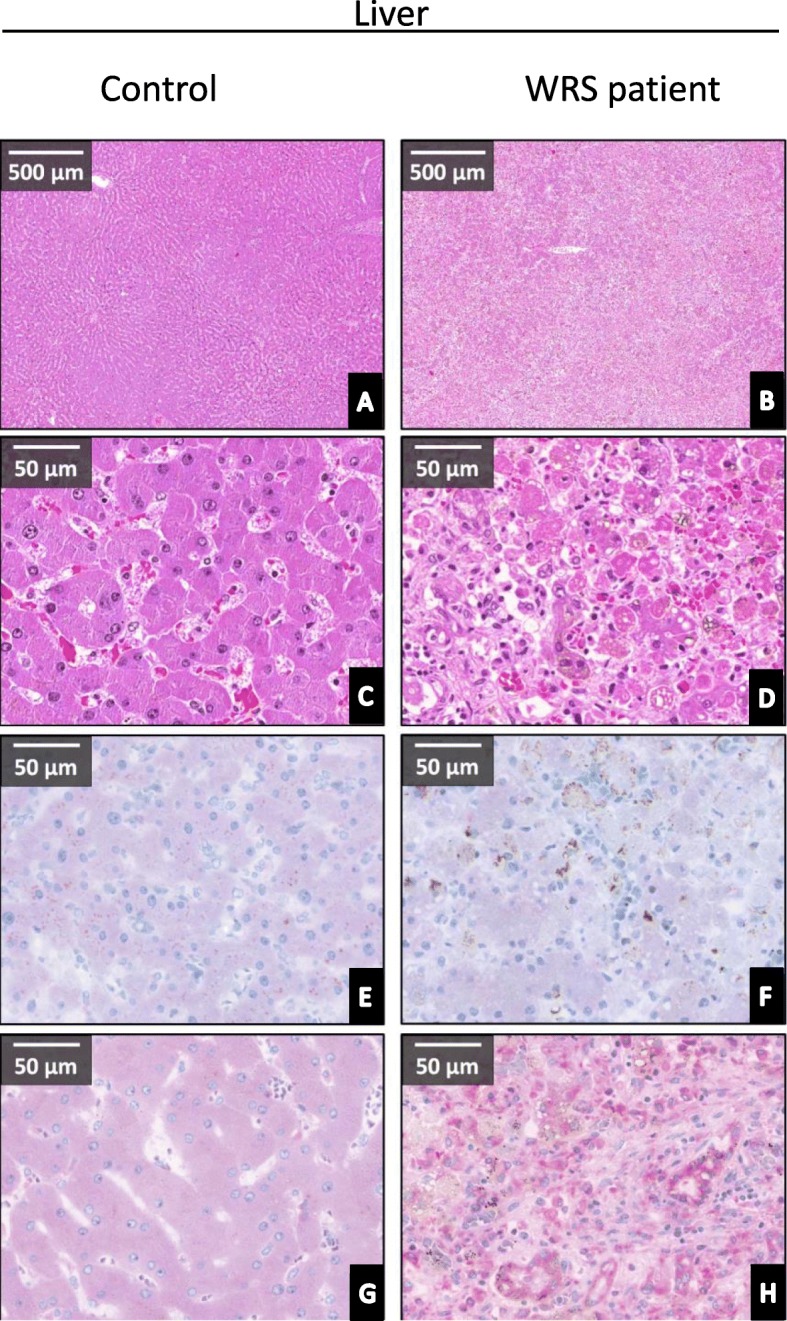
The first cases in Hungary, - two patients in one family, where the parents were fourth-degree cousins - showed the typical clinical features of WRS: early onset diabetes mellitus with hyperglycemia, growth retardation, infection-induced multiple organ failure. The genetic background of the disease was a novel alteration in the EIF2AK3 gene involving the splice site of exon 11- intron 11-12 boundary: g.53051_53062delinsTG. According to cDNA sequencing this created a new splice site and resulted in a frameshift and the development of an early termination codon at amino acid position 633 (p.Pro627AspfsTer7). Based on in vitro cloning and expression studies, the truncated protein was functionally inactive. Immunohistochemistry revealed that the intact protein was absent in the islets of pancreas, furthermore insulin expressing cells were also dramatically diminished. Elevated GRP78 and reduced CHOP protein expression were observed in the liver.
The novel genetic alteration causing the absence of the EIF2AK3 protein resulted in insufficient handling of severe endoplasmic reticulum stress, leading to liver failure and demise of the patients.
沃尔科特-拉利森综合征(WRS)是一种罕见的常染色体隐性遗传病,是近亲结婚家庭中新生儿糖尿病的最常见原因。WRS 是由真核翻译起始因子 2-α 激酶 3(EIF2AK3)基因的各种遗传改变引起的。
对一个被诊断患有 WRS 的近亲家庭进行了遗传分析,采用 Sanger 测序。通过体外克隆、表达和免疫组织化学研究改变的蛋白质。
匈牙利首例病例——一个家庭中的两个患者,父母是四代表亲——表现出典型的 WRS 临床特征:早发性糖尿病伴高血糖、生长迟缓、感染引起的多器官衰竭。疾病的遗传背景是 EIF2AK3 基因的一个新的改变,涉及外显子 11-内含子 11-12 边界的剪接位点:g.53051_53062delinsTG。根据 cDNA 测序,这创建了一个新的剪接位点,并导致在氨基酸位置 633 处发生移码和提前终止密码子(p.Pro627AspfsTer7)。基于体外克隆和表达研究,截短蛋白无功能。免疫组织化学显示,完整蛋白在胰岛中缺失,此外,胰岛素表达细胞也显著减少。在肝脏中观察到 GRP78 升高和 CHOP 蛋白表达减少。
导致 EIF2AK3 蛋白缺失的新遗传改变导致内质网应激处理不足,导致肝衰竭和患者死亡。