Faculty of Health and Society, Department of Care Science, Malmö University, Malmö, Sweden.
School of Nursing and Midwifery, Transforming Maternity Care Collaborative, Griffith University, & Gold Coast University Hospital, Griffith, Australia.
BMC Pregnancy Childbirth. 2020 Mar 26;20(1):183. doi: 10.1186/s12884-020-02864-5.
Victimisation of women is encountered in all countries across the world, it damages the mental and physical health of women. During pregnancy and the postpartum period, women are at a greater risk of experiencing violence from an intimate partner. The aim of this study was to explore childbirth outcomes in a Swedish population of women reporting a history of violence including domestic violence during pregnancy.
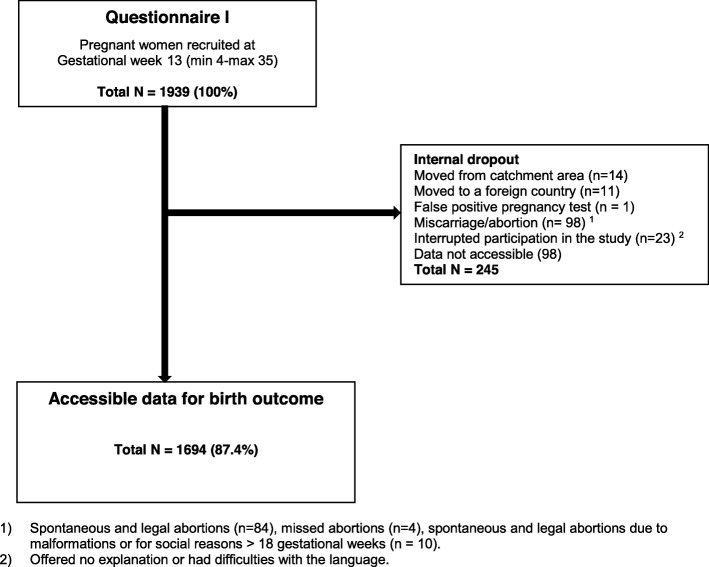
A longitudinal cohort design was used. In total, 1939 pregnant women ≥18 years were recruited to answer two questionnaires, both questionnaires were administered in the early and late stages of their pregnancy. The available dataset included birth records of 1694 mothers who gave birth between June 2012 and April 2014. Statistical analyses included descriptive statistics, T-test and bivariate logistic regression.
Of 1694 mothers 38.7% (n = 656) reported a history of violence and 2% (n = 34) also experienced domestic violence during pregnancy. Women who were single, living apart from their partner, unemployed, smoked and faced financial distress were at a higher risk of experiencing violence (p = 0.001). They also had significant low scores on the SOC-scale and high EDS-scores ≥13 (p = 0.001) when compared to women without a history of violence (p = 0.001). Having a history of violence increased the woman's risk of undergoing a caesarean section (OR 1.33, 95% CI 1.02-1.70). A history of emotional abuse also significantly increased the risk of having a caesarean section irrespective of whether it was a planned or an emergency caesarean section (OR 1.50, 95% CI 1.09-2.06). Infants born to a mother who reported a history of violence, were at significant risk of being born premature < 37 weeks of gestation compared to infants born by mothers with no history of violence (p = 0,049).
A history of violence and/or exclusively a history of emotional abuse has a negative impact on childbirth outcomes including caesarean section and premature birth. Therefore, early identification of a history of or ongoing violence is crucial to provide women with extra support which may have positive impact on her birth outcomes.
在世界各国,都存在针对女性的暴力行为,这种行为损害了女性的身心健康。在怀孕期间和产后期间,女性更容易遭受亲密伴侣的暴力。本研究旨在探讨瑞典人群中报告有暴力史(包括怀孕期间的家庭暴力)的女性的分娩结局。
采用纵向队列设计。共有 1939 名≥18 岁的孕妇被招募回答两份问卷,两份问卷均在她们妊娠早期和晚期进行。可用数据集包括 1694 名母亲的分娩记录,这些母亲于 2012 年 6 月至 2014 年 4 月期间分娩。统计分析包括描述性统计、T 检验和双变量逻辑回归。
在 1694 名母亲中,38.7%(n=656)报告有暴力史,2%(n=34)在怀孕期间也经历过家庭暴力。单身、与伴侣分居、失业、吸烟和面临经济困难的女性更有可能遭受暴力(p=0.001)。与没有暴力史的女性相比,她们的 SOC 量表评分显著较低,EDS 评分≥13 分的比例也较高(p=0.001)。有暴力史的女性行剖宫产的风险增加(OR 1.33,95%CI 1.02-1.70)。有情感虐待史也显著增加了行剖宫产的风险,无论剖宫产是计划剖宫产还是紧急剖宫产(OR 1.50,95%CI 1.09-2.06)。与没有暴力史的母亲所生的婴儿相比,报告有暴力史的母亲所生的婴儿早产<37 周的风险显著增加(p=0.049)。
暴力史和/或仅情感虐待史对分娩结局有负面影响,包括剖宫产和早产。因此,早期识别有暴力史或正在发生的暴力行为至关重要,以便为女性提供额外的支持,这可能对其分娩结局产生积极影响。