Department of Biology, Stern College, Yeshiva University, New York, NY 10016, USA.
Department of Developmental and Molecular Biology, Albert Einstein College of Medicine, Bronx, NY 10461, USA.
Asian J Androl. 2020 Nov-Dec;22(6):569-577. doi: 10.4103/aja.aja_11_20.
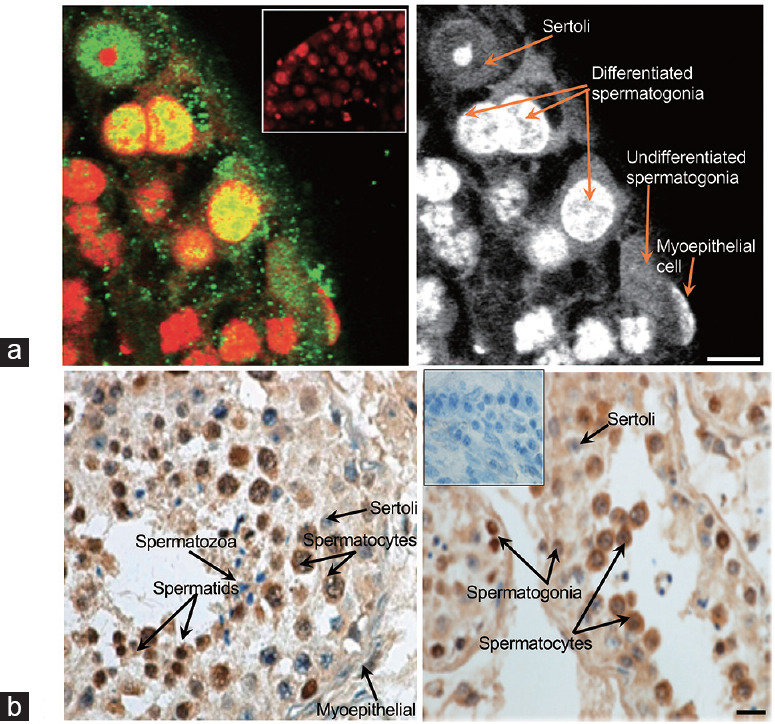
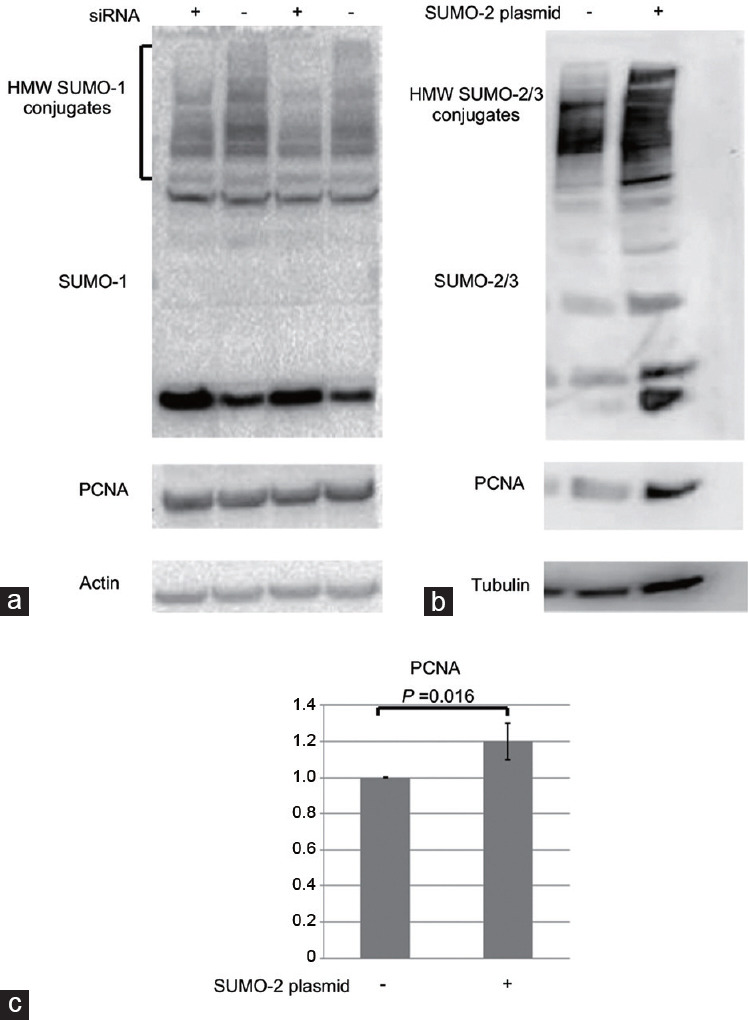
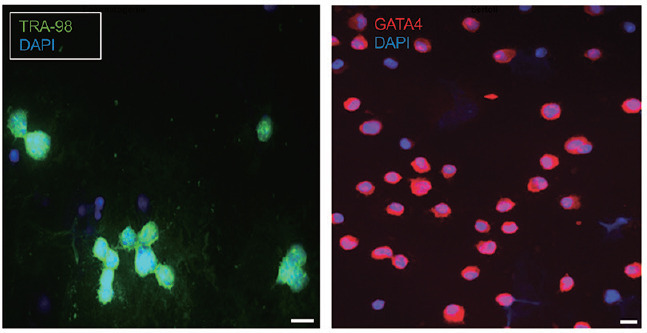
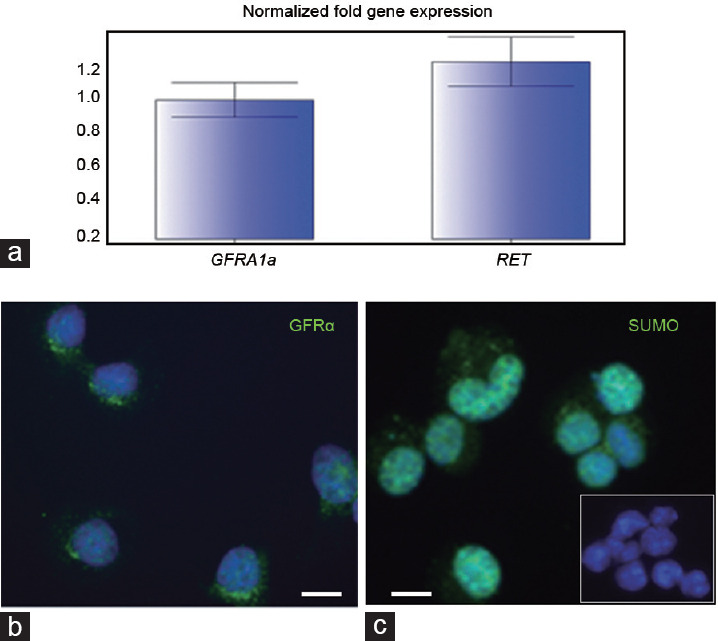
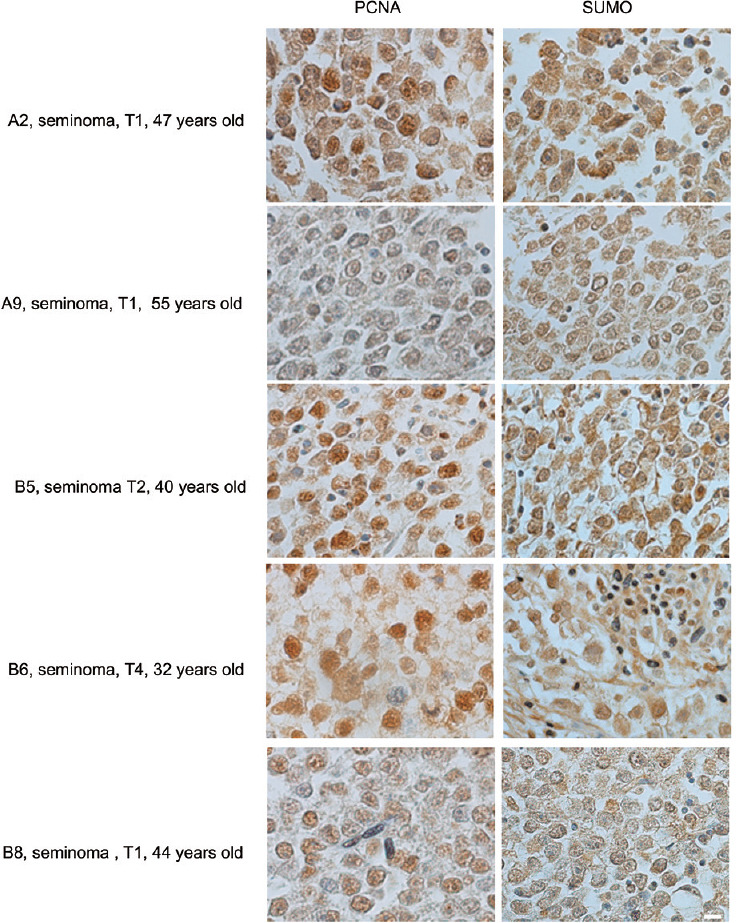
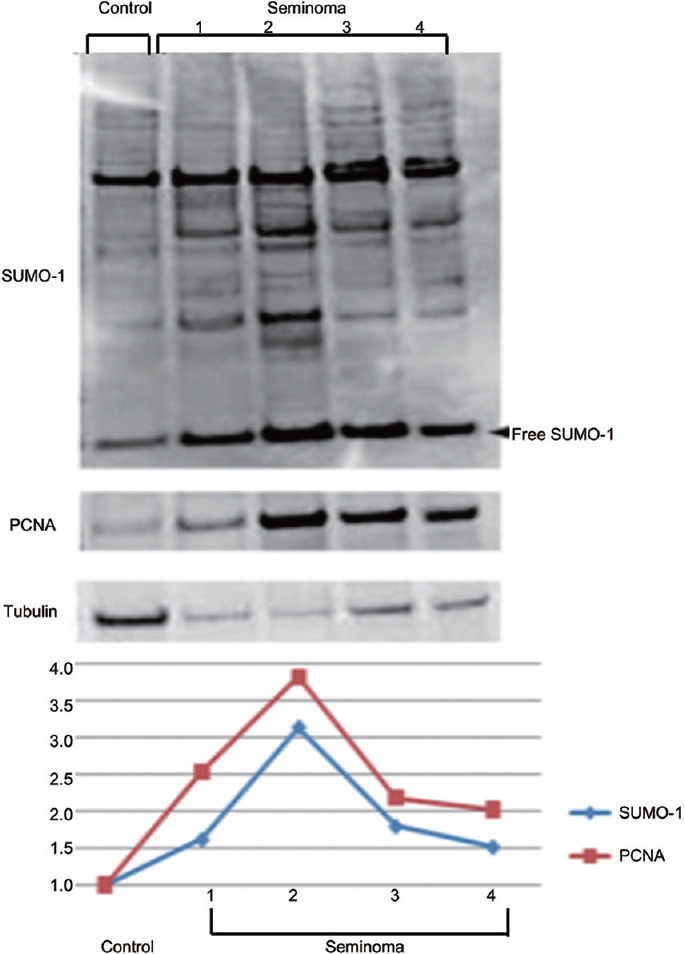
Spermatogenesis is regulated by a complex network of posttranslation modifications. Sumoylation (a modification by small ubiquitin-like modifiers, or SUMO proteins) was identified as an important cellular event in different cell types. SUMO proteins are highly expressed in the testis, and their role during spermatogenesis has begun to be elucidated. Given the important role of sumoylation in the regulation of mitosis and cancer progression in other tissues, the aim of the current study was to identify the targets of SUMO in proliferating mouse spermatogonia and human seminoma tissues and to initially examine the level of sumoylation in relation to the proliferative activity of the tissues. Using freshly purified spermatogonia and C18-4 spermatogonia cell line, mass spectrometry analysis identified several SUMO targets implicated into the proliferation of spermatogonia (such as heat shock protein 60 [HSP60] and prohibitin). Tissue array and western blot approaches showed that SUMO expression is a prominent feature of human seminomas and that the proliferative activity of the tumor tissues was positively correlated with the level of SUMO expression. Downregulation of sumoylation with si-RNA was not sufficient to significantly affect the proliferation of C18-4 spermatogonia; however, SUMO overexpression increased the proliferation rate of the cells. These data suggest that cells are more sensitive to an elevated level of SUMO, and that this situation may lead to an upregulated cellular proliferation and, possibly, cancer. Mass spectrometry analysis identified around a hundred SUMO targets in seminoma samples. Notably, many of the identified proteins (such as proliferating cell nuclear antigen [PCNA], DNA topoisomerase 2-alpha [Top2A], prohibitin, 14-3-3 protein, and others) were implicated in oncogenic transformation and cancer progression.
精子发生受复杂的翻译后修饰网络调控。SUMO 化(由小泛素样修饰物或 SUMO 蛋白进行的修饰)被鉴定为不同细胞类型中的重要细胞事件。SUMO 蛋白在睾丸中高度表达,其在精子发生中的作用开始被阐明。鉴于 SUMO 化在其他组织中的有丝分裂和癌症进展调控中的重要作用,本研究的目的是鉴定增殖的小鼠精原细胞和人精原细胞瘤组织中 SUMO 的靶标,并初步研究 SUMO 修饰与组织增殖活性的关系。使用新鲜纯化的精原细胞和 C18-4 精原细胞系,质谱分析鉴定了几个参与精原细胞增殖的 SUMO 靶标(如热休克蛋白 60 [HSP60]和抑制素)。组织阵列和 Western blot 方法表明,SUMO 表达是人类精原细胞瘤的一个显著特征,肿瘤组织的增殖活性与 SUMO 表达水平呈正相关。用 si-RNA 下调 SUMO 修饰不足以显著影响 C18-4 精原细胞的增殖;然而,SUMO 过表达增加了细胞的增殖率。这些数据表明,细胞对 SUMO 水平的升高更为敏感,这种情况可能导致细胞增殖的上调,并且可能导致癌症。质谱分析鉴定了精原细胞瘤样本中的大约一百个 SUMO 靶标。值得注意的是,许多鉴定出的蛋白质(如增殖细胞核抗原 [PCNA]、DNA 拓扑异构酶 2-α [Top2A]、抑制素、14-3-3 蛋白等)参与了致癌转化和癌症进展。