Institute of Molecular and Cell Biology, Hochschule Mannheim, 68163 Mannheim, Germany.
BRAIN AG, 64673 Zwingenberg, Germany.
Sensors (Basel). 2020 Mar 25;20(7):1811. doi: 10.3390/s20071811.
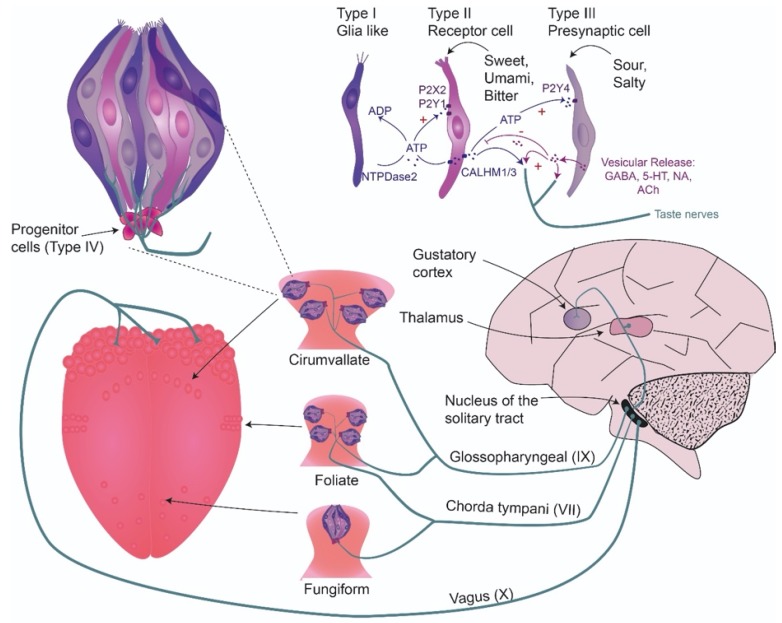
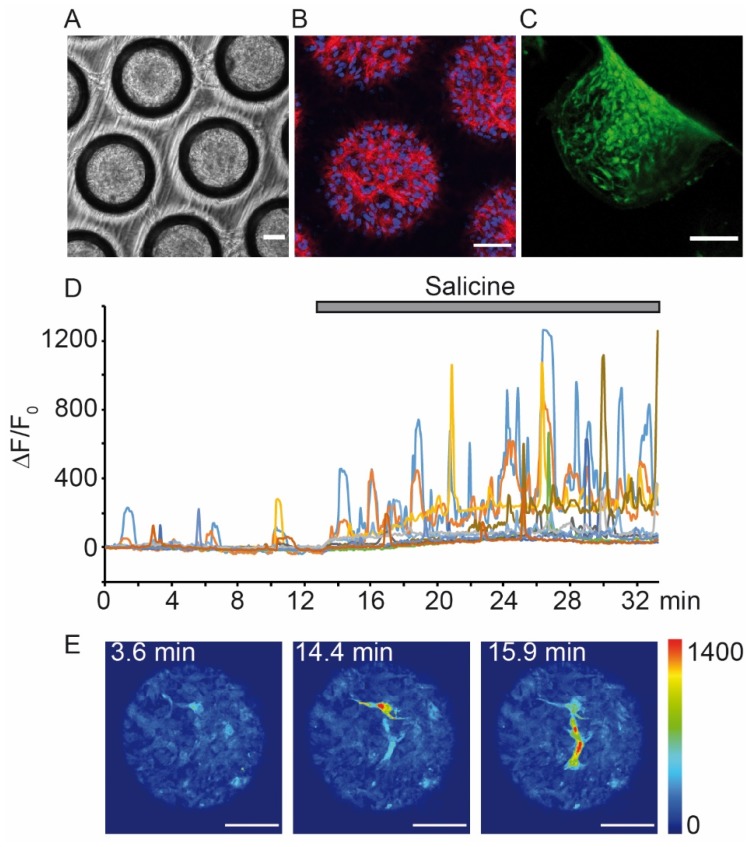
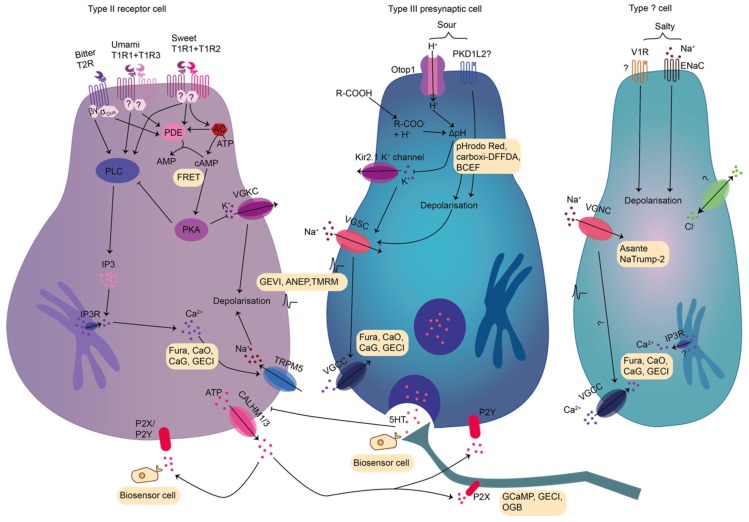
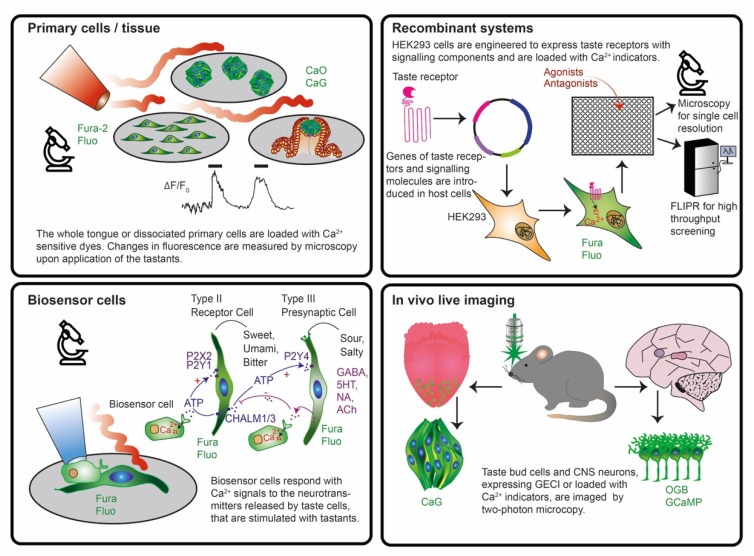
The five basic taste modalities, sweet, bitter, umami, salty and sour induce changes of Ca levels, pH and/or membrane potential in taste cells of the tongue and/or in neurons that convey and decode gustatory signals to the brain. Optical biosensors, which can be either synthetic dyes or genetically encoded proteins whose fluorescence spectra depend on levels of Ca, pH or membrane potential, have been used in primary cells/tissues or in recombinant systems to study taste-related intra- and intercellular signaling mechanisms or to discover new ligands. Taste-evoked responses were measured by microscopy achieving high spatial and temporal resolution, while plate readers were employed for higher throughput screening. Here, these approaches making use of fluorescent optical biosensors to investigate specific taste-related questions or to screen new agonists/antagonists for the different taste modalities were reviewed systematically. Furthermore, in the context of recent developments in genetically encoded sensors, 3D cultures and imaging technologies, we propose new feasible approaches for studying taste physiology and for compound screening.
五种基本味觉,甜、苦、鲜、咸、酸,会引起舌部味觉细胞和/或向大脑传递和解码味觉信号的神经元中的 Ca 水平、pH 值和/或膜电位变化。光学生物传感器可以是合成染料,也可以是依赖于 Ca、pH 值或膜电位的荧光光谱的基因编码蛋白,已经用于原代细胞/组织或重组系统中,以研究与味觉相关的细胞内和细胞间信号转导机制,或发现新的配体。通过显微镜实现高时空分辨率来测量味觉诱发的反应,而平板读数器则用于更高通量的筛选。在这里,我们系统地回顾了这些利用荧光光学生物传感器来研究特定味觉相关问题或筛选不同味觉模式新激动剂/拮抗剂的方法。此外,在基因编码传感器、3D 培养和成像技术的最新发展背景下,我们提出了研究味觉生理学和化合物筛选的新可行方法。