Li Ruilei, Li Heng, Ge Chunlei, Fu Qiaofen, Li Zhen, Jin Yarong, Tan Qinghua, Zhu Zhitao, Zhang Zhiwei, Dong Suwei, Li Gaofeng, Song Xin
Department of Cancer Biotherapy Center, The Third Affiliated Hospital of Kunming Medical University (Tumor Hospital of Yunnan Province), Kunming, Yunnan 650118, P.R. China.
Department of Chest Surgery, The Third Affiliated Hospital of Kunming Medical University (Tumor Hospital of Yunnan Province), Kunming, Yunnan 650118, P.R. China.
Oncol Lett. 2020 Apr;19(4):3111-3122. doi: 10.3892/ol.2020.11417. Epub 2020 Feb 20.
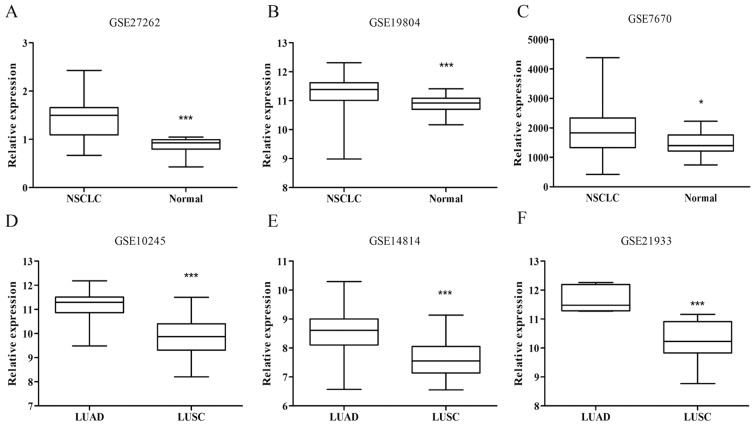
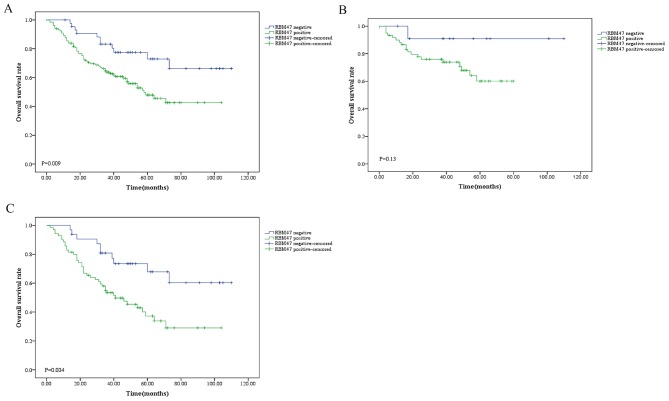
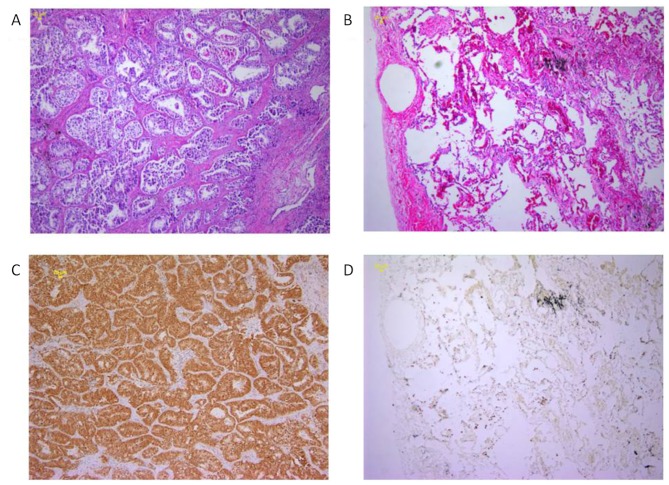
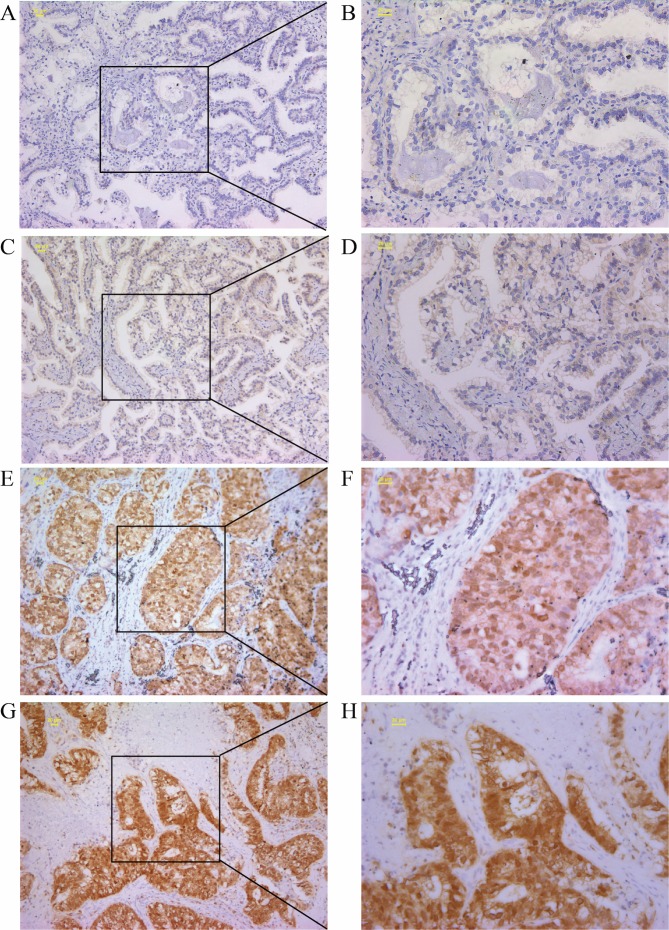
Lung cancer is the leading cause of cancer-associated mortality worldwide. In China, in particular, lung cancer mortality has markedly increased and is likely to continue to rise. RNA-binding proteins are pivotal to the development and progression of a variety of cancer types, including non-small cell lung cancer (NSCLC). RNA-binding motif protein 47 (RBM47) has been found to act as a tumor suppressor in breast cancer and NSCLC. However, to the best of our knowledge, RBM47 expression in NSCLC tissues has yet to be investigated. Analysis via the online database, Gene Expression Omnibus, revealed that RBM47 was upregulated in NSCLC and associated with pathological type, suggesting that RBM47 may play different roles in lung adenocarcinoma and lung squamous cell carcinoma. In the present study, the expression of RBM47 was examined by immunohistochemistry in 175 pairs of tumor and adjacent non-cancerous tissues resected from patients with NSCLC. The results indicated that the expression of RBM47 was significantly increased in NSCLC samples compared with that in the matched non-cancerous samples. Furthermore, RBM47 expression was higher in Xuanwei compared with that in non-Xuanwei NSCLC, suggesting that RBM47 is a more sensitive biomarker in Xuanwei NSCLC, and that it may serve as a candidate therapeutic target. In addition, RBM47 expression was associated with the pathological type, however not with the age, sex, lymph node metastasis, pT stage or pathological Tumor-Node-Metastasis stage of the patients. The increased expression level of RBM47 may indicate a worse overall survival rate for patients with NSCLC. In addition, multivariate survival analysis showed that the Xuanwei area is associated with poor prognosis for patients with NSCLC. In conclusion, the present study revealed that the upregulation of RBM47 accelerated the malignant progression of NSCLC, indicating that RBM47 may be a potential biomarker for NSCLC progression and a therapeutic target for NSCLC.
肺癌是全球癌症相关死亡的主要原因。特别是在中国,肺癌死亡率显著上升,且可能继续攀升。RNA结合蛋白对于包括非小细胞肺癌(NSCLC)在内的多种癌症类型的发生和发展至关重要。已发现RNA结合基序蛋白47(RBM47)在乳腺癌和NSCLC中作为肿瘤抑制因子发挥作用。然而,据我们所知,尚未对NSCLC组织中RBM47的表达进行研究。通过在线数据库基因表达综合数据库(Gene Expression Omnibus)分析发现,RBM47在NSCLC中上调,且与病理类型相关,这表明RBM47可能在肺腺癌和肺鳞状细胞癌中发挥不同作用。在本研究中,采用免疫组织化学方法检测了175对NSCLC患者手术切除的肿瘤组织和癌旁非癌组织中RBM47的表达。结果表明,与配对的非癌样本相比,NSCLC样本中RBM47的表达显著增加。此外,宣威地区NSCLC中RBM47的表达高于非宣威地区,这表明RBM47是宣威NSCLC中更敏感的生物标志物,并且可能作为候选治疗靶点。此外,RBM47的表达与病理类型相关,但与患者的年龄、性别、淋巴结转移、pT分期或病理肿瘤-淋巴结-转移分期无关。RBM47表达水平升高可能表明NSCLC患者的总生存率较差。此外,多因素生存分析表明,宣威地区与NSCLC患者的不良预后相关。总之,本研究表明RBM47的上调加速了NSCLC的恶性进展,这表明RBM47可能是NSCLC进展的潜在生物标志物和NSCLC的治疗靶点。