Sanyear Chanita, Butthep Punnee, Eamsaard Wiraya, Fucharoen Suthat, Svasti Saovaros, Masaratana Patarabutr
Department of Pathology, Faculty of Medicine, Ramathibodi Hospital, Mahidol University, Bangkok, Thailand.
Department of Biochemistry, Faculty of Medicine Siriraj Hospital, Mahidol University, Bangkok, Thailand.
PeerJ. 2020 Mar 19;8:e8802. doi: 10.7717/peerj.8802. eCollection 2020.
Iron overload is one of common complications of β-thalassemia. Systemic iron homeostasis is regulated by iron-regulatory hormone, hepcidin, which inhibits intestinal iron absorption and iron recycling by reticuloendothelial system. In addition, body iron status and requirement can be altered with age. In adolescence, iron requirement is increased due to blood volume expansion and growth spurt. Heterozygous β-globin knockout mice ( ; BKO) is a mouse model of thalassemia widely used to study iron homeostasis under this pathological condition. However, effects of age on iron homeostasis, particularly the expression of genes involved in hemoglobin metabolism as well as erythroid regulators in the spleen, during adolescence have not been explored in this mouse model.
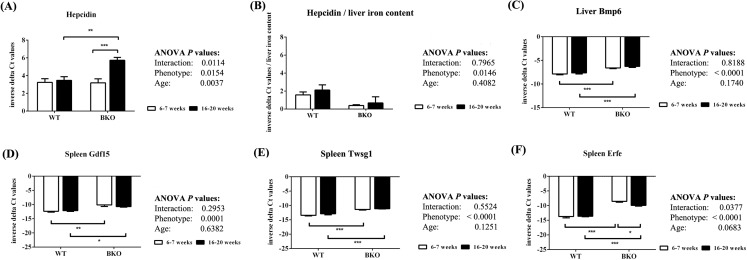
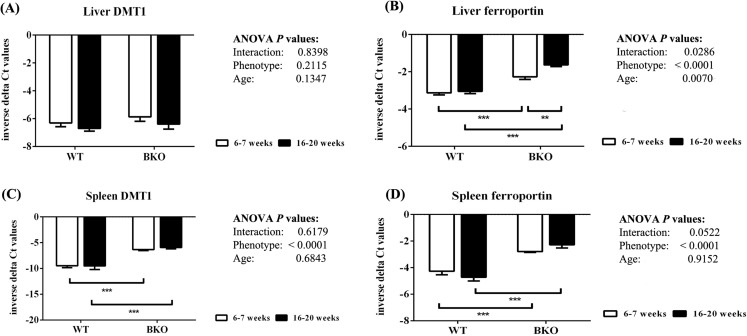
Iron parameters as well as the mRNA expression of hepcidin and genes involved in iron transport and metabolism in wildtype (WT) and BKO mice during adolescence (6-7 weeks old) and adulthood (16-20 weeks old) were analyzed and compared by 2-way ANOVA.
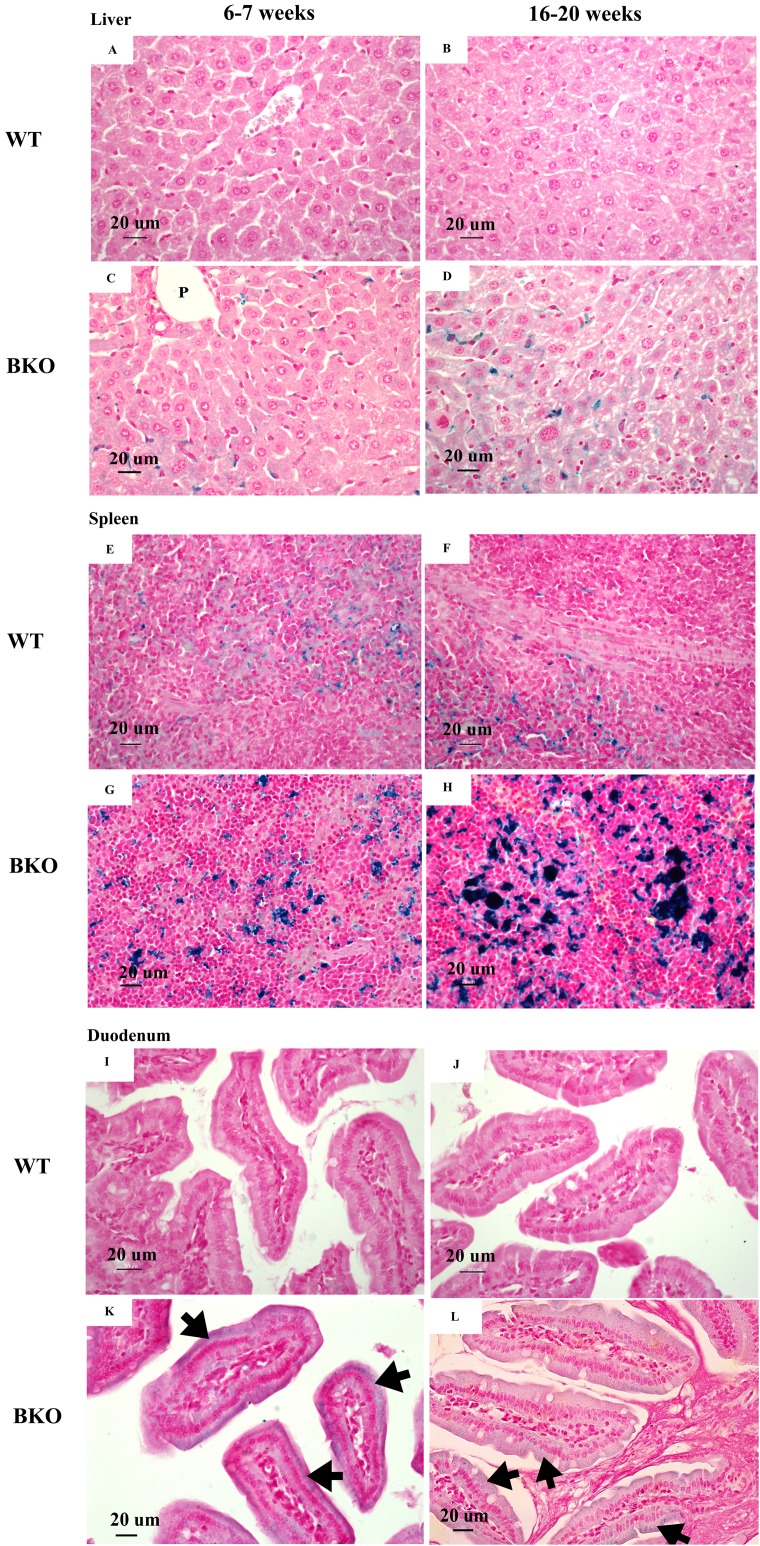
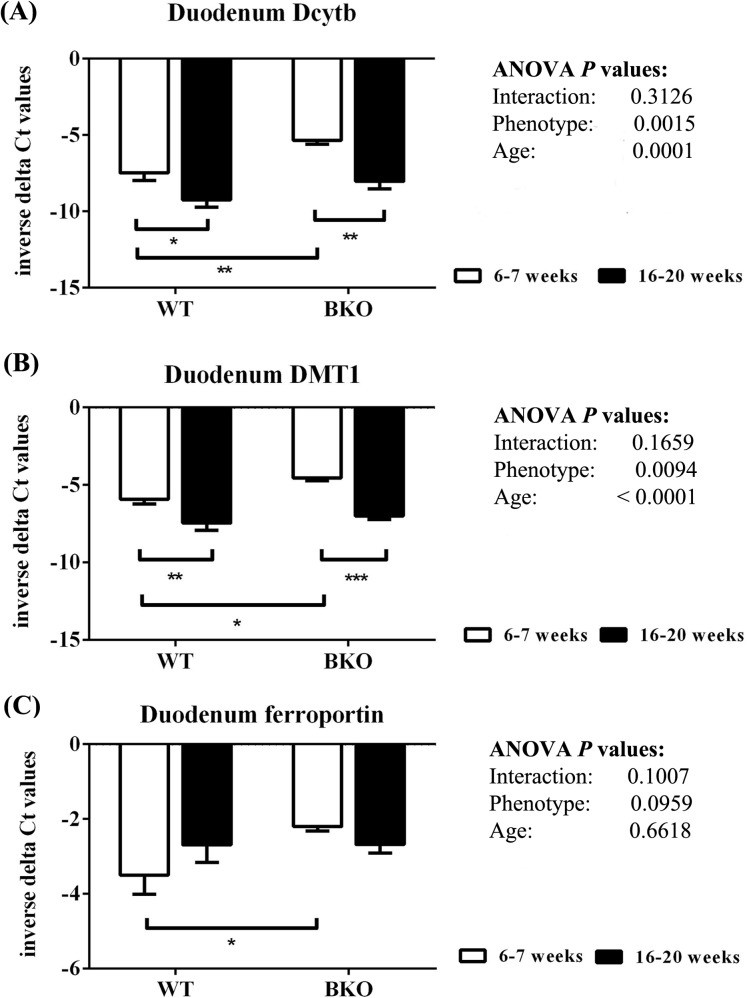
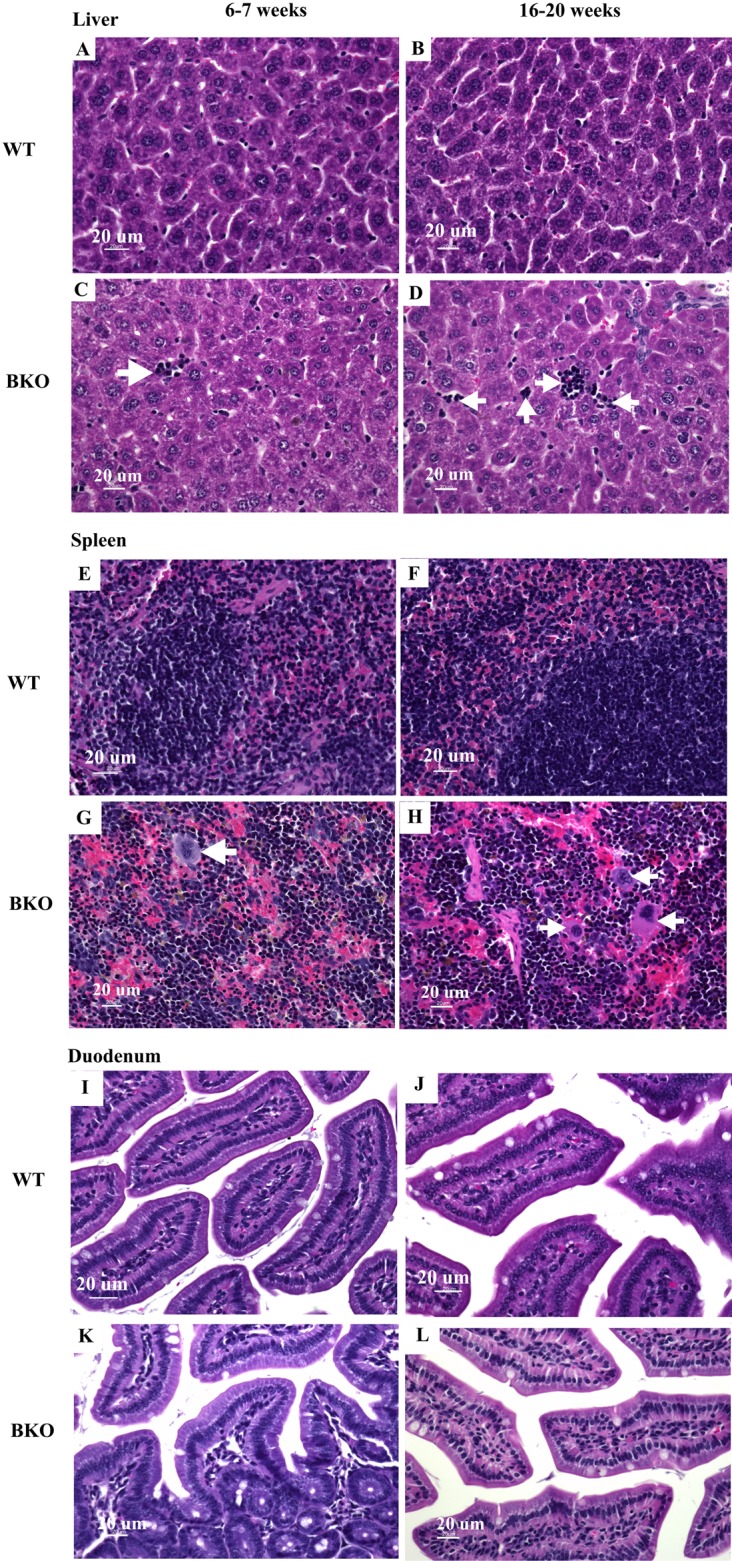
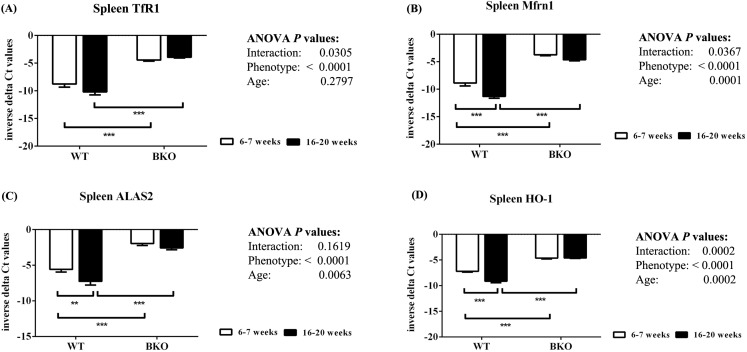
The transition of adolescence to adulthood was associated with reductions in duodenal iron transporter mRNA expression and serum iron levels of both WT and BKO mice. Erythrocyte parameters in BKO mice remained abnormal in both age groups despite persistent induction of genes involved in hemoglobin metabolism in the spleen and progressively increased extramedullary erythropiesis. In BKO mice, adulthood was associated with increased liver hepcidin and ferroportin mRNA expression along with splenic erythroferrone mRNA suppression compared to adolescence.
Our results demonstrate that iron homeostasis in a mouse model of thalassemia intermedia is altered between adolescence and adulthood. The present study underscores the importance of the age of thalassemic mice in the study of molecular or pathophysiological changes under thalassemic condition.
铁过载是β地中海贫血常见的并发症之一。全身铁稳态由铁调节激素铁调素调控,铁调素可抑制肠道铁吸收及网状内皮系统的铁循环。此外,机体铁状态和需求会随年龄变化。在青春期,由于血容量增加和生长加速,铁需求增加。杂合β-珠蛋白敲除小鼠(;BKO)是一种广泛用于研究这种病理状态下铁稳态的地中海贫血小鼠模型。然而,在该小鼠模型中,尚未探讨年龄对青春期铁稳态的影响,尤其是对参与血红蛋白代谢的基因以及脾脏中红系调节因子表达的影响。
采用双向方差分析对青春期(6 - 7周龄)和成年期(16 - 20周龄)的野生型(WT)和BKO小鼠的铁参数以及铁调素和参与铁转运与代谢的基因的mRNA表达进行分析和比较。
青春期向成年期的转变与WT和BKO小鼠十二指肠铁转运蛋白mRNA表达及血清铁水平的降低有关。尽管脾脏中参与血红蛋白代谢的基因持续诱导且髓外造血逐渐增加,但两个年龄组的BKO小鼠红细胞参数仍异常。与青春期相比,成年期BKO小鼠肝脏铁调素和铁转运蛋白mRNA表达增加,同时脾脏红细胞铁调素mRNA表达受到抑制。
我们的结果表明,中间型地中海贫血小鼠模型中的铁稳态在青春期和成年期之间发生了改变。本研究强调了地中海贫血小鼠年龄在研究地中海贫血状态下分子或病理生理变化中的重要性。