Department of Cardiology, 2nd Affiliated Hospital of Harbin Medical University, Harbin, China.
The Key Laboratory of Myocardial Ischemia, Harbin Medical University, Ministry of Education, Harbin, China.
J Cell Mol Med. 2020 May;24(9):5205-5212. doi: 10.1111/jcmm.15173. Epub 2020 Mar 27.
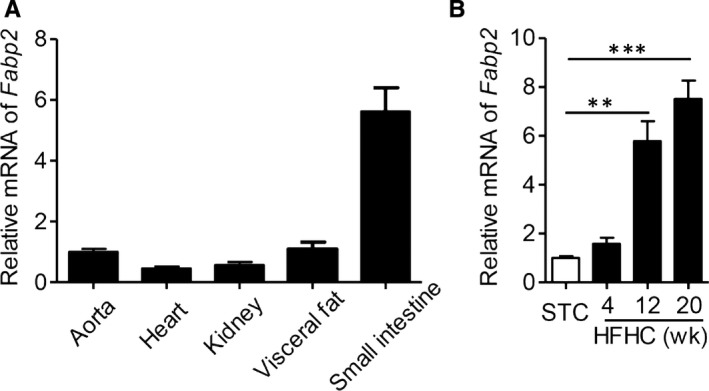
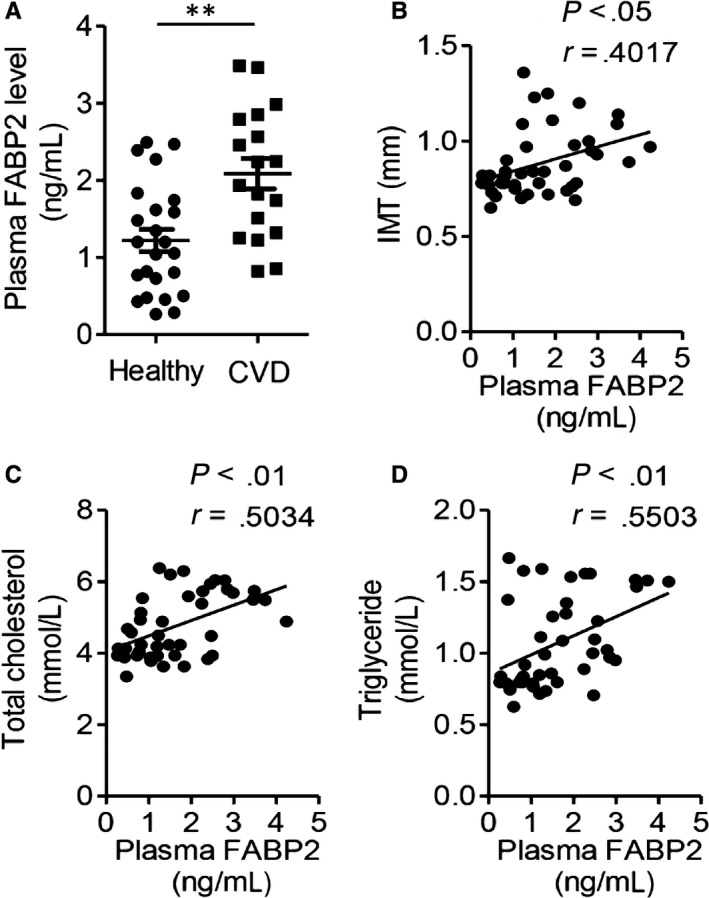
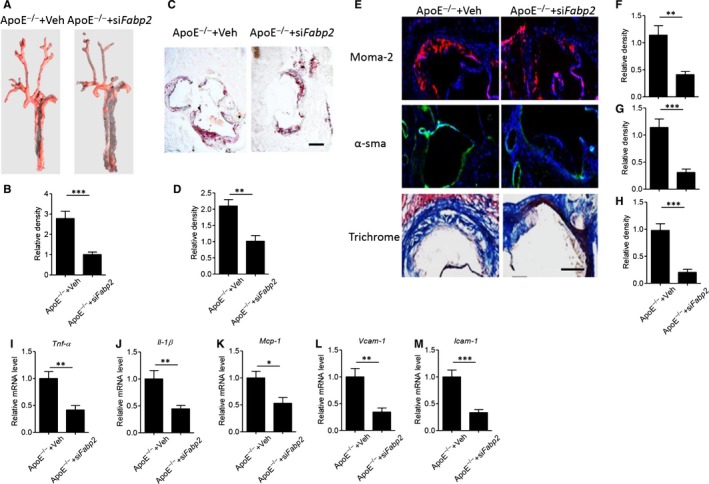
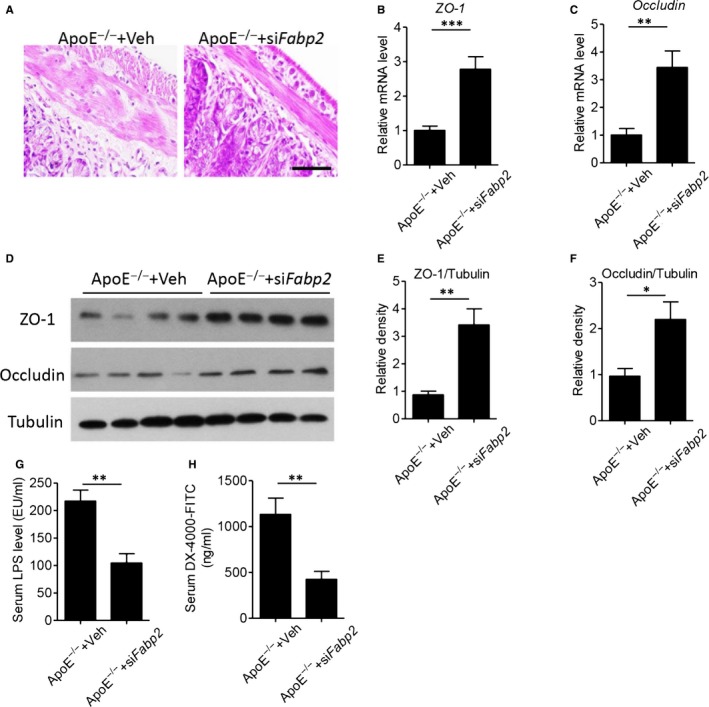
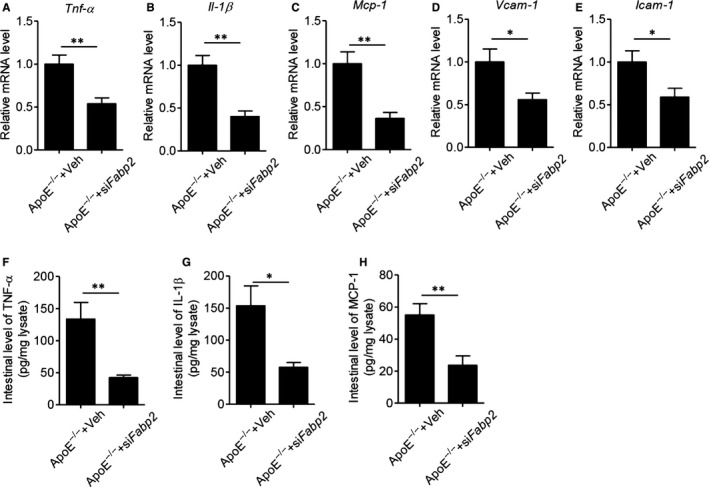
Atherosclerosis is one of leading phenotypes of cardiovascular diseases, featured with increased vascular intima-media thickness (IMT) and unstable plaques. The interaction between gastrointestinal system and cardiovascular homeostasis is emerging as a hot topic. Therefore, the present study aimed to explore the role of an intestinal protein, intestinal fatty acid-binding protein (I-FABP/FABP2) in the atherosclerotic progress. In western diet-fed ApoE mice, FABP2 was highly expressed in intestine. Silence of intestinal Fabp2 attenuated western diet-induced atherosclerotic phenotypes, including decreasing toxic lipid accumulation, vascular fibrosis and inflammatory response. Mechanistically, intestinal Fabp2 knockdown improved intestinal permeability through increasing the expression of tight junction proteins. Meanwhile, intestinal Fabp2 knockdown mice exhibited down-regulation of intestinal inflammation in western diet-fed ApoE mice. In clinical patients, the circulating level of FABP2 was obviously increased in patients with cardiovascular disease and positively correlated with the value of carotid intima-media thickness, total cholesterol and triglyceride. In conclusion, FABP2-induced intestinal permeability could address a potential role of gastrointestinal system in the development of atherosclerosis, and targeting on intestinal FABP2 might provide a therapeutic approach to protect against atherosclerosis.
动脉粥样硬化是心血管疾病的主要表型之一,其特征为血管内膜-中膜厚度(IMT)增加和不稳定斑块。胃肠道系统与心血管稳态之间的相互作用正成为一个热门话题。因此,本研究旨在探讨一种肠道蛋白,肠脂肪酸结合蛋白(I-FABP/FABP2)在动脉粥样硬化进展中的作用。在西方饮食喂养的 ApoE 小鼠中,FABP2 在肠道中高表达。肠道 Fabp2 沉默可减弱西方饮食诱导的动脉粥样硬化表型,包括减少毒性脂质积累、血管纤维化和炎症反应。在机制上,肠道 Fabp2 敲低通过增加紧密连接蛋白的表达来改善肠道通透性。同时,在西方饮食喂养的 ApoE 小鼠中,肠道 Fabp2 敲低可降低肠道炎症。在临床患者中,心血管疾病患者的 FABP2 循环水平明显升高,且与颈动脉内膜-中膜厚度、总胆固醇和甘油三酯的值呈正相关。总之,FABP2 诱导的肠道通透性可能为胃肠道系统在动脉粥样硬化发展中的作用提供了一个潜在的解释,针对肠道 FABP2 可能为预防动脉粥样硬化提供一种治疗方法。