Casali Paolo G, Trama Annalisa
Medical Oncology Unit 2, Fondazione IRCCS Istituto Nazionale Tumori & Oncology and Haemato-Oncology Department, University of Milan, Milan, Italy.
Department of Research, Evaluative Epidemiology Unit, Fondazione IRCCS Istituto Nazionale Tumori, Milan, Italy
ESMO Open. 2020 Mar;5(2). doi: 10.1136/esmoopen-2019-000666.
The Surveillance of Rare Cancers in Europe (RARECARE) project proposed a definition and a list of rare cancers. The Joint Action on Rare Cancers (JARC), launched by the European Union and involving 18 member states and 34 partners, promoted a wide consensus effort to review the list.
A group of experts was set up, including scientific societies, member state representatives of JARC, representatives of the European Reference Networks dedicated to rare cancers and rare cancer patient advocates. The definition and the list of rare clinical entities, based on the incidence data provided by two European projects (RARECARE and RARECAREnet), were rediscussed through a consensus meeting of the expert panel.
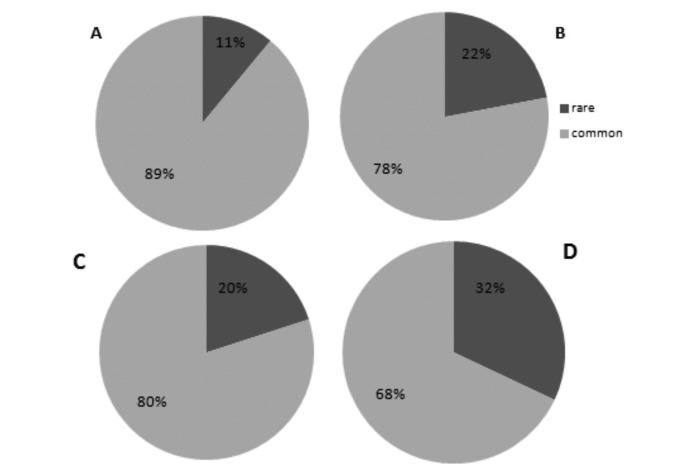
By consensus, it was reiterated that the best criterion for a definition of rare cancers is incidence, rather than prevalence. By consensus, the experts slightly modified the composition of the tiers of rare cancers, according to the definition based on an incidence threshold <6/100 000/year, and grouped all rare cancers within 12 families of rare cancers. Even when defined conservatively this way, rare cancers are not rare collectively, since they correspond to 10%-20% of all cancer cases.
The list of rare cancers reviewed by JARC should be viewed as a tool in the fight against rare cancers and rare diseases. It may help to appreciate that rare cancers are cancers and rare diseases at the same time, combining issues and difficulties of both. We hope that refinements to the list and a wider understanding of its implications may contribute to increase awareness of problems posed by rare cancers and to improve quality of care in a large group of patients with cancer, who may be discriminated against just because of the low frequency of their diseases.
欧洲罕见癌症监测(RARECARE)项目提出了罕见癌症的定义和清单。由欧盟发起、18个成员国和34个合作伙伴参与的罕见癌症联合行动(JARC)推动了一项广泛的共识行动,以审查该清单。
成立了一个专家小组,包括科学协会、JARC成员国代表、致力于罕见癌症的欧洲参考网络代表以及罕见癌症患者倡导者。基于两个欧洲项目(RARECARE和RARECAREnet)提供的发病率数据,通过专家小组的共识会议重新讨论了罕见临床实体的定义和清单。
经协商一致重申,定义罕见癌症的最佳标准是发病率,而非患病率。经协商一致,专家们根据基于发病率阈值<6/100 000/年的定义,对罕见癌症层级的构成进行了微调,并将所有罕见癌症归为12个罕见癌症家族。即使以这种保守方式定义,罕见癌症总体上也并不罕见,因为它们占所有癌症病例的10%-20%。
JARC审查的罕见癌症清单应被视为对抗罕见癌症和罕见疾病的一种工具。它可能有助于认识到罕见癌症既是癌症又是罕见疾病,兼具两者的问题和困难。我们希望对清单的完善以及对其影响的更广泛理解,可能有助于提高对罕见癌症所带来问题的认识,并改善一大批可能因疾病发生率低而受到歧视的癌症患者的护理质量。