Division of Immune Receptors and T Cell Activation, Center for Pathophysiology, Infectiology, and Immunology, Institute of Immunology, Medical University of Vienna, Vienna, Austria.
Institute for Hygiene and Applied Immunology, Center for Pathophysiology, Infectiology and Immunology, Medical University of Vienna, Vienna, Austria.
Eur J Immunol. 2020 Aug;50(8):1126-1141. doi: 10.1002/eji.201948400. Epub 2020 Apr 28.
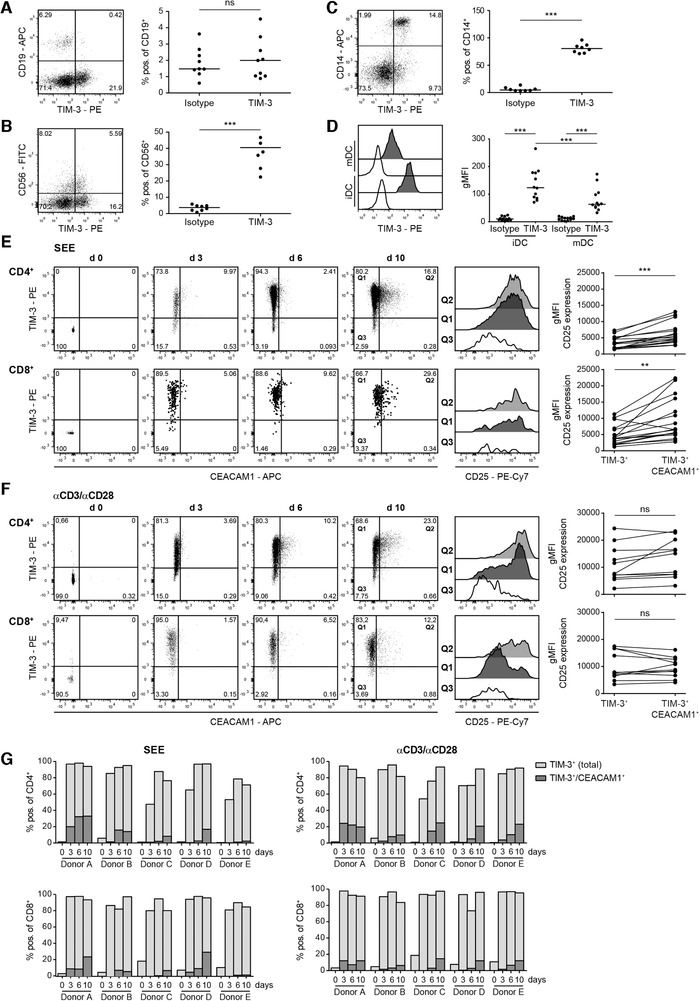
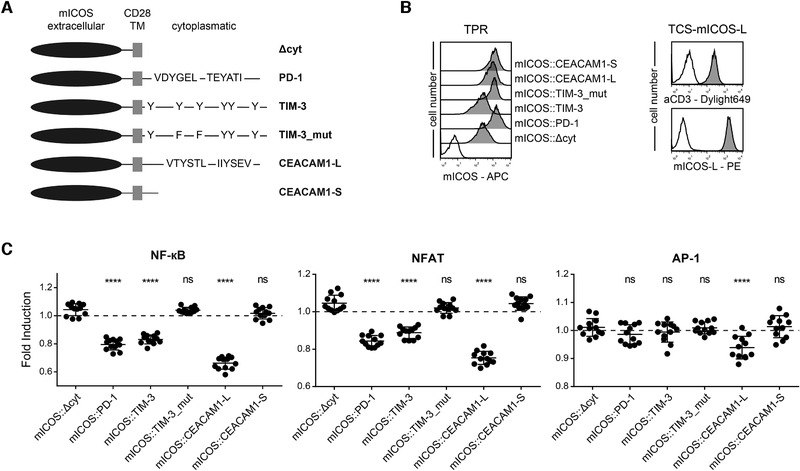
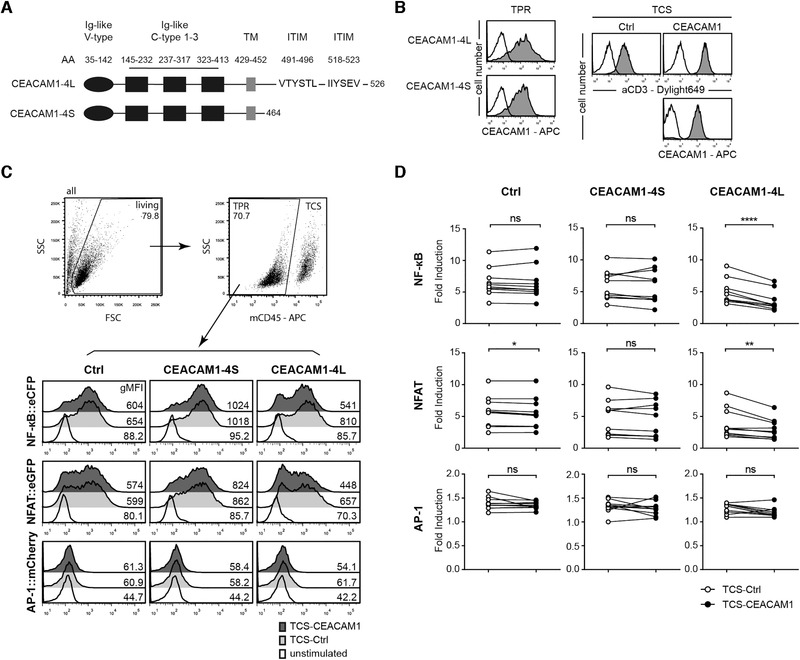
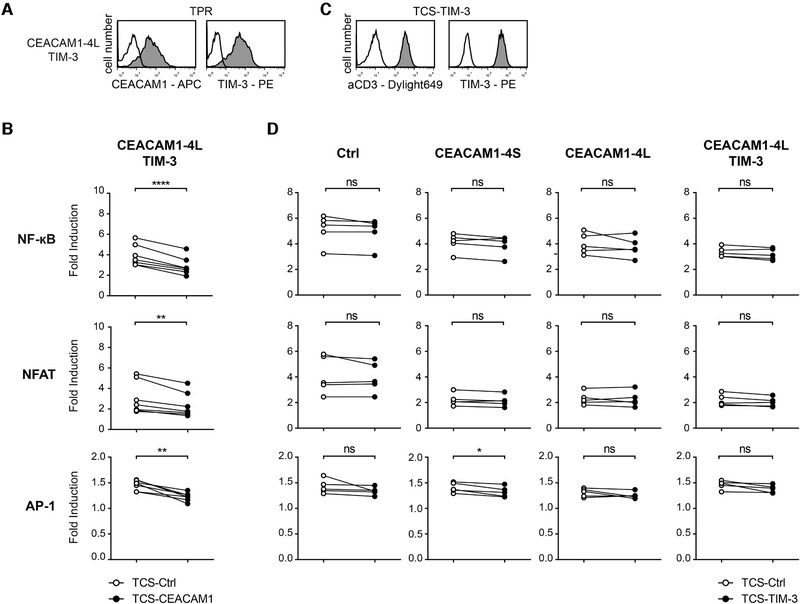
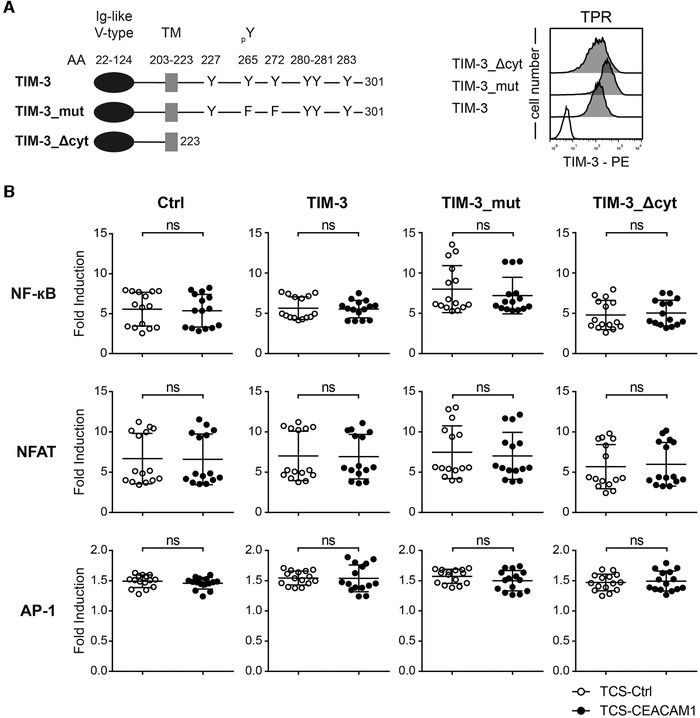
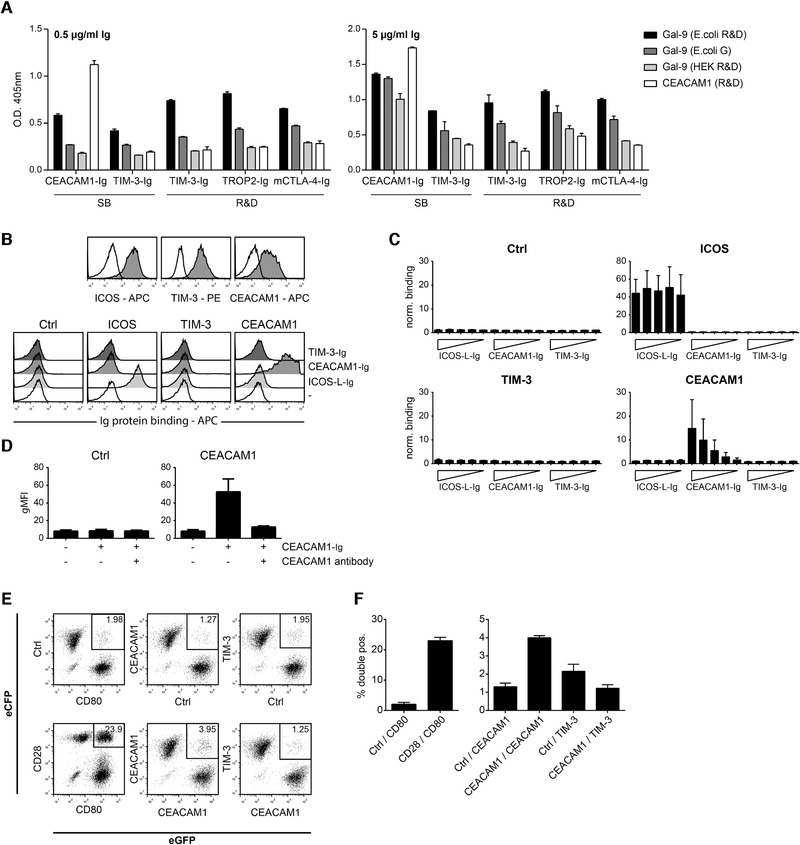
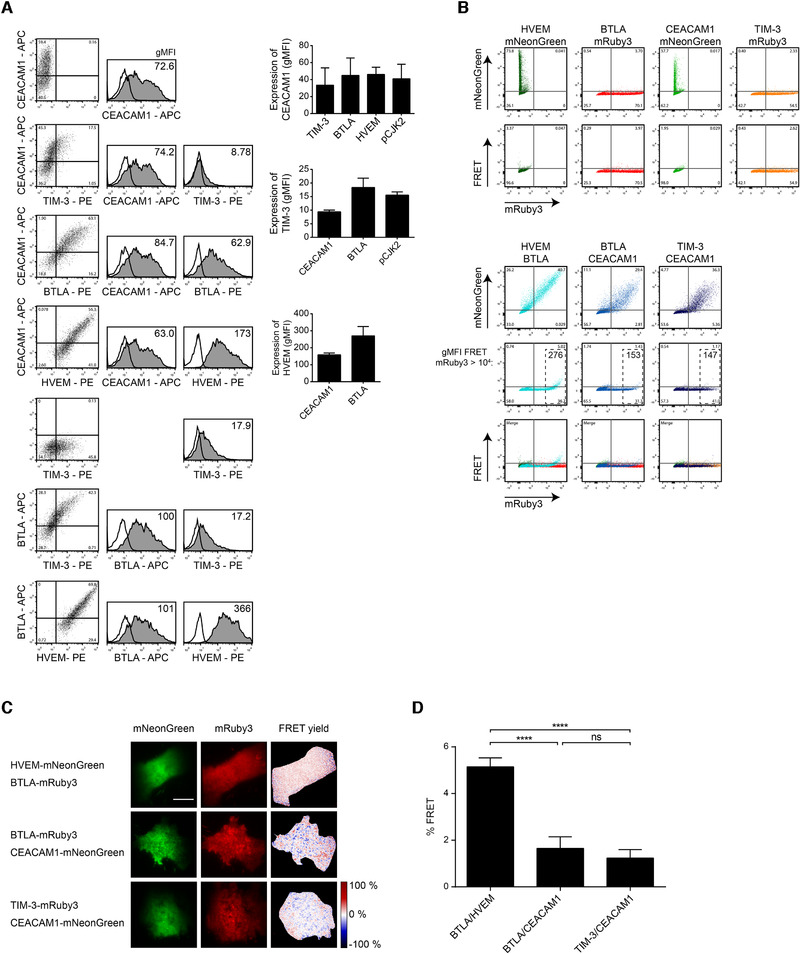
TIM-3 has been considered as a target in cancer immunotherapy. In T cells, inhibitory as well as activating functions have been ascribed to this molecule. Its role may therefore depend on the state of T cells and on the presence of interaction partners capable to perform functional pairing. Carcinoembryonic antigen-related cell adhesion molecule (CEACAM1) has been proposed to bind TIM-3 and to regulate its function. Using a T cell reporter platform we confirmed CEACAM1-mediated inhibition, but CEACAM1 did not functionally engage TIM-3. TIM-3 and CEACAM1 coexpression was limited to a small subset of activated T cells. Moreover, results obtained in extensive binding studies were not in support of an interaction between TIM-3 and CEACAM1. Cytoplasmic sequences derived from TIM-3 induced inhibitory signaling in our human T cell reporter system. Our results indicate that TIM-3 functions are independent of CEACAM1 and that this receptor has the capability to promote inhibitory signaling pathways in human T cells.
TIM-3 被认为是癌症免疫治疗的一个靶点。在 T 细胞中,这个分子既有抑制作用,也有激活作用。因此,它的作用可能取决于 T 细胞的状态和是否存在能够进行功能配对的相互作用伙伴。癌胚抗原相关细胞粘附分子(CEACAM1)被认为可以结合 TIM-3 并调节其功能。我们使用 T 细胞报告基因平台证实了 CEACAM1 介导的抑制作用,但 CEACAM1 并没有与 TIM-3 进行功能结合。TIM-3 和 CEACAM1 的共表达仅限于一小部分活化的 T 细胞。此外,广泛的结合研究结果并不支持 TIM-3 和 CEACAM1 之间的相互作用。我们的人类 T 细胞报告基因系统中的 TIM-3 衍生的细胞质序列诱导抑制性信号。我们的结果表明,TIM-3 的功能独立于 CEACAM1,并且该受体具有在人类 T 细胞中促进抑制性信号通路的能力。