Alrabaa Rami George, Simhon Matthew, Kadiyala R Kumar
Department of Orthopedic Surgery, Columbia University Medical Center, New York, New York, U.S.A.
Arthrosc Tech. 2020 Feb 7;9(3):e339-e344. doi: 10.1016/j.eats.2019.11.002. eCollection 2020 Mar.
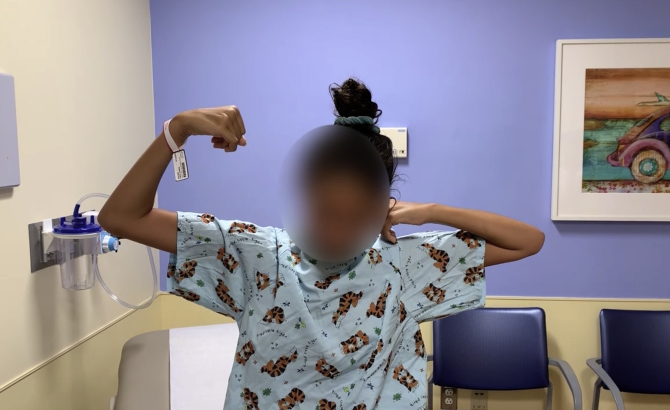
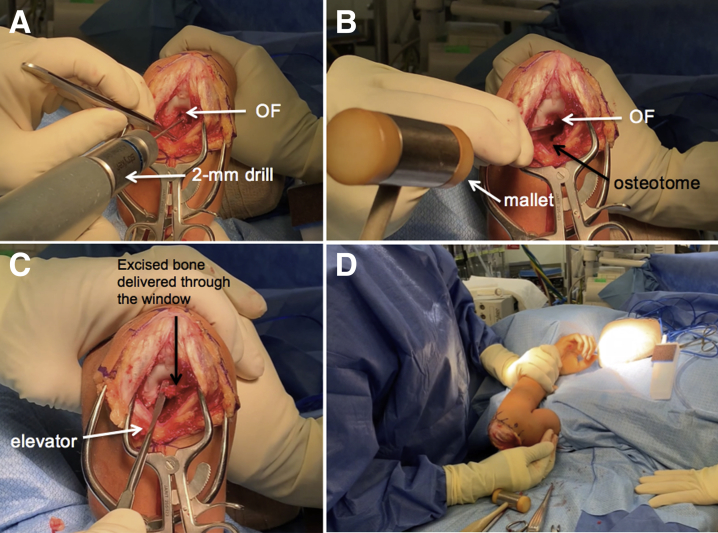
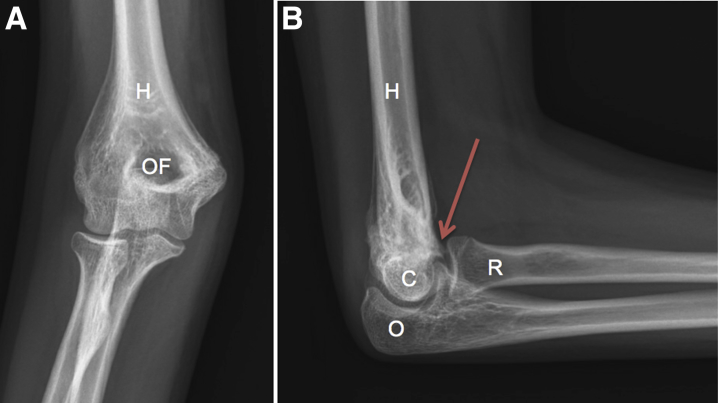
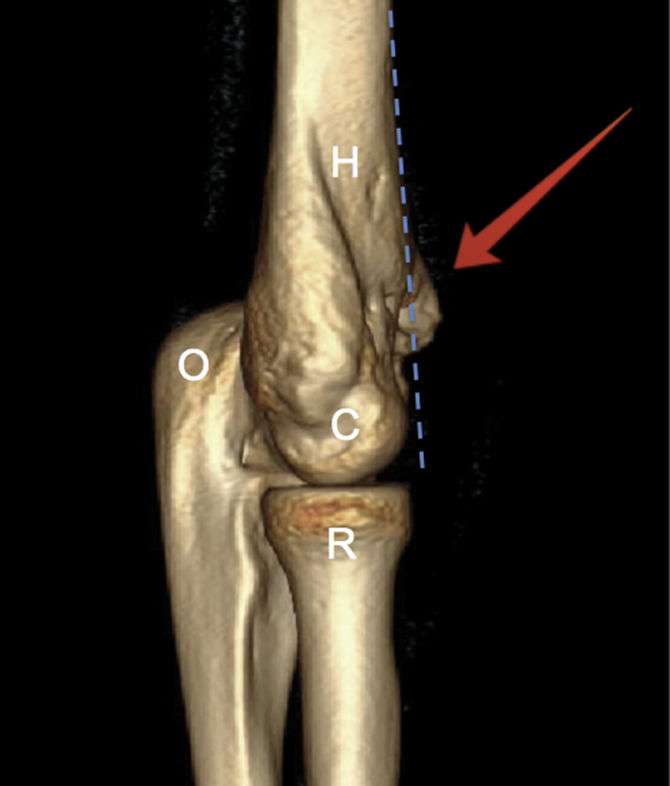
The Outerbridge-Kashiwagi (O-K) procedure has conventionally been used for the treatment of osteoarthritis of the elbow and to treat posttraumatic sequelae including posttraumatic arthritis, stiffness, contracture, and ulnar neuritis. The procedure involves exposure of the posterior elbow joint as well creating a window posteriorly through the olecranon fossa to target anterior aspects of the elbow. Several case series have shown the O-K procedure to have good functional outcomes with minimal complications. Used mostly for the surgical treatment of adult osteoarthritis, the O-K procedure has not been previously described for the treatment of a pediatric supracondylar humerus fracture malunion. This article and accompanying video will present the pearls and discuss the technique of the O-K procedure used to treat the loss of elbow flexion as a sequelae of supracondylar humerus fracture malunion.
传统上,Outerbridge-Kashiwagi(O-K)手术用于治疗肘关节骨关节炎以及治疗创伤后后遗症,包括创伤后关节炎、僵硬、挛缩和尺神经炎。该手术包括暴露肘关节后方,以及通过鹰嘴窝在后方开一个窗口以处理肘关节前方。多个病例系列表明,O-K手术具有良好的功能结果,并发症极少。O-K手术主要用于成人骨关节炎的外科治疗,此前尚未有用于治疗儿童肱骨髁上骨折畸形愈合的相关描述。本文及随附视频将介绍要点,并讨论使用O-K手术治疗因肱骨髁上骨折畸形愈合导致的肘关节屈曲丧失的技术。