Department of Thoracic Medicine, Frankston Hospital, Peninsula Health, 2 Hastings Road, Frankston, VIC, 3199, Australia.
Faculty of Medicine, Nursing and Health Sciences, Monash University, Clayton, Victoria, Australia.
Respir Res. 2020 Mar 30;21(1):76. doi: 10.1186/s12931-020-1330-5.
The mechanism for symptomatic improvement after bronchial thermoplasty (BT) is unclear, since spirometry reveals little or no change. In this study, the effects of BT on airway resistance were examined using two independent techniques.
Eighteen consecutive patients, with severe asthma (57.6 ± 14.2 years) were evaluated by spirometry and plethysmography at three time points: (i) baseline, (ii) left lung treated but right lung untreated and (iii) 6 weeks after both lungs were treated with BT. At each assessment, total and specific airway resistance (Raw, sRaw) were measured. High resolution CT scans were undertaken at the first two assessments, and measurements of lobar volume, airway volume and airway resistance were made. The Asthma Control Questionnaire (ACQ) was administered at each assessment.
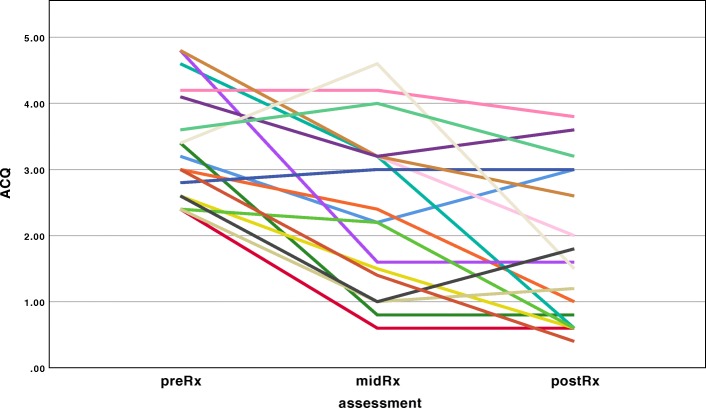
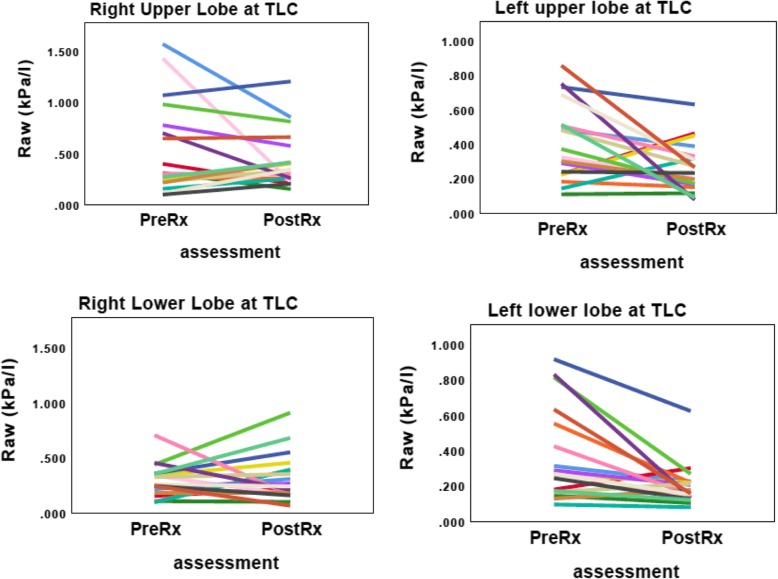
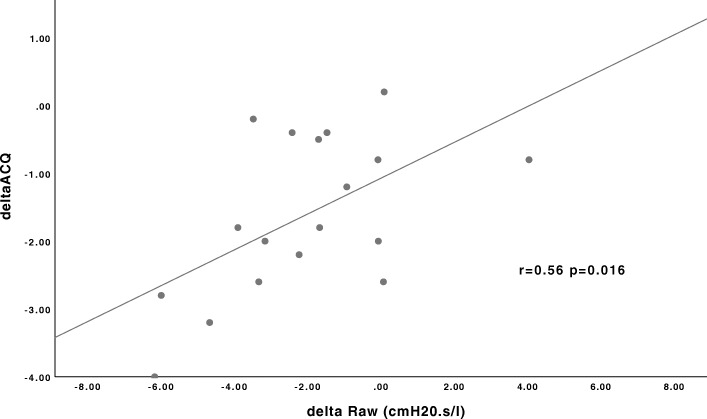
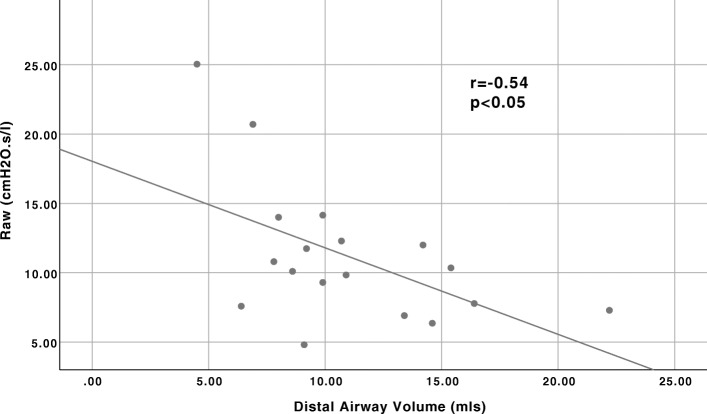
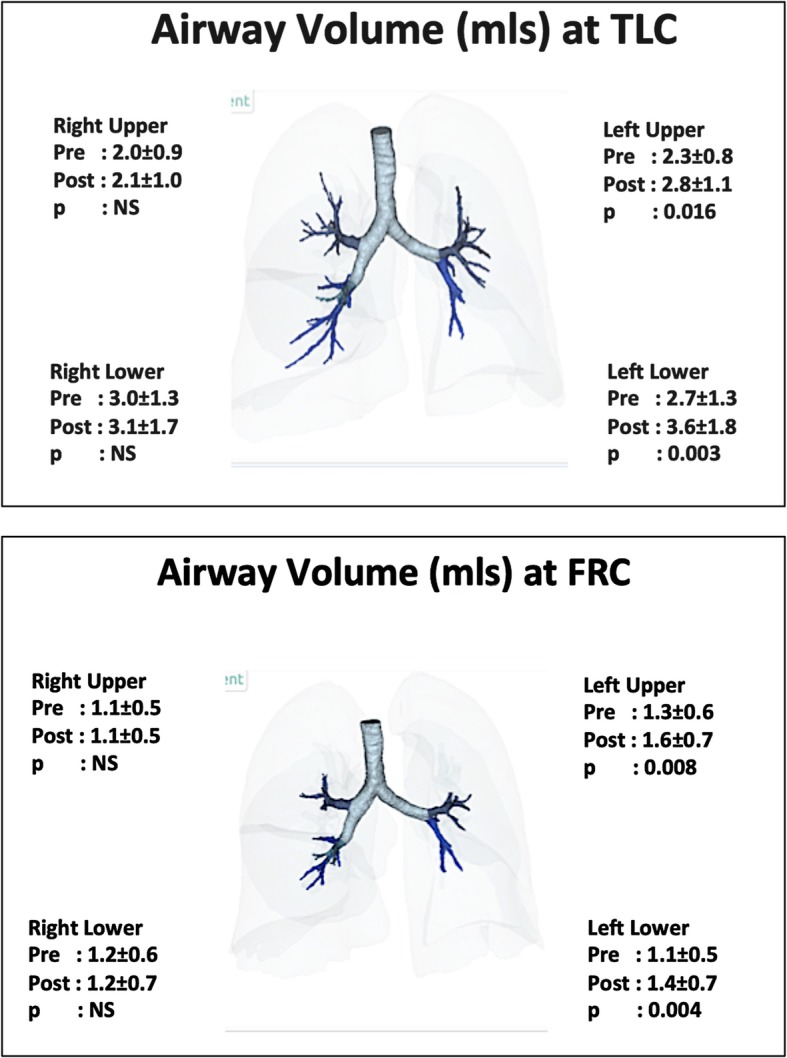
The baseline ACQ score was 3.5 ± 0.9, and improved progressively to 1.8 ± 1.2 (p < 0.01). At baseline, severe airflow obstruction was observed, FEV1 44.8 ± 13.7% predicted, together with gas trapping, and elevated Raw at 342 ± 173%predicted. Following BT, significant improvements in Raw and sRaw were observed, as well as a reduction in Residual Volume, increase in Vital Capacity and no change in FEV1. The change in Raw correlated with the change in ACQ (r = 0.56, p < 0.05). CT scans demonstrated reduced airway volume at baseline, which correlated with the increased Raw determined by plethysmography (p = - 0.536, p = < 0.05). Following BT, the airway volume increased in the treated lung, and this was accompanied by a significant reduction in CT-determined local airway resistance.
Symptomatic improvement after BT is mediated by increased airway volume and reduced airway resistance.
支气管热成形术(BT)后症状改善的机制尚不清楚,因为肺活量测定显示变化很小或没有变化。在这项研究中,使用两种独立的技术检查了 BT 对气道阻力的影响。
连续评估了 18 名患有严重哮喘的患者(57.6±14.2 岁),使用肺活量测定法和体积描记法在三个时间点进行评估:(i)基线,(ii)左肺治疗而右肺未治疗,以及(iii)BT 治疗后 6 周时。在每次评估中,测量总气道阻力(Raw)和特异性气道阻力(sRaw)。在最初的两次评估中进行了高分辨率 CT 扫描,并测量了叶容积、气道容积和气道阻力。在每次评估时均进行了哮喘控制问卷(ACQ)评估。
基线时的 ACQ 评分为 3.5±0.9,逐渐改善至 1.8±1.2(p<0.01)。基线时,观察到严重气流阻塞,FEV1 预测值为 44.8±13.7%,同时存在气体潴留和预测值升高 342±173%的 Raw。BT 后,Raw 和 sRaw 显著改善,残气量减少,肺活量增加,FEV1 无变化。Raw 的变化与 ACQ 的变化相关(r=0.56,p<0.05)。CT 扫描显示基线时气道容积减少,与体积描记法测定的 Raw 增加相关(p=-0.536,p<0.05)。BT 后,治疗侧肺的气道容积增加,同时 CT 确定的局部气道阻力显著降低。
BT 后症状改善是通过增加气道容积和降低气道阻力介导的。