Watson Pavinee, Thomas David, Hoggard Adrian, Parker Michael, Schreurs Nicola
School of Food and Advanced Technology, Massey University, Palmerston North 4442, New Zealand.
School of Agriculture and Environment, Massey University, Palmerston North 4442, New Zealand.
Animals (Basel). 2020 Mar 27;10(4):558. doi: 10.3390/ani10040558.
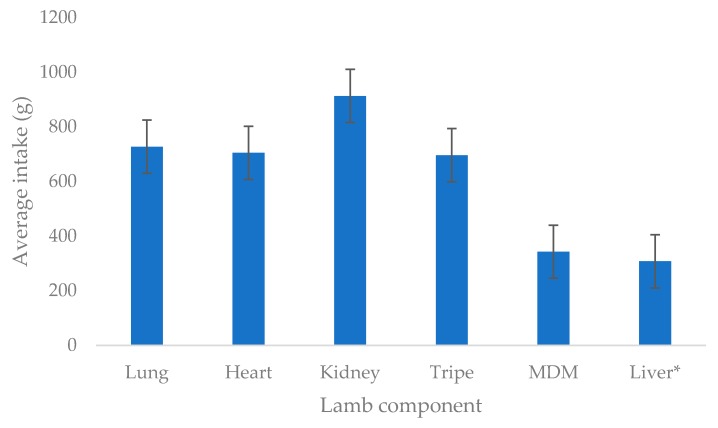
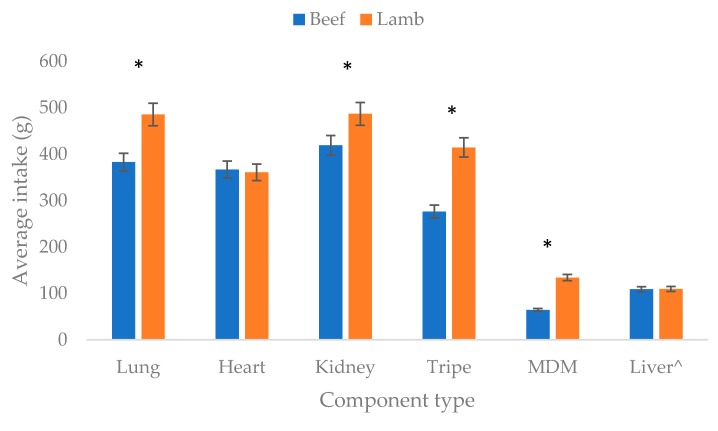
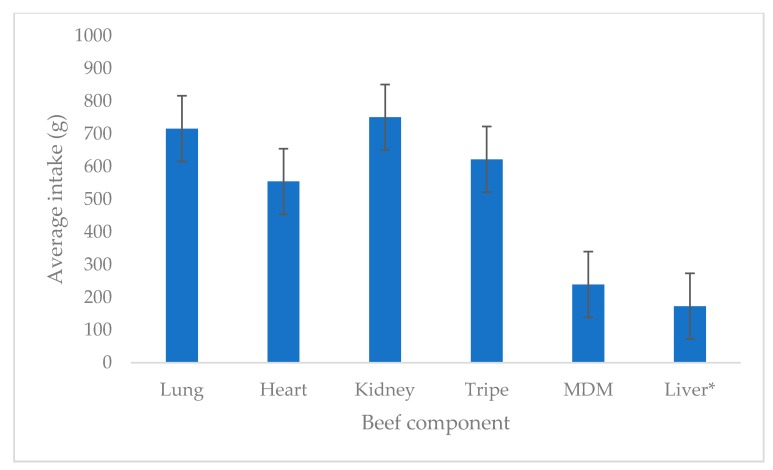
The pet food industry continues to utilise large amounts of inedible meat components from the human food industry. Although used extensively in pet food formulations and as palatants, little is known about the palatability of individual meat components. The objectives of this study were to investigate the palatability of raw meat components commonly used in the production of pet food, using acceptance and preference testing. Those examined were lung, heart, kidney, tripe, liver and mechanically deboned meat (MDM) from lamb and beef. Two-bowl acceptance tests were used to develop an overall ranking of components within each species. Two-bowl preference tests between equivalent beef and lamb components were then used to determine whether a preference was exhibited for one species over the other. For the acceptance of components from lamb and beef, liver was the most palatable within both species, with kidney equivalent to liver when testing lamb components. The MDM was identified as the least palatable component from both species. When examining the preference between equivalent components between species, cats showed preferences for lamb over equivalent beef components, except for heart and liver which showed no difference in intake between the two species. Overall, cats were able to clearly rank the palatability of different components from lamb and beef, as well as between equivalent components from the two species. Selecting highly palatable ingredients whilst still meeting pet food manufacturing guidelines may play a role in improving overall diet palatability and acceptance by cats.
宠物食品行业继续大量使用来自人类食品行业的不可食用肉类成分。尽管这些成分在宠物食品配方中被广泛使用并作为调味剂,但对于单个肉类成分的适口性却知之甚少。本研究的目的是通过接受度和偏好测试来调查宠物食品生产中常用的生肉成分的适口性。所检测的成分包括来自羊肉和牛肉的肺、心脏、肾脏、肚、肝脏和机械去骨肉(MDM)。采用双碗接受度测试对每个物种内的成分进行总体排名。然后通过在等量牛肉和羊肉成分之间进行双碗偏好测试,以确定是否对某一物种表现出相对于另一物种的偏好。对于羊肉和牛肉成分的接受度,肝脏在两个物种中都是最可口的,在测试羊肉成分时,肾脏与肝脏相当。MDM被确定为两个物种中最不可口的成分。在研究物种间等量成分的偏好时,除了心脏和肝脏在两个物种间的摄入量没有差异外,猫对羊肉成分的偏好高于等量的牛肉成分。总体而言,猫能够清楚地对羊肉和牛肉的不同成分以及两个物种的等量成分的适口性进行排名。在仍符合宠物食品制造指南的同时选择高度可口的成分,可能有助于提高猫对整体饮食的适口性和接受度。