Duralliu Arnold, Matejtschuk Paul, Stickings Paul, Hassall Laura, Tierney Robert, Williams Daryl R
Surfaces and Particle Engineering Laboratory, Department of Chemical Engineering, Imperial College London, SW7 2AZ, UK.
Standardisation Science, National Institute for Biological Standards and Control, Blanche Lane, South Mimms, Potters Bar, Hertfordshire, EN6 3QG, UK.
Pharmaceutics. 2020 Mar 27;12(4):303. doi: 10.3390/pharmaceutics12040303.
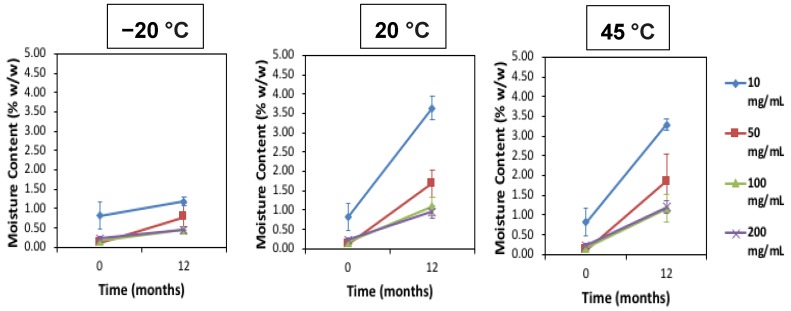
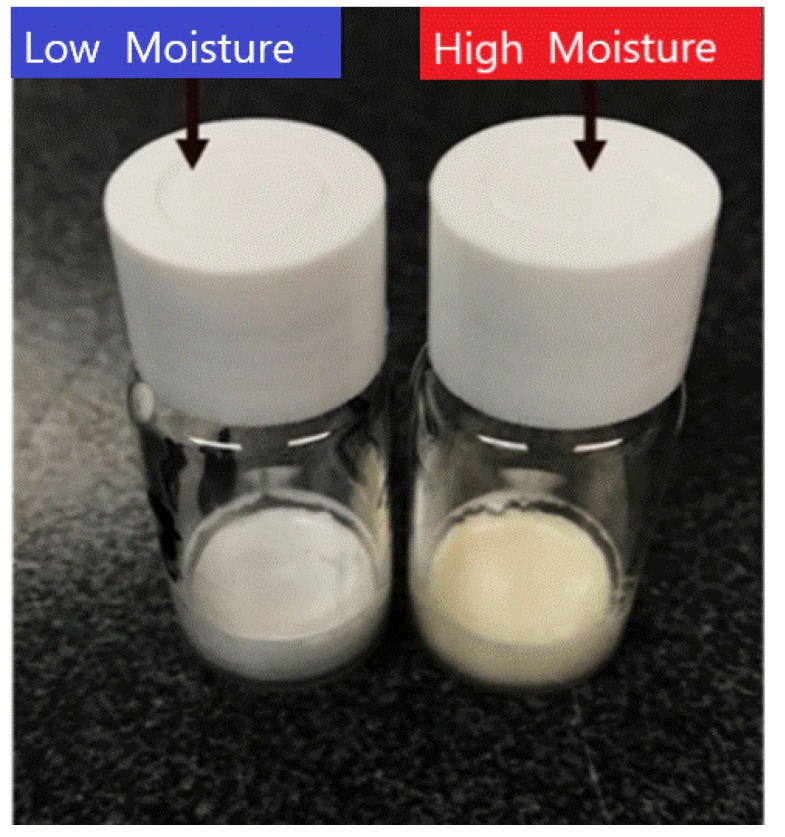
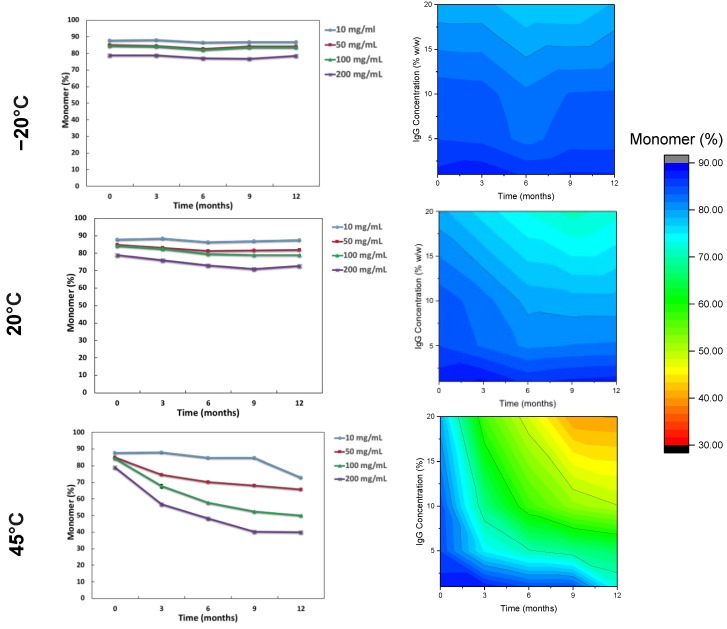
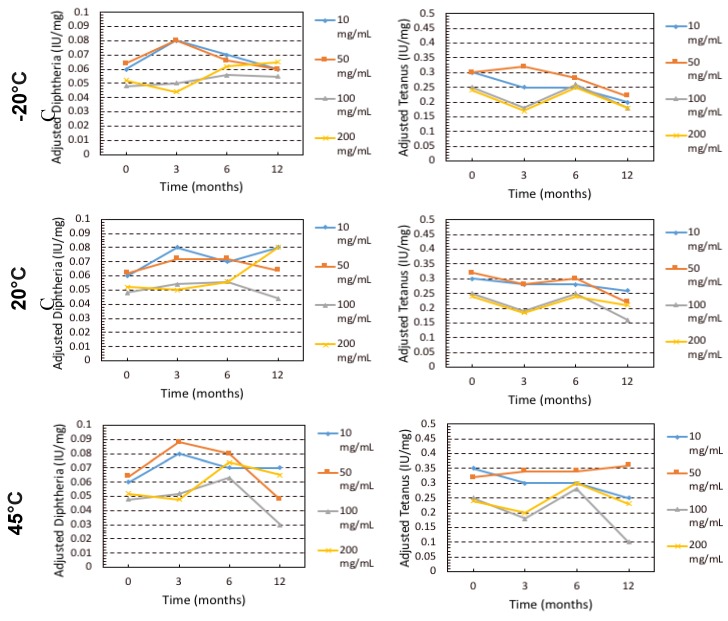
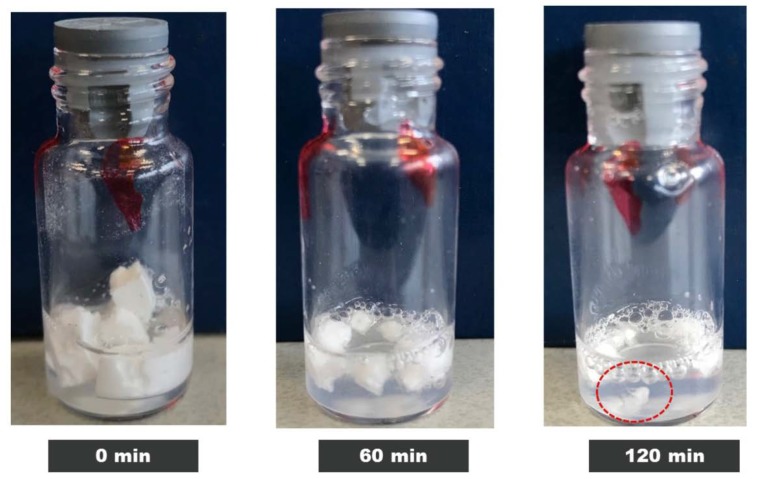
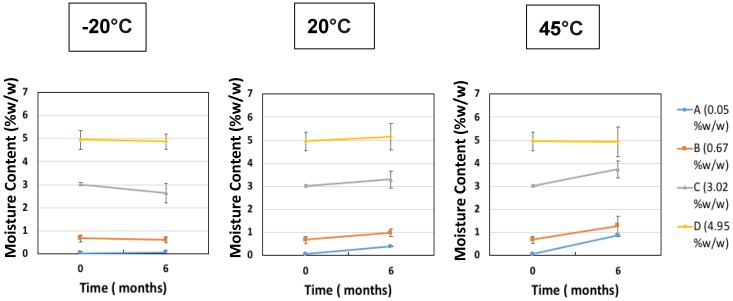
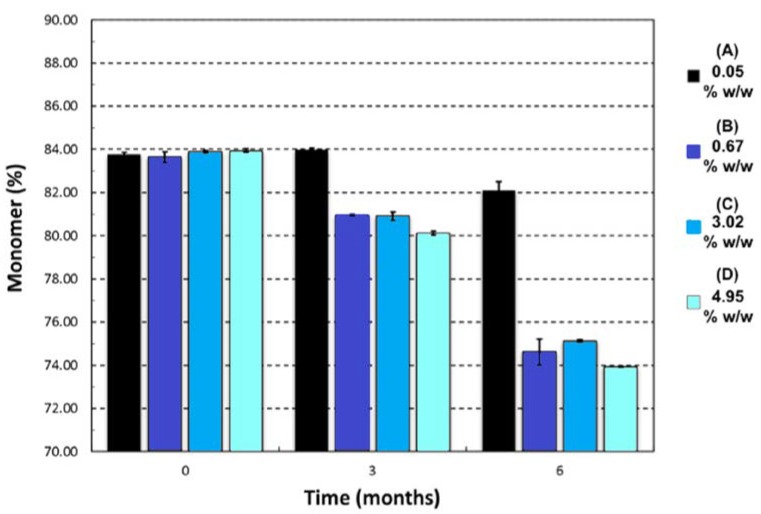
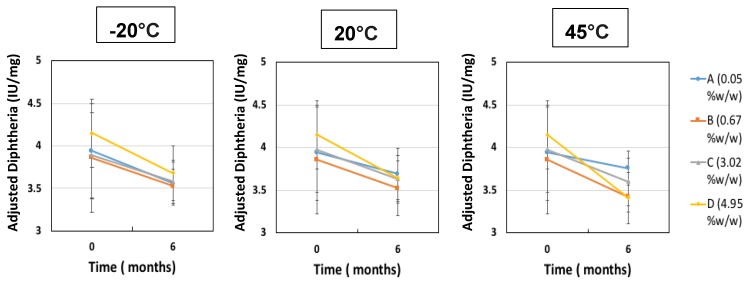
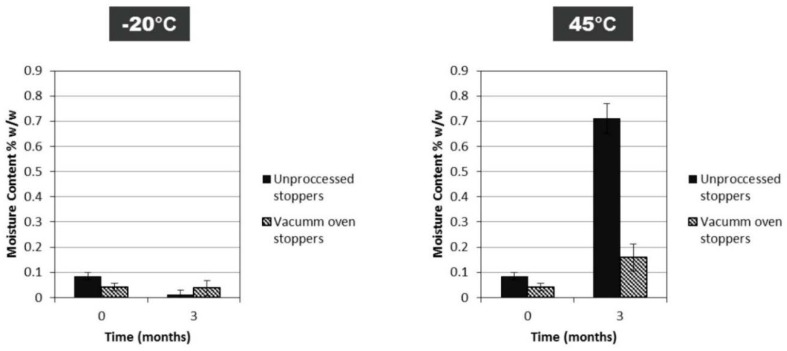
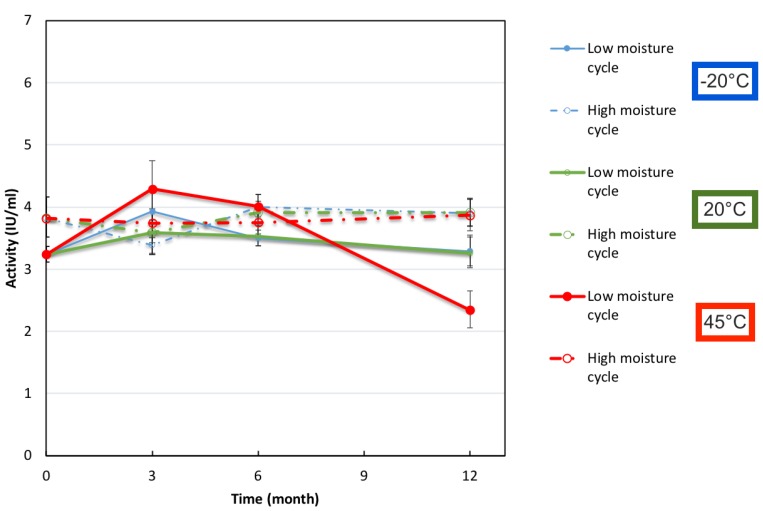
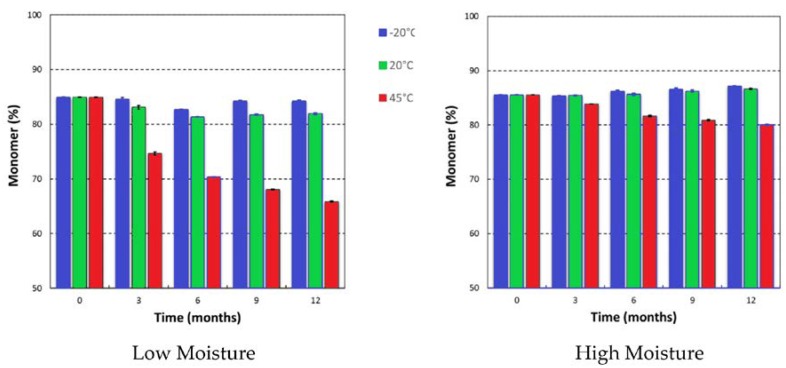
High protein concentration products for targeted therapeutic use are often freeze-dried to enhance stability. The long-term storage stability of freeze-dried (FD) plasma-derived Immunoglobulin G (IgG) from moderate to high concentrations (10-200 mg/mL) was assessed. Monomer content, binding activity and reconstitution times were evaluated over a 12-month period under accelerated and real-term storage conditions. In the first case study it was shown that FD IgG from 10 to 200 mg/mL had minimal monomer/activity losses at up to ambient temperature after 12 months of storage. However, at 45 °C the sucrose-to-protein ratio played a significant impact on IgG stability above 50 mg/mL. All IgG concentrations witnessed moisture ingress over a 12-month period. The impact of moisture ingress from environmental exposure (between 0.1% and 5% / moisture) for IgG 50 mg/mL was assessed, being generated by exposing low moisture batches to an atmospheric environment for fixed time periods. Results showed that at -20 °C and 20 °C there was no significant difference in terms of monomer or antigen-binding activity losses over 6 months. However, at 45 °C, there were losses in monomer content, seemingly worse for higher moisture content samples although model binding activity indicated no losses. Finally, the difference between a low moisture product (0.1-1% /) and a moderately high moisture (3% /) product generated by alternative freeze-drying cycles, both stoppered under low oxygen headspace conditions, was evaluated. Results showed that at -20 °C and 20 °C there was no difference in terms of binding activity or monomer content. However, at 45 °C, the low moisture samples had greater monomer and binding activity losses than samples from the highest moisture cycle batch, indicating that over-drying can be an issue.
用于靶向治疗的高蛋白浓度产品通常会进行冻干处理以提高稳定性。对中等至高浓度(10 - 200 mg/mL)的冻干血浆来源免疫球蛋白G(IgG)的长期储存稳定性进行了评估。在加速和实际储存条件下,对12个月期间的单体含量、结合活性和复溶时间进行了评估。在第一个案例研究中表明,10至200 mg/mL的冻干IgG在储存12个月后,在高达环境温度下单体/活性损失最小。然而,在45°C时,蔗糖与蛋白质的比例对50 mg/mL以上的IgG稳定性有显著影响。所有IgG浓度在12个月期间都出现了水分进入的情况。评估了环境暴露(0.1%至5%/水分)导致的水分进入对50 mg/mL IgG的影响,方法是将低水分批次在大气环境中暴露固定时间段。结果表明,在-20°C和20°C时,6个月内单体或抗原结合活性损失没有显著差异。然而,在45°C时,单体含量有所损失,对于较高水分含量的样品似乎更严重,尽管模型结合活性表明没有损失。最后,评估了通过不同冻干循环产生的低水分产品(0.1 - 1%/)和中等高水分(3%/)产品之间的差异,两者均在低氧顶空条件下密封。结果表明,在-20°C和20°C时,结合活性或单体含量没有差异。然而,在45°C时,低水分样品的单体和结合活性损失比最高水分循环批次的样品更大,表明过度干燥可能是一个问题。