Immunoregulation Laboratory, CRCHUM, Montreal, QC H2X 0A9, Canada.
Cells. 2020 Mar 27;9(4):813. doi: 10.3390/cells9040813.
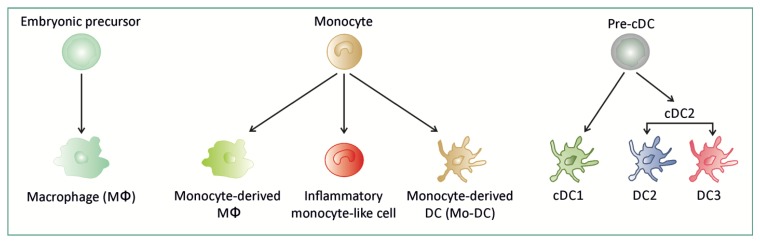
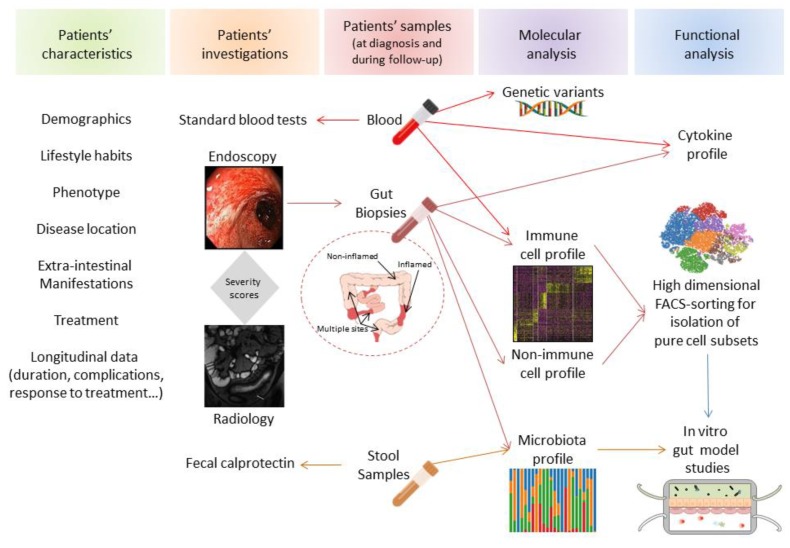
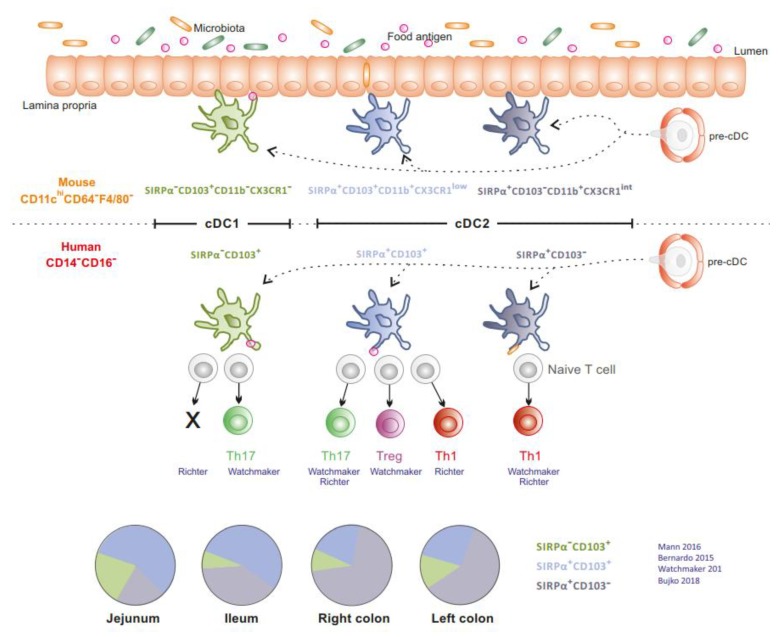
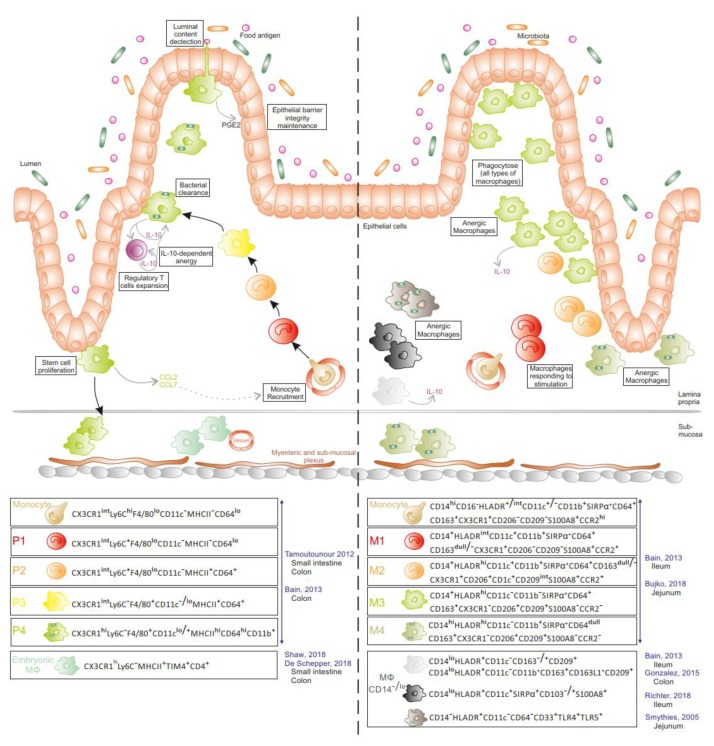
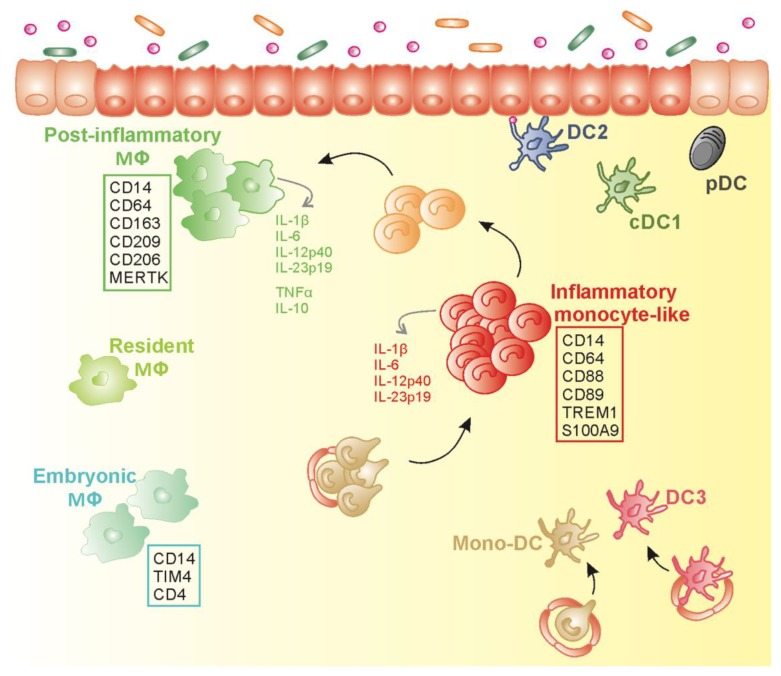
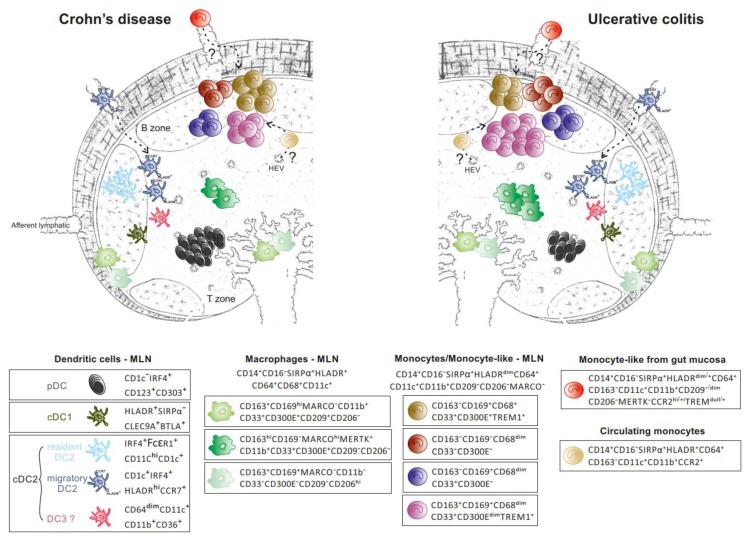
Inflammatory bowel diseases (IBDs), which include Crohn's disease (CD) and ulcerative colitis (UC), are driven by an abnormal immune response to commensal microbiota in genetically susceptible hosts. In addition to epithelial and stromal cells, innate and adaptive immune systems are both involved in IBD immunopathogenesis. Given the advances driven by single-cell technologies, we here reviewed the immune landscape and function of mononuclear phagocytes in inflamed non-lymphoid and lymphoid tissues of CD and UC patients. Immune cell profiling of IBD tissues using scRNA sequencing combined with multi-color cytometry analysis identifies unique clusters of monocyte-like cells, macrophages, and dendritic cells. These clusters reflect either distinct cell lineages (nature), or distinct or intermediate cell types with identical ontogeny, adapting their phenotype and function to the surrounding milieu (nurture and tissue imprinting). These advanced technologies will provide an unprecedented view of immune cell networks in health and disease, and thus may offer a personalized medicine approach to patients with IBD.
炎症性肠病(IBD)包括克罗恩病(CD)和溃疡性结肠炎(UC),是由遗传易感宿主对共生微生物群的异常免疫反应引起的。除了上皮细胞和基质细胞,固有和适应性免疫系统都参与了 IBD 的免疫发病机制。鉴于单细胞技术的进步,我们在这里回顾了 CD 和 UC 患者非淋巴和淋巴组织中单核吞噬细胞的免疫景观和功能。使用 scRNA 测序结合多色细胞术分析对 IBD 组织进行免疫细胞分析,可鉴定出类似于单核细胞、巨噬细胞和树突状细胞的独特细胞簇。这些簇反映了不同的细胞谱系(先天),或者具有相同起源的不同或中间细胞类型,使其表型和功能适应周围环境(后天和组织印记)。这些先进的技术将提供对健康和疾病中免疫细胞网络的前所未有的观察,并可能为 IBD 患者提供个性化的治疗方法。