National Center for Biodefense and Infectious Diseases, and School of Systems Biology, George Mason University, Manassas, VA, United States.
Department of Biochemistry and Molecular Biology, The Brody School of Medicine, East Carolina University, Greenville, NC, United States.
Front Cell Infect Microbiol. 2020 Mar 13;10:82. doi: 10.3389/fcimb.2020.00082. eCollection 2020.
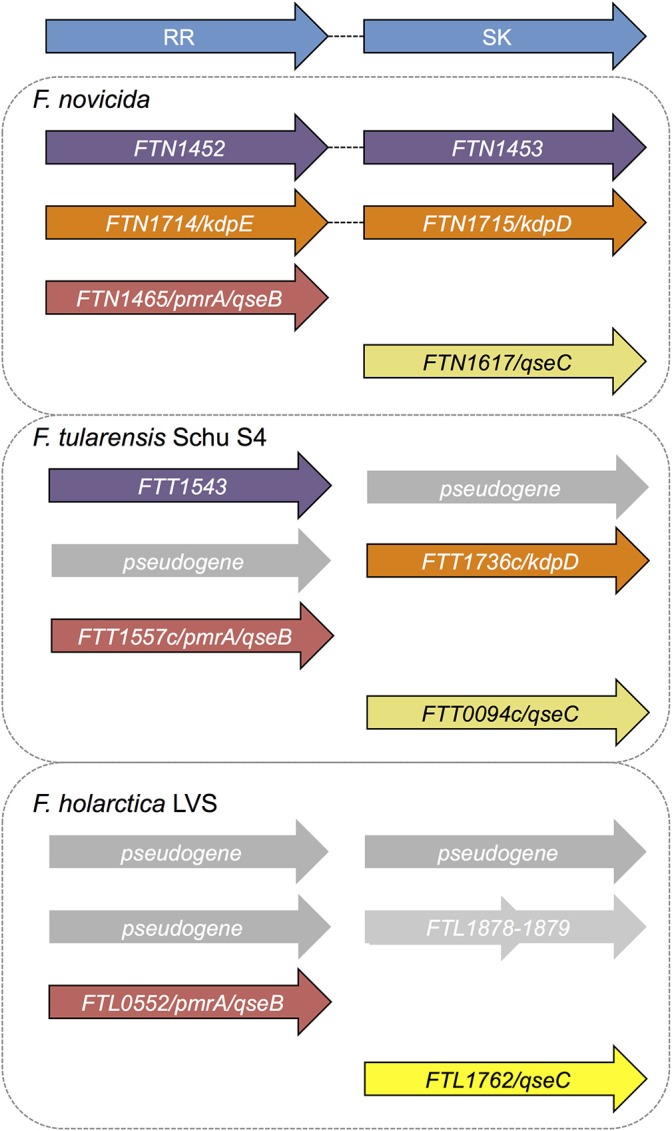
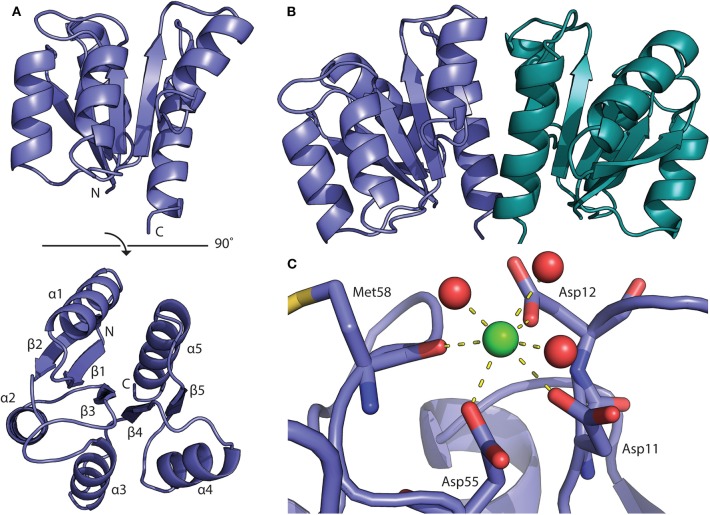
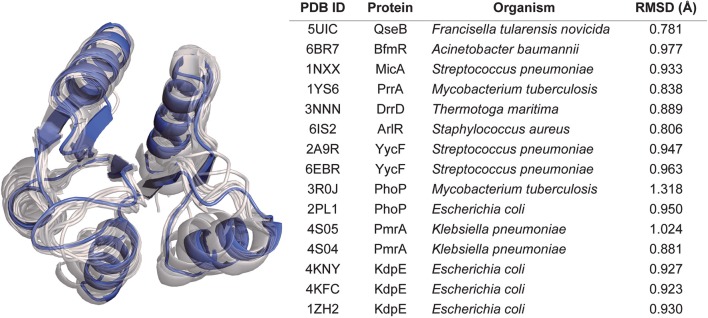
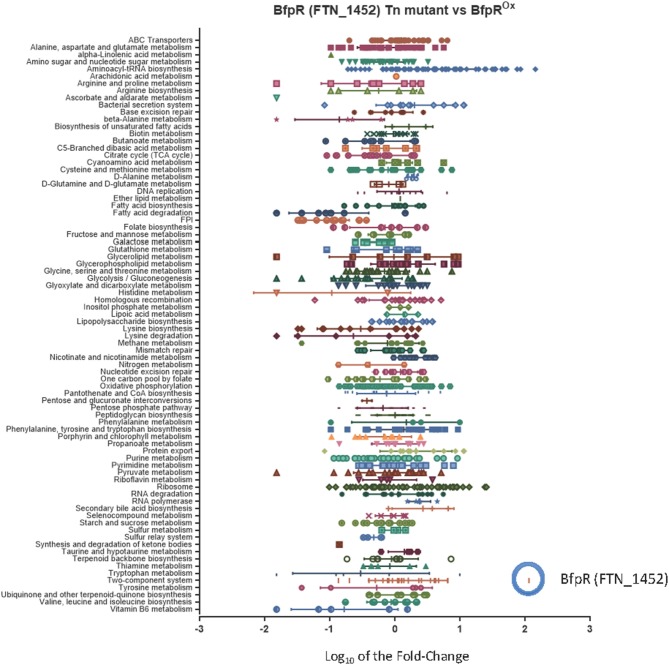
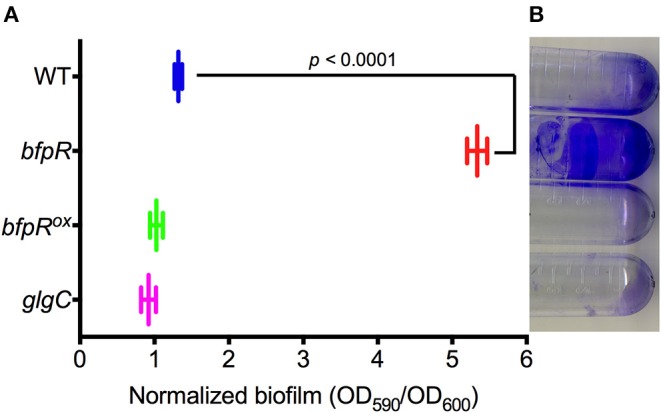
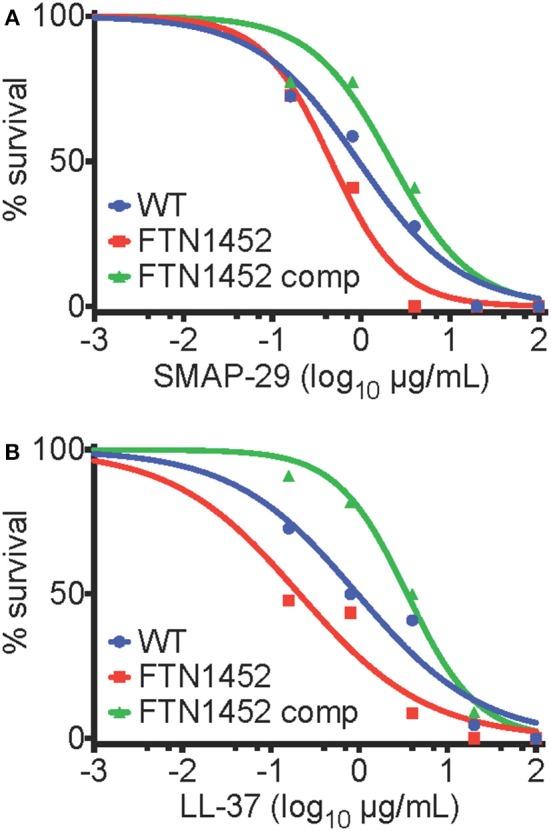
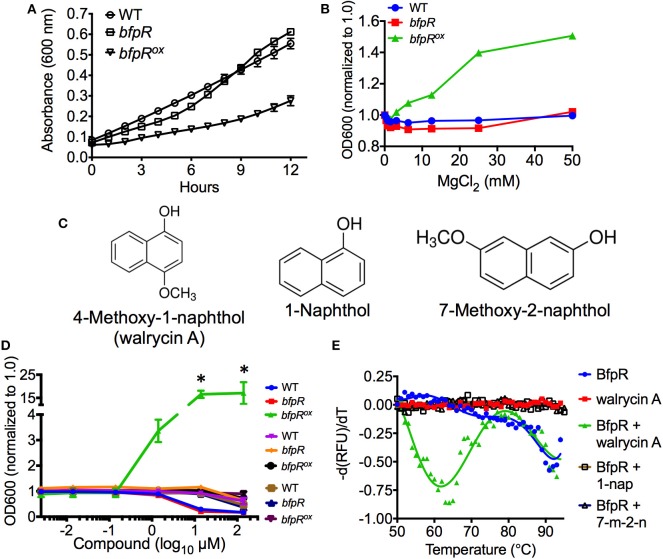
Response regulators are a critical part of the two-component system of gene expression regulation in bacteria, transferring a signal from a sensor kinase into DNA binding activity resulting in alteration of gene expression. In this study, we investigated a previously uncharacterized response regulator in , FTN_1452 that we have named BfpR (Biofilm-regulating protein Regulator, ). In contrast to another Francisella response regulator, QseB/PmrA, BfpR appears to be a negative regulator of biofilm production, and also a positive regulator of antimicrobial peptide resistance in this bacterium. The protein was crystallized and X-ray crystallography studies produced a 1.8 Å structure of the BfpR N-terminal receiver domain revealing interesting insight into its potential interaction with the sensor kinase. Structural analysis of BfpR places it in the OmpR/PhoP family of bacterial response regulators along with WalR and ResD. Proteomic and transcriptomic analyses suggest that BfpR overexpression affects expression of the critical virulence factor iglC, as well as other proteins in the bacterium. We demonstrate that mutation of is associated with an antimicrobial peptide resistance phenotype, a phenotype also associated with other response regulators, for the human cathelicidin peptide LL-37 and a sheep antimicrobial peptide SMAP-29. with mutated replicated better than WT in intracellular infection assays in human-derived macrophages suggesting that the down-regulation of iglC expression in mutant may enable this intracellular replication to occur. Response regulators have been shown to play important roles in the regulation of bacterial biofilm production. We demonstrate that biofilm formation was highly increased in the mutant, corresponding to altered glycogen synthesis. Waxworm infection experiments suggest a role of BfpR as a negative modulator of iglC expression with de-repression by Mg. In this study, we find that the response regulator BfpR may be a negative regulator of biofilm formation, and a positive regulator of antimicrobial peptide resistance in .
应答调控器是细菌中基因表达调控双组分系统的关键部分,它将信号从传感器激酶传递到 DNA 结合活性,从而改变基因表达。在这项研究中,我们研究了一种以前未被描述的 应答调控器,FTN_1452,我们将其命名为 BfpR(生物膜调节蛋白调控因子)。与另一种弗朗西斯氏菌应答调控器 QseB/PmrA 不同,BfpR 似乎是生物膜产生的负调控因子,也是该细菌中抗抗菌肽的正调控因子。该蛋白被结晶,并进行 X 射线晶体学研究,得到了 BfpR N 端受体结构域的 1.8 Å 结构,这为其与传感器激酶的潜在相互作用提供了有趣的见解。BfpR 的结构分析将其置于细菌应答调控器的 OmpR/PhoP 家族中,与 WalR 和 ResD 一起。蛋白质组学和转录组学分析表明,BfpR 过表达会影响关键毒力因子 iglC 以及细菌中其他蛋白质的表达。我们证明 的突变与抗抗菌肽的表型相关,这种表型也与其他应答调控因子相关,如人源抗菌肽 LL-37 和绵羊抗菌肽 SMAP-29。与突变的 相比,WT 在人源性巨噬细胞内感染实验中复制更好,这表明 突变体中 iglC 表达的下调可能使其能够进行这种细胞内复制。应答调控器在细菌生物膜形成的调节中发挥着重要作用。我们证明 突变体中的生物膜形成高度增加,对应于糖原合成的改变。黄粉虫感染实验表明 BfpR 作为 iglC 表达的负调控因子发挥作用,Mg 可使其去阻遏。在这项研究中,我们发现应答调控器 BfpR 可能是生物膜形成的负调控因子,也是 的抗菌肽抗耐药的正调控因子。