Irwin Madison, Tare Meghana, Singh Aditi, Puli Oorvashi Roy, Gogia Neha, Riccetti Matthew, Deshpande Prajakta, Kango-Singh Madhuri, Singh Amit
Department of Biology, University of Dayton, Dayton, OH, United States.
Premedical Program, University of Dayton, Dayton, OH, United States.
Front Cell Dev Biol. 2020 Mar 13;8:117. doi: 10.3389/fcell.2020.00117. eCollection 2020.
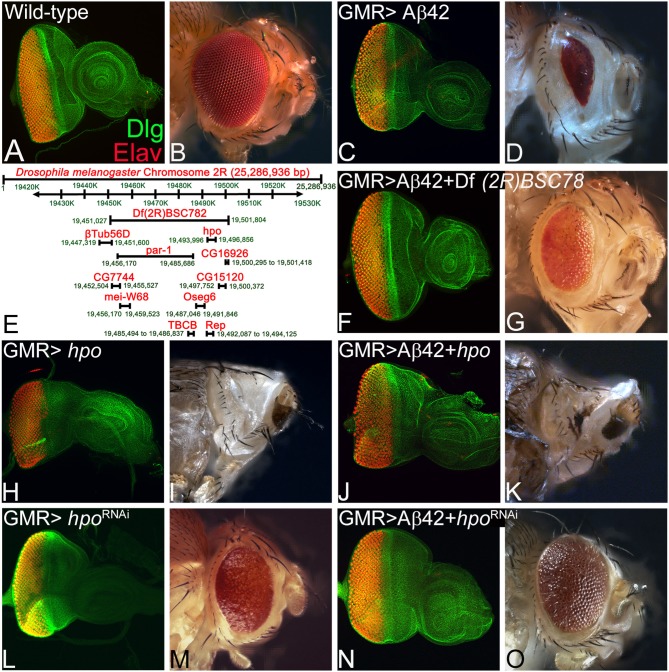
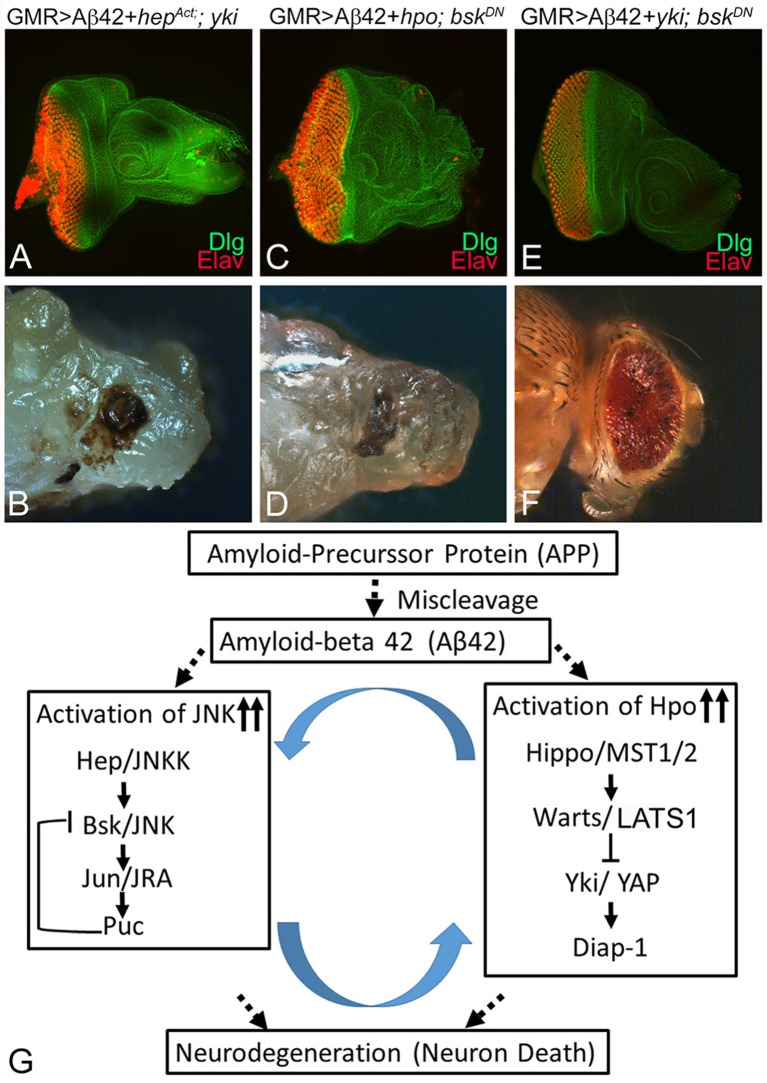
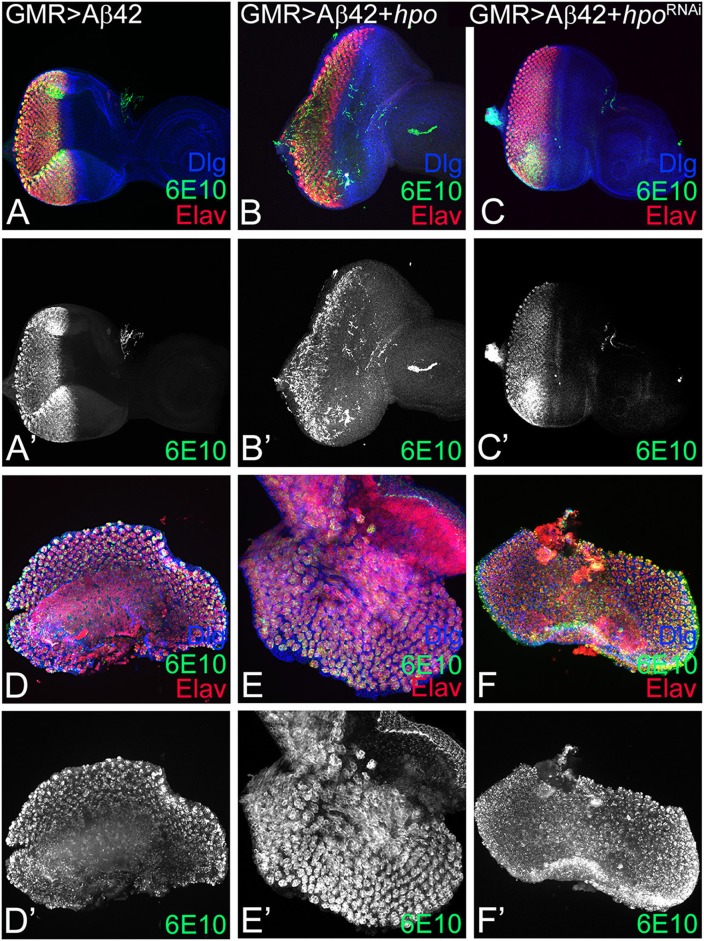
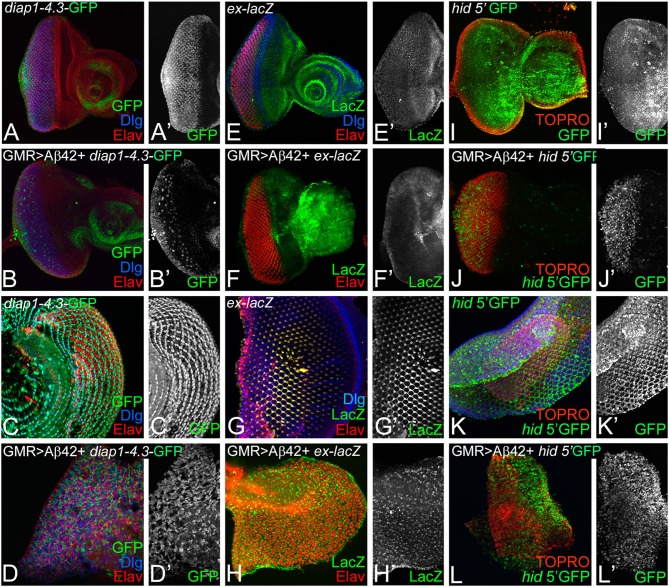
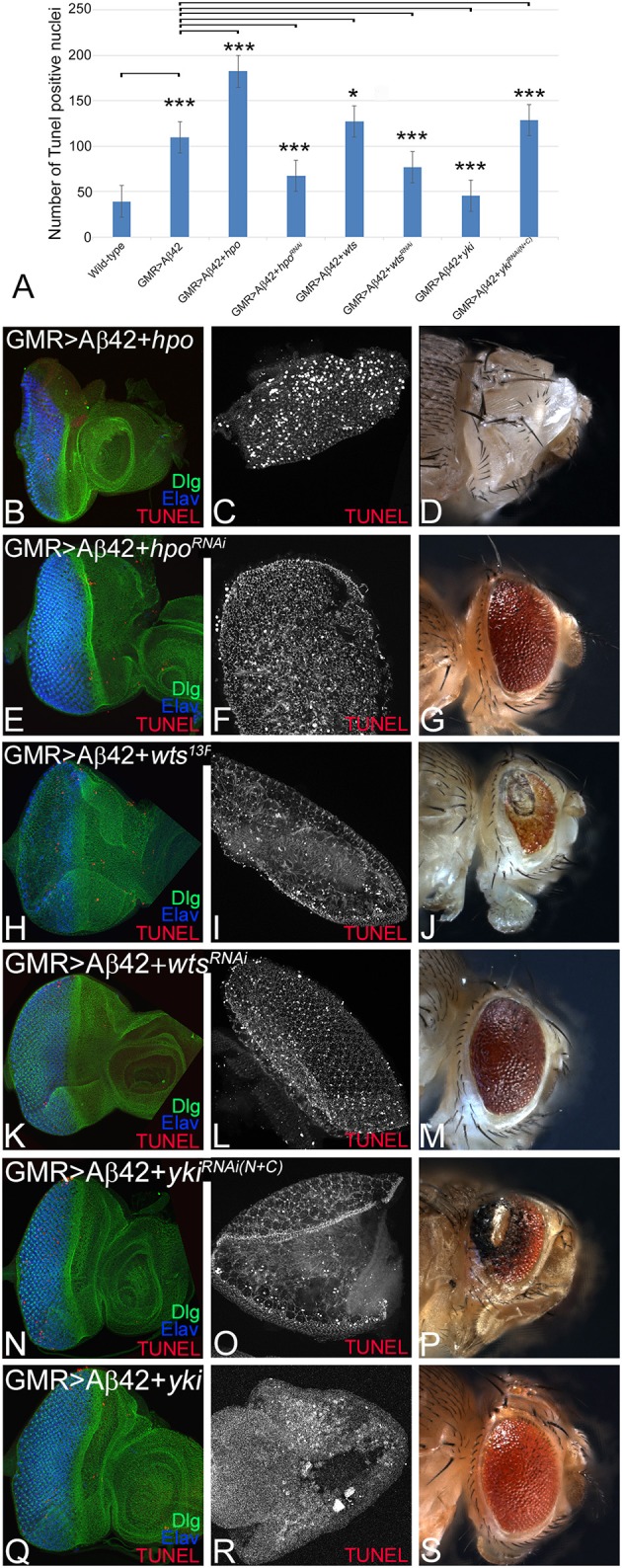
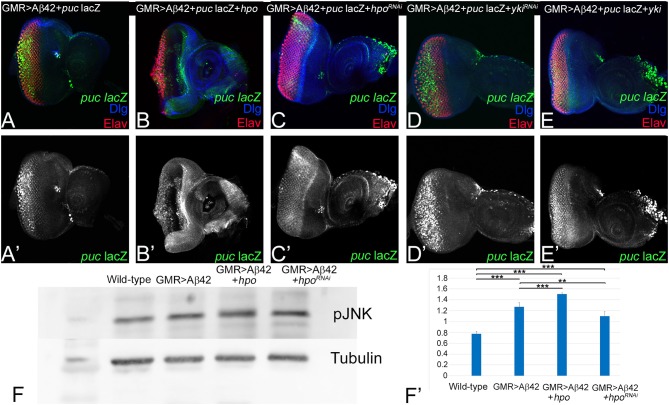
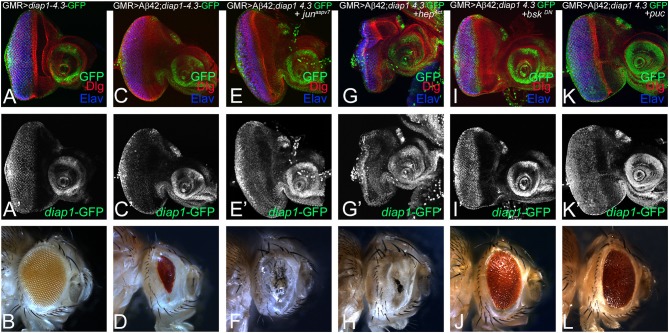
Alzheimer's disease (AD, OMIM: 104300) is an age-related disorder that affects millions of people. One of the underlying causes of AD is generation of hydrophobic amyloid-beta 42 (Aβ42) peptides that accumulate to form amyloid plaques. These plaques induce oxidative stress and aberrant signaling, which result in the death of neurons and other pathologies linked to neurodegeneration. We have developed a eye model of AD by targeted misexpression of human Aβ42 in the differentiating retinal neurons, where an accumulation of Aβ42 triggers a characteristic neurodegenerative phenotype. In a forward deficiency screen to look for genetic modifiers, we identified a molecularly defined deficiency, which suppresses Aβ42-mediated neurodegeneration. This deficiency uncovers () gene, a member of evolutionarily conserved Hippo signaling pathway that regulates growth. Activation of Hippo signaling causes cell death, whereas downregulation of Hippo signaling triggers cell proliferation. We found that Hippo signaling is activated in Aβ42-mediated neurodegeneration. Downregulation of Hippo signaling rescues the Aβ42-mediated neurodegeneration, whereas upregulation of Hippo signaling enhances the Aβ42-mediated neurodegeneration phenotypes. It is known that c-Jun-amino-terminal kinase (JNK) signaling pathway is upregulated in AD. We found that activation of JNK signaling enhances the Aβ42-mediated neurodegeneration, whereas downregulation of JNK signaling rescues the Aβ42-mediated neurodegeneration. We tested the nature of interactions between Hippo signaling and JNK signaling in Aβ42-mediated neurodegeneration using genetic epistasis approach. Our data suggest that Hippo signaling and JNK signaling, two independent signaling pathways, act synergistically upon accumulation of Aβ42 plaques to trigger cell death. Our studies demonstrate a novel role of Hippo signaling pathway in Aβ42-mediated neurodegeneration.
阿尔茨海默病(AD,OMIM:104300)是一种与年龄相关的疾病,影响着数百万人。AD的潜在病因之一是疏水性β淀粉样蛋白42(Aβ42)肽的产生,这些肽会聚集形成淀粉样斑块。这些斑块会诱导氧化应激和异常信号传导,从而导致神经元死亡以及与神经退行性变相关的其他病变。我们通过在分化的视网膜神经元中靶向错误表达人Aβ42,建立了AD的眼部模型,其中Aβ42的积累会触发特征性的神经退行性表型。在一项寻找基因修饰因子的正向缺陷筛选中,我们鉴定出一种分子定义的缺陷,它能抑制Aβ42介导的神经退行性变。这种缺陷揭示了()基因,它是进化上保守的调控生长的Hippo信号通路的成员之一。Hippo信号通路的激活会导致细胞死亡,而Hippo信号通路的下调会触发细胞增殖。我们发现Hippo信号通路在Aβ42介导的神经退行性变中被激活。下调Hippo信号通路可挽救Aβ42介导的神经退行性变,而上调Hippo信号通路则会增强Aβ42介导的神经退行性变表型。已知c-Jun氨基末端激酶(JNK)信号通路在AD中上调。我们发现激活JNK信号通路会增强Aβ42介导的神经退行性变,而下调JNK信号通路则可挽救Aβ42介导的神经退行性变。我们使用遗传上位性方法测试了在Aβ42介导的神经退行性变中Hippo信号通路与JNK信号通路之间相互作用的性质。我们的数据表明,Hippo信号通路和JNK信号通路这两条独立的信号通路,在Aβ42斑块积累时协同作用以触发细胞死亡。我们的研究证明了Hippo信号通路在Aβ42介导的神经退行性变中的新作用。