Cancerology Laboratory, Leloir Institute‑Biochemical Research Institute of Buenos Aires (IIBBA), National Scientific and Technical Research Council (CONICET), Buenos Aires C1405BWE, Argentina.
Melanoma Oncology and Immunology Group, Centenary Institute, Sydney, New South Wales 2050, Australia.
Int J Oncol. 2020 Jun;56(6):1429-1441. doi: 10.3892/ijo.2020.5031. Epub 2020 Mar 30.
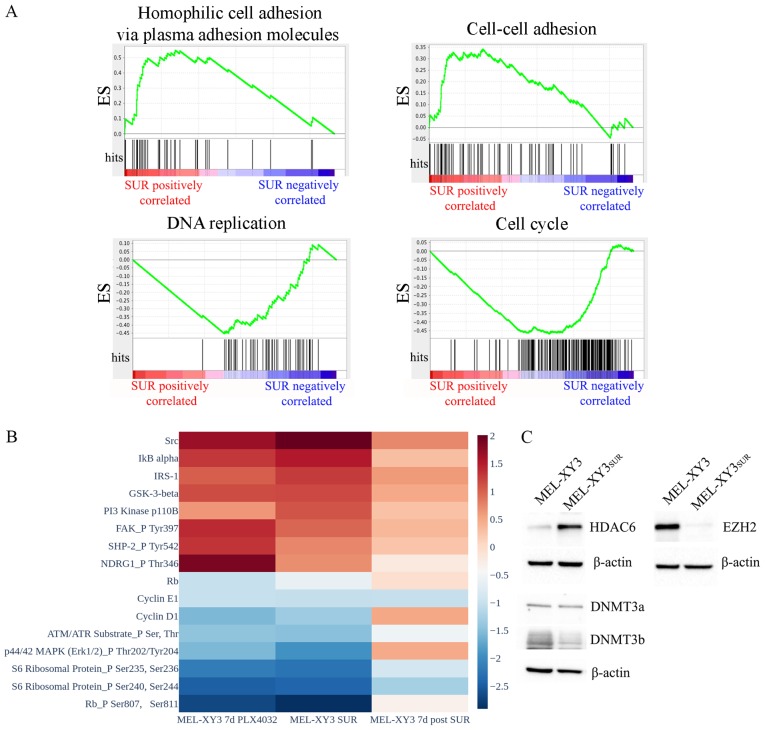
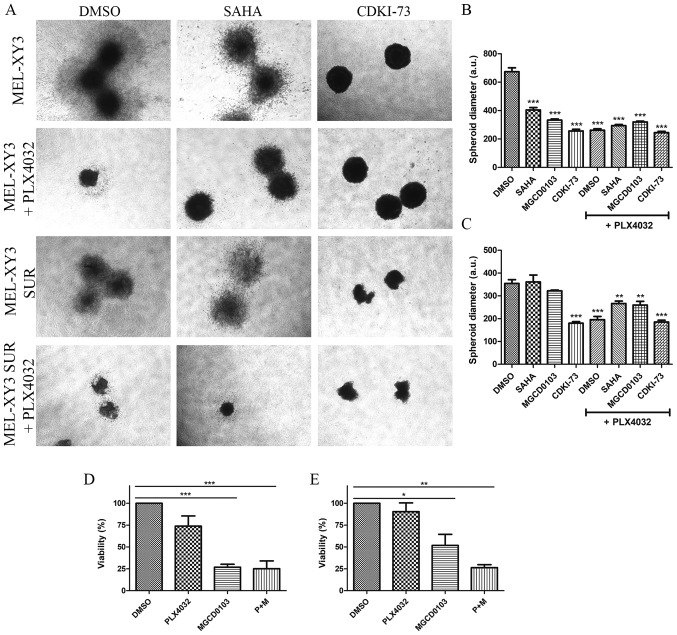
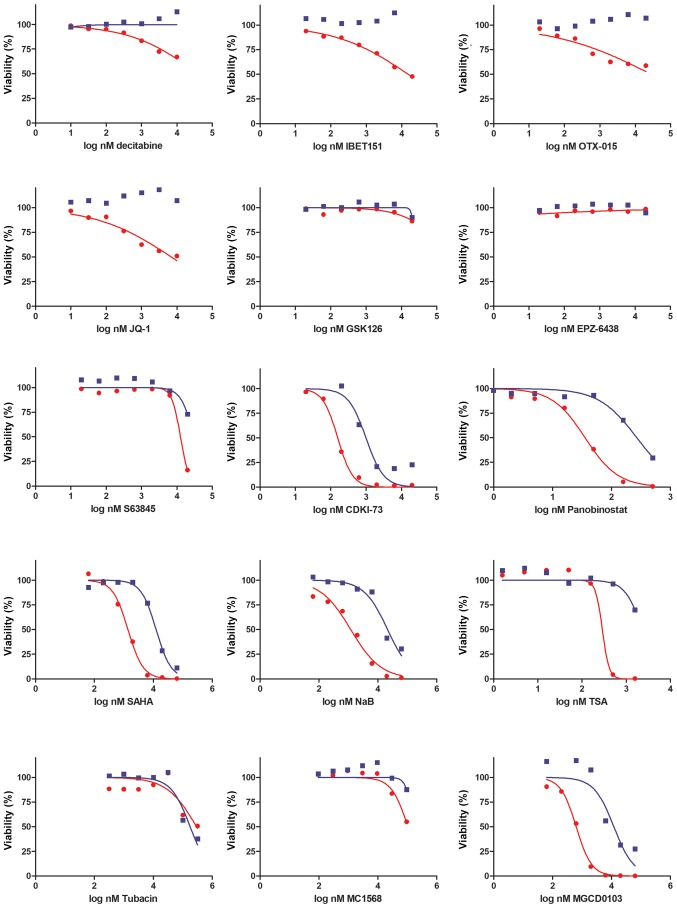
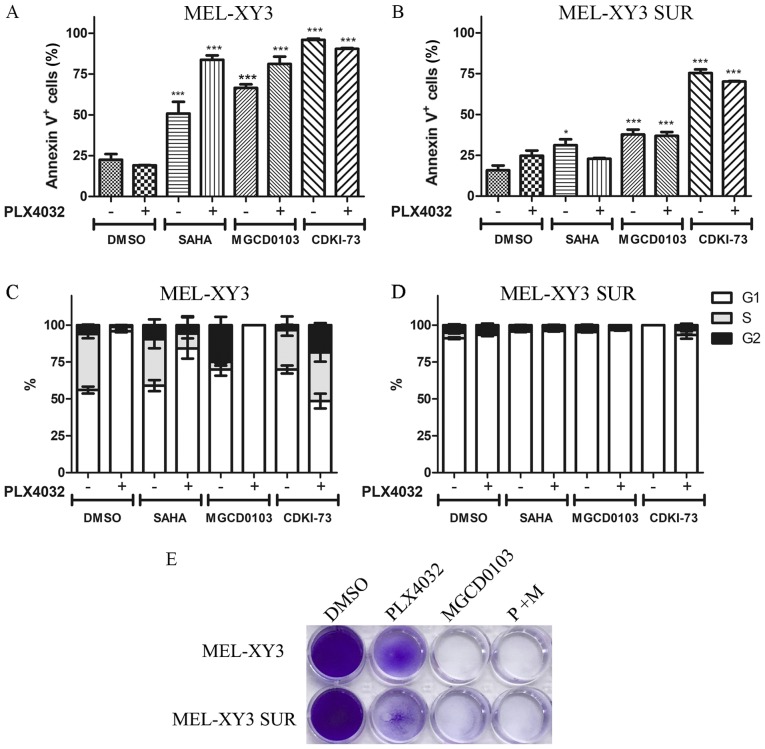
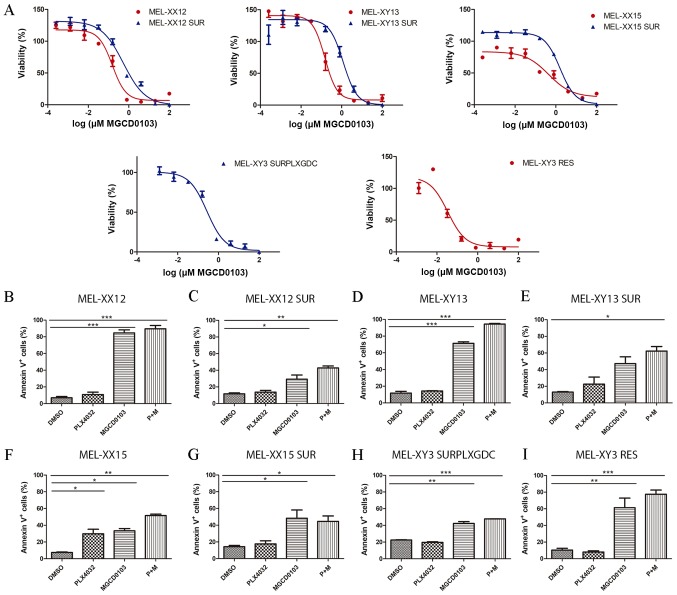
It is estimated that ~50% of patients with melanoma harbour B‑Raf (BRAF)V600 driver mutations, with the most common of these being BRAFV600E, which leads to the activation of mitogen‑activated protein kinase proliferative and survival pathways. BRAF inhibitors are used extensively to treat BRAF‑mutated metastatic melanoma; however, acquired resistance occurs in the majority of patients. The effects of long‑term treatment with PLX4032 (BRAFV600 inhibitor) were studied in vitro on sensitive V600E BRAF‑mutated melanoma cell lines. After several weeks of treatment with PLX4032, the majority of the melanoma cells died; however, a proportion of cells remained viable and quiescent, presenting senescent cancer stem cell‑like characteristics. This surviving population was termed SUR cells, as discontinuing treatment allowed the population to regrow while retaining equal drug sensitivity to that of parental cells. RNA sequencing analysis revealed that SUR cells exhibit changes in the expression of 1,415 genes (P<0.05) compared with parental cells. Changes in the expression levels of a number of epigenetic regulators were also observed. These changes and the reversible nature of the senescence state were consistent with epigenetic regulation; thus, it was investigated as to whether the senescent state could be reversed by epigenetic inhibitors. It was found that both parental and SUR cells were sensitive to different histone deacetylase (HDAC) inhibitors, such as SAHA and MGCD0103, and to the cyclin‑dependent kinase (CDK)9 inhibitor, CDKI‑73, which induced apoptosis and reduced proliferation both in the parental and SUR populations. The results suggested that the combination of PLX4032 with HDAC and CDK9 inhibitors may achieve complete elimination of SUR cells that persist after BRAF inhibitor treatment, and reduce the development of resistance to BRAF inhibitors.
据估计,~50%的黑色素瘤患者存在 B-Raf (BRAF)V600 驱动突变,其中最常见的是 BRAFV600E,这导致丝裂原激活蛋白激酶增殖和存活途径的激活。BRAF 抑制剂广泛用于治疗 BRAF 突变的转移性黑色素瘤;然而,大多数患者会发生获得性耐药。在体外研究了 PLX4032(BRAFV600 抑制剂)对敏感 V600E BRAF 突变黑色素瘤细胞系的长期治疗效果。在 PLX4032 治疗数周后,大多数黑色素瘤细胞死亡;然而,一部分细胞仍然存活并处于静止状态,表现出衰老的癌症干细胞样特征。这个存活的群体被称为 SUR 细胞,因为停止治疗允许该群体重新生长,同时保持与亲本细胞相同的药物敏感性。RNA 测序分析显示,与亲本细胞相比,SUR 细胞中表达了 1415 个基因(P<0.05)。还观察到一些表观遗传调节剂表达水平的变化。这些变化和衰老状态的可逆性与表观遗传调控一致;因此,研究了是否可以通过表观遗传抑制剂逆转衰老状态。结果发现,亲本细胞和 SUR 细胞都对不同的组蛋白去乙酰化酶 (HDAC) 抑制剂(如 SAHA 和 MGCD0103)和细胞周期蛋白依赖性激酶 (CDK)9 抑制剂 CDKI-73 敏感,这些抑制剂诱导凋亡并减少亲本和 SUR 群体的增殖。结果表明,PLX4032 与 HDAC 和 CDK9 抑制剂的联合应用可能会完全消除 BRAF 抑制剂治疗后持续存在的 SUR 细胞,并降低对 BRAF 抑制剂的耐药性。